An agency within the U.S. Department of Housing and Urban Development (HUD), the Government National Mortgage Association (GNMA or “Ginnie Mae”) was designed to support the government’s housing programs by creating a secondary market to buy and sell residential mortgages. Ginnie Mae provides guarantees for mortgage-backed securities (MBS), most of which are federally insured loans issued by the Federal Housing Administration and other federal housing offices. In effect, the agency buys mortgages from lending institutions and pools them into government-backed securities, which it sells to investors, guaranteeing timely repayment on both the principal and the interest.
In an effort to bolster the devastated housing market during the Great Depression, Congress passed the National Housing Act in 1934. The legislation was designed to increase homeownership by making mortgage funds available to more Americans through government-guaranteed loans, which in turn protected lenders from default and encouraged them to lend to more borrowers. In 1938, Congress amended the act to create the Federal Mortgage Association, designed to help lenders gain access to capital. Congress established the Government National Mortgage Association (Ginnie Mae) in 1968 as a government-owned corporation within the Department of Housing and Urban Development.
Today, Ginnie Mae securities are the “only mortgage-backed securities that offer the full faith and credit guarantee of the United States government.” The agency has guaranteed more than $2.6 trillion in mortgage-backed securities, which translates to homeownership for more than 34 million American households.
As the first to issue MBSs, Ginnie Mae played a key role in the development of a secondary mortgage market, but has gradually lost its market share over the last several decades, increasingly so in the last several years. (See Reform and Debate sections). Despite losing ground to the private sector and difficult conditions created by the sub-prime crisis, in its 2007 report to Congress, the agency claims its markets have remained liquid through the storm, with dollar volume of single-family MBSs increasing by 7 percent and a significant market share increase. In the same report, the agency also identifies three major initiatives for the year as “Promoting FHA modernization developing the Home Equity Conversion Mortgage (HECM) mortgage-backed security (HMBS), and promoting foreign investment.”
In April of 2008, observers heralded a comeback for GNMA and FHA on the ashes of the sub-prime crash, as the agencies have been granted temporary authority to guarantee “jumbo” loans. It is hoped that an expansion beyond their traditional territory of low- and moderate-income mortgages will help counteract downward pressure on the mortgage market.
An FHA reform bill that seeks to modernize the agencies could further significant impact on Ginnie Mae operations. Different versions of the bill have passed in the House and Senate. (See Reform Section).
Historically, Ginnie Mae operations have directly affected low- and moderate-income potential homeowners. By providing a safety net for lenders and investors, GNMA securities ensure a steady flow of capital to the (secondary) mortgage market, and create accessible terms for a many people who might not otherwise be serviced by traditional lenders. (This has changed somewhat in recent years, with private-sector companies taking an increasing share of the secondary mortgage market and offering competitive mortgage deals, including in the sub-prime market).
Ginnie Mae pools government-insured loans into federally guarantees mortgage-backed securities (MBS), which are primarily backed by Federal Housing Administration (FHA) mortgage loans, but also include Department of Veterans Affairs, Rural Housing Service and Office of Public and Indian Housing loans. By guaranteeing timely payment of the principal and interest on MBSs, the agency allows lenders to sell their loans at a better price in the secondary market and channel the money back into new mortgage loans. That is, by increasing liquidity in the secondary market and attracting new capital (including global capital), the agency makes credit available for low-income residential mortgages insured by government agencies.
As the only MBSs claiming “full faith and credit” of the government, Ginnie Maes are relatively risk-free. They pay the investor in interest and tax-free return on the principal, which means they are “self liquidating instruments.” But as with all mortgage-backed debt, Ginnie Maes carry the risk that, when interest rates fall, homeowners will refinance, reducing the repayment span and yield.”
GNMA MBS are created when GNMA-approved lenders (including commercial banks and savings and loan institutions) pool government-insured or guaranteed mortgage loans. The pools, which generally consist of mortgages with similar terms and interest rates and can include more than a thousand mortgages, are used as collateral to issue securities on the secondary market. (Once approved by GNMA, the pool is sold to investors by securities dealers). MBS are referred to as “pass throughs” because the principal and interest of the underlying loans are passed through to investors. The interest rate of the security is lower than that of the underlying loan, with the remainder going to pay service and guaranty fees. As they are guaranteed by the “full faith and credit” of the government, even if the borrower defaults, investors receive full and timely payment of principal and interest. For these reasons, GNMA mortgage pools are considered stable investments by securities dealers and investor.
The agency offers the following types of securities products:
·Ginnie Mae I MBS are modified “pass-through” mortgage-backed securities for which buyers receive separate payments for principal and interest. Ginnie Mae’s most heavily traded product, these are based on single-family mortgages insured by the FHA, VA, RHS or PIH. Interest rates for these types are required to be the same, with mortgages issued by the same entity. Minimum pool size is $1 million.
·Ginnie Mae II MBS were introduced in 1983 “in response to the changing demands” of the secondary mortgage market. Like I MBS, they are modified pass-through securities, but buyers receive and aggregate principal and interest payment from a central paying agent. This product allows for multiple-issuer pools and a wider range of coupons, with minimum pool size of $250,000 for multi-lender, and $1 million for single-lender pools.
·Real Estate Mortgage Investment Conduits (REMICs) “Direct principal and interest payments from underlying MBSs to classes with different principal balances, interest rates, average lives, prepayment characteristics and final maturities. Unlike traditional pass-throughs, the principal and interest payments in REMICs are not passed through to investors pro rata; instead, they are divided into varying payment streams to create classes with different expected maturities, different levels of seniority or subordination or other differing characteristics. The assets underlying REMIC securities can be either other MBS or whole mortgage loans.”
“Ginnie Mae is opening the door for issuers to combine single-family mortgage-backed securities with reverse mortgage securities in a new real estate mortgage investment conduit, which should give the agency's fledging HECM mortgage-backed securities program a boost. A Ginnie official said the new REMIC program will be ready in a few weeks and they are aiming to complete the first forward/reverse mortgage REMIC this summer. "We don't expect to see a deal until the summer," the official said. Back in September, Ginnie rolled out an MBS program for Federal Housing Administration-insured reverse mortgages, which are called Home Equity Conversion Mortgages, or HECMs. Only one HECM MBS transaction has been completed. But Ginnie executives say they expect the new H-Class REMIC to allow Wall Street to structure the cash flows so it is more attractive to investors and provide a better execution for HECM MBS issuers.”
FHA Reform/The Expanding American Homeownership Act of 2007
The Expanding American Homeownership Act (H.R. 5121, known as FHA “Reform” or “Modernization”) seeks to expand the breadth of FHA activity by permanently raising loan limits, reducing down payment requirements, and providing more flexibility in insurance premiums to match the credit profile of the buyer. Different versions of the bill passed in the House and Senate in 2007, and differences are expected to be resolved quickly.
Although instrumental in the early residential MBS market, Ginnie Mae has been pushed out by growth in conforming and nonconforming markets in recent years. GNMA was the predominant secondary market corporation, but in the mid- to late 1980s, government-sponsored enterprises (GSEs) Fannie Mae and Freddie Mac captured the MBS market. And by 2004, private conduits (which buy loans not insured by the government and independent of GSE purchase requirements) grew faster than any of the three. In 2005 the agency held less than 7 percent of the outstanding MBS market, down from a 1990 share of nearly 25 percent (Sources: Mortgage Banking/Inside Mortgage Finance).
Faced with the challenge of resurrecting Ginnie Mae, policy makers are largely looking toward its relationship with the Federal Housing Administration (FHA). Critics point to the agency’s reliance on the FHA, which is itself losing market share, to produce home loans to package into securities. FHA’s decline is partly attributable to a loss of business to conventional mortgage lenders that provide larger loans on better terms to low- and moderate-income buyers.
Most of the more than $400 billion (down from a peak of $604 billion in 2001) in Ginnie Mae securities in 2006 were in FHA-insured mortgages. (90 percent of FHA-insured loans go into Ginnie Mae-backed securities)
GNMAs are still the only MBS offering the full faith and credit guarantee of the U.S. Treasury, and the agency is a trusted secondary market presence, respected on Wall Street, making it attractive to conservative investors, including foreign governments. However, as a government-chartered corporation, GNMA is constrained by regulations that tie its growth to the fate of FHA. According to critics, though once a leader in mortgage innovation, FHA is inhibited by an outdated organizational structure, unable to adapt programs to rapid changes in the contemporary mortgage market.
Therefore, growth of the agency will largely be tied to FHA modernization and reform efforts—which seek to make the agency and its programs more flexible and consumer-friendly, in part by extending finance options to meet the needs of a diverse range of borrowers.
Following the agency’s dramatic decline in the secondary market in recent years, attention turned toward Ginnie Mae’s dependence on an “out of touch” FHA. The hope is that upcoming FHA reforms will also resuscitate GNMA (See Reform Section). In turn, the old debate over the working relationship between Ginnie Mae and FHA was resurrected as critics on both sides considered whether corroboration between the two is effectively servicing the federal government’s end goal: to increase FHA loans through Ginnie Mae securitization. Some insiders claim that, although improvements have been made, there is a long way to go before the agencies’ operations are brought into synch—while others maintain that the there are no problems.
Out of Synch (by Anita Willis-Boyland, Mortgage Banking)
Merger?
Some advocate merging the two agencies. The potential advantages of combining FHA and GNMA functions including improved efficiency, products and services, but many argue that it would be at the expense of Ginnie Mae’s strategic market orientation as it is absorbed within the larger bureaucracy.
A requirement that homeowners who prepay FHA mortgages be charged interest through the full month of the payoff has been enforced since 1970 by Ginnie Mae. The agency, which packages most FHA loans into bonds to sell to investors, is caught between borrowers and investors, as, they argue, investors buy bonds with the expectation that they will receive full-month interest on all associated mortgage loans. Critics, as those at the National Association of Realtors, claimed that the policy unfairly burdened the consumer, while some considered raising FHA interest rates to pay investors. In 2004, the debate reached key committees of both the House and Senate.
Your website does not list ALL the directors of GNMA and the years they served which is important historic info. Might be good to list something about each of these directors as well. Why only list a couple ??? Is there a bais for these few ?
Government National Mortgage Administration (Ginnie Mae)
Tozer, Ted
Previous President
Theodore W. (Ted) Tozer, President Barack Obama’s choice to take the helm as President of the Government National Mortgage Association, also known as Ginnie Mae, was sworn in February 24, 2010. Established by Congress in 1968, Ginnie Mae was designed to support the government’s housing programs by creating a secondary market to buy and sell residential mortgages. Ginnie Mae provides guarantees for mortgage-backed securities (MBS), most of which are federally insured loans issued by the Federal Housing Administration and other federal housing offices. In effect, the agency buys mortgages from lending institutions and pools them into government-backed securities, which it sells to investors, guaranteeing repayment on both the principal and the interest. The mortgage-backed securities underlying the 2008 financial crash were issued and backed by private lenders, but since their demise, Ginnie Mae has increased its participation in backing such securities.
Born in 1957, Tozer earned a B.S. in Accounting and Finance at Indiana University in 1979. He became a Certified Public Accountant in 1980 and a Certified Management Accountant in 1984.
He began working for BancOhio National Bank in 1979 as Vice President and Investment Operations Manager, and its subsidiary BancOhio Mortgage Company in 1985. He remained there into 1989. In that year, he went to work for National City Bank, which had acquired BancOhio in 1984. Tozer rose through the corporate ranks, eventually becoming Senior Vice President of Capital Markets at National City Mortgage, which later became part of PNC Financial Services Group. His responsibilities included daily pricing of loan products; managing interest rate risk of loans being held in inventory for future sales; designing loan products that are sellable into the capital markets; delivery and settlement of loan pools; and negotiating the sale of loan pools into the capital markets.
In May 2000, Tozer warned against the spread of adjustable rate mortgages, referring to them as “a disaster ready to come.”
During Tozer’s tenure, National City’s mortgage business was posting huge losses, and the bank, which was worth less than $6 billion, faced about $20 billion in future losses on its current loans. In June 2008, National City entered into a secret agreement with the Office of the Comptroller of the Currency regarding capital levels, risk-management practices and other aspects of its business, effectively putting the bank on probation. In October 2008, National City was unable to obtain federal bank bailout money, and had to be sold to PNC Bank for $5.6 billion even though it had been worth $25 million only a year earlier.
Tozer was a member of the Fannie Mae Midwest Secondary Advisory Group from 1994 to 1999 and a trustee of the Ohio Mortgage Bankers Association from 1999 to 2001. He became a a member of Freddie Mac’s National Lender Advisory Board in 2002 and he served as chairman of the Mortgage Bankers Association (MBA) of America’s Secondary and Capital Markets committee from 2002 to 2004. During his time as Chairman, he also served on the MBA Residential Board of Governors and worked with Ginnie Mae in the overhaul of the GNMA II program. In 2008, Tozer became a charter member of of Fannie Mae’s National Lender Advisory Board.
Since 2000, Tozer has contributed $6,300 to political causes, including $1,000 to John McCain’s unsuccessful 2000 campaign for the Republican presidential nomination, $500 to the Democratic-leaning America Coming Together 527 Committee in 2004, and $4,550 to President Obama’s 2008 campaign.
Joseph J. Murin earned a business degree from Chicago’s National-Louis University, after which he went to work as a loan officer for Pittsburgh National Bank (now PNC Bank). Between 1979 and 1982, he was president of Murin Brothers, Inc., a family-owned construction company. Murin was regional president of American Pioneer Savings in Orlando, Florida, chief lending officer for Standard Federal Savings and Loan, and president of Century Mortgage before joining Lender’s Service, Inc. (LSI) in 1992. Eventually he progressed to the position of LSI’s chief executive officer and remained CEO until the company was sold to Merrill Lynch in 1998. Murin moved on to Basis100, a Canadian firm that developed the Canadian Bond Trading system, again moving up to CEO. Murin then established Mortgage Settlement Network as a managing partner and sold that company on August 2007. Murin was sworn in as President of Ginnie Mae on July 1, 2008, eight months after President Bush nominated him.
An agency within the U.S. Department of Housing and Urban Development (HUD), the Government National Mortgage Association (GNMA or “Ginnie Mae”) was designed to support the government’s housing programs by creating a secondary market to buy and sell residential mortgages. Ginnie Mae provides guarantees for mortgage-backed securities (MBS), most of which are federally insured loans issued by the Federal Housing Administration and other federal housing offices. In effect, the agency buys mortgages from lending institutions and pools them into government-backed securities, which it sells to investors, guaranteeing timely repayment on both the principal and the interest.
In an effort to bolster the devastated housing market during the Great Depression, Congress passed the National Housing Act in 1934. The legislation was designed to increase homeownership by making mortgage funds available to more Americans through government-guaranteed loans, which in turn protected lenders from default and encouraged them to lend to more borrowers. In 1938, Congress amended the act to create the Federal Mortgage Association, designed to help lenders gain access to capital. Congress established the Government National Mortgage Association (Ginnie Mae) in 1968 as a government-owned corporation within the Department of Housing and Urban Development.
Today, Ginnie Mae securities are the “only mortgage-backed securities that offer the full faith and credit guarantee of the United States government.” The agency has guaranteed more than $2.6 trillion in mortgage-backed securities, which translates to homeownership for more than 34 million American households.
As the first to issue MBSs, Ginnie Mae played a key role in the development of a secondary mortgage market, but has gradually lost its market share over the last several decades, increasingly so in the last several years. (See Reform and Debate sections). Despite losing ground to the private sector and difficult conditions created by the sub-prime crisis, in its 2007 report to Congress, the agency claims its markets have remained liquid through the storm, with dollar volume of single-family MBSs increasing by 7 percent and a significant market share increase. In the same report, the agency also identifies three major initiatives for the year as “Promoting FHA modernization developing the Home Equity Conversion Mortgage (HECM) mortgage-backed security (HMBS), and promoting foreign investment.”
In April of 2008, observers heralded a comeback for GNMA and FHA on the ashes of the sub-prime crash, as the agencies have been granted temporary authority to guarantee “jumbo” loans. It is hoped that an expansion beyond their traditional territory of low- and moderate-income mortgages will help counteract downward pressure on the mortgage market.
An FHA reform bill that seeks to modernize the agencies could further significant impact on Ginnie Mae operations. Different versions of the bill have passed in the House and Senate. (See Reform Section).
Historically, Ginnie Mae operations have directly affected low- and moderate-income potential homeowners. By providing a safety net for lenders and investors, GNMA securities ensure a steady flow of capital to the (secondary) mortgage market, and create accessible terms for a many people who might not otherwise be serviced by traditional lenders. (This has changed somewhat in recent years, with private-sector companies taking an increasing share of the secondary mortgage market and offering competitive mortgage deals, including in the sub-prime market).
Ginnie Mae pools government-insured loans into federally guarantees mortgage-backed securities (MBS), which are primarily backed by Federal Housing Administration (FHA) mortgage loans, but also include Department of Veterans Affairs, Rural Housing Service and Office of Public and Indian Housing loans. By guaranteeing timely payment of the principal and interest on MBSs, the agency allows lenders to sell their loans at a better price in the secondary market and channel the money back into new mortgage loans. That is, by increasing liquidity in the secondary market and attracting new capital (including global capital), the agency makes credit available for low-income residential mortgages insured by government agencies.
As the only MBSs claiming “full faith and credit” of the government, Ginnie Maes are relatively risk-free. They pay the investor in interest and tax-free return on the principal, which means they are “self liquidating instruments.” But as with all mortgage-backed debt, Ginnie Maes carry the risk that, when interest rates fall, homeowners will refinance, reducing the repayment span and yield.”
GNMA MBS are created when GNMA-approved lenders (including commercial banks and savings and loan institutions) pool government-insured or guaranteed mortgage loans. The pools, which generally consist of mortgages with similar terms and interest rates and can include more than a thousand mortgages, are used as collateral to issue securities on the secondary market. (Once approved by GNMA, the pool is sold to investors by securities dealers). MBS are referred to as “pass throughs” because the principal and interest of the underlying loans are passed through to investors. The interest rate of the security is lower than that of the underlying loan, with the remainder going to pay service and guaranty fees. As they are guaranteed by the “full faith and credit” of the government, even if the borrower defaults, investors receive full and timely payment of principal and interest. For these reasons, GNMA mortgage pools are considered stable investments by securities dealers and investor.
The agency offers the following types of securities products:
·Ginnie Mae I MBS are modified “pass-through” mortgage-backed securities for which buyers receive separate payments for principal and interest. Ginnie Mae’s most heavily traded product, these are based on single-family mortgages insured by the FHA, VA, RHS or PIH. Interest rates for these types are required to be the same, with mortgages issued by the same entity. Minimum pool size is $1 million.
·Ginnie Mae II MBS were introduced in 1983 “in response to the changing demands” of the secondary mortgage market. Like I MBS, they are modified pass-through securities, but buyers receive and aggregate principal and interest payment from a central paying agent. This product allows for multiple-issuer pools and a wider range of coupons, with minimum pool size of $250,000 for multi-lender, and $1 million for single-lender pools.
·Real Estate Mortgage Investment Conduits (REMICs) “Direct principal and interest payments from underlying MBSs to classes with different principal balances, interest rates, average lives, prepayment characteristics and final maturities. Unlike traditional pass-throughs, the principal and interest payments in REMICs are not passed through to investors pro rata; instead, they are divided into varying payment streams to create classes with different expected maturities, different levels of seniority or subordination or other differing characteristics. The assets underlying REMIC securities can be either other MBS or whole mortgage loans.”
“Ginnie Mae is opening the door for issuers to combine single-family mortgage-backed securities with reverse mortgage securities in a new real estate mortgage investment conduit, which should give the agency's fledging HECM mortgage-backed securities program a boost. A Ginnie official said the new REMIC program will be ready in a few weeks and they are aiming to complete the first forward/reverse mortgage REMIC this summer. "We don't expect to see a deal until the summer," the official said. Back in September, Ginnie rolled out an MBS program for Federal Housing Administration-insured reverse mortgages, which are called Home Equity Conversion Mortgages, or HECMs. Only one HECM MBS transaction has been completed. But Ginnie executives say they expect the new H-Class REMIC to allow Wall Street to structure the cash flows so it is more attractive to investors and provide a better execution for HECM MBS issuers.”
FHA Reform/The Expanding American Homeownership Act of 2007
The Expanding American Homeownership Act (H.R. 5121, known as FHA “Reform” or “Modernization”) seeks to expand the breadth of FHA activity by permanently raising loan limits, reducing down payment requirements, and providing more flexibility in insurance premiums to match the credit profile of the buyer. Different versions of the bill passed in the House and Senate in 2007, and differences are expected to be resolved quickly.
Although instrumental in the early residential MBS market, Ginnie Mae has been pushed out by growth in conforming and nonconforming markets in recent years. GNMA was the predominant secondary market corporation, but in the mid- to late 1980s, government-sponsored enterprises (GSEs) Fannie Mae and Freddie Mac captured the MBS market. And by 2004, private conduits (which buy loans not insured by the government and independent of GSE purchase requirements) grew faster than any of the three. In 2005 the agency held less than 7 percent of the outstanding MBS market, down from a 1990 share of nearly 25 percent (Sources: Mortgage Banking/Inside Mortgage Finance).
Faced with the challenge of resurrecting Ginnie Mae, policy makers are largely looking toward its relationship with the Federal Housing Administration (FHA). Critics point to the agency’s reliance on the FHA, which is itself losing market share, to produce home loans to package into securities. FHA’s decline is partly attributable to a loss of business to conventional mortgage lenders that provide larger loans on better terms to low- and moderate-income buyers.
Most of the more than $400 billion (down from a peak of $604 billion in 2001) in Ginnie Mae securities in 2006 were in FHA-insured mortgages. (90 percent of FHA-insured loans go into Ginnie Mae-backed securities)
GNMAs are still the only MBS offering the full faith and credit guarantee of the U.S. Treasury, and the agency is a trusted secondary market presence, respected on Wall Street, making it attractive to conservative investors, including foreign governments. However, as a government-chartered corporation, GNMA is constrained by regulations that tie its growth to the fate of FHA. According to critics, though once a leader in mortgage innovation, FHA is inhibited by an outdated organizational structure, unable to adapt programs to rapid changes in the contemporary mortgage market.
Therefore, growth of the agency will largely be tied to FHA modernization and reform efforts—which seek to make the agency and its programs more flexible and consumer-friendly, in part by extending finance options to meet the needs of a diverse range of borrowers.
Following the agency’s dramatic decline in the secondary market in recent years, attention turned toward Ginnie Mae’s dependence on an “out of touch” FHA. The hope is that upcoming FHA reforms will also resuscitate GNMA (See Reform Section). In turn, the old debate over the working relationship between Ginnie Mae and FHA was resurrected as critics on both sides considered whether corroboration between the two is effectively servicing the federal government’s end goal: to increase FHA loans through Ginnie Mae securitization. Some insiders claim that, although improvements have been made, there is a long way to go before the agencies’ operations are brought into synch—while others maintain that the there are no problems.
Out of Synch (by Anita Willis-Boyland, Mortgage Banking)
Merger?
Some advocate merging the two agencies. The potential advantages of combining FHA and GNMA functions including improved efficiency, products and services, but many argue that it would be at the expense of Ginnie Mae’s strategic market orientation as it is absorbed within the larger bureaucracy.
A requirement that homeowners who prepay FHA mortgages be charged interest through the full month of the payoff has been enforced since 1970 by Ginnie Mae. The agency, which packages most FHA loans into bonds to sell to investors, is caught between borrowers and investors, as, they argue, investors buy bonds with the expectation that they will receive full-month interest on all associated mortgage loans. Critics, as those at the National Association of Realtors, claimed that the policy unfairly burdened the consumer, while some considered raising FHA interest rates to pay investors. In 2004, the debate reached key committees of both the House and Senate.
Your website does not list ALL the directors of GNMA and the years they served which is important historic info. Might be good to list something about each of these directors as well. Why only list a couple ??? Is there a bais for these few ?
Founded: 1968
Annual Budget: $11 million for administrative expenses; $100 billion in mortgage-backed securities commitment authority (2008)
Government National Mortgage Administration (Ginnie Mae)
Tozer, Ted
Previous President
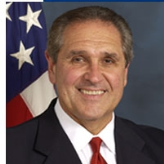
Theodore W. (Ted) Tozer, President Barack Obama’s choice to take the helm as President of the Government National Mortgage Association, also known as Ginnie Mae, was sworn in February 24, 2010. Established by Congress in 1968, Ginnie Mae was designed to support the government’s housing programs by creating a secondary market to buy and sell residential mortgages. Ginnie Mae provides guarantees for mortgage-backed securities (MBS), most of which are federally insured loans issued by the Federal Housing Administration and other federal housing offices. In effect, the agency buys mortgages from lending institutions and pools them into government-backed securities, which it sells to investors, guaranteeing repayment on both the principal and the interest. The mortgage-backed securities underlying the 2008 financial crash were issued and backed by private lenders, but since their demise, Ginnie Mae has increased its participation in backing such securities.
Born in 1957, Tozer earned a B.S. in Accounting and Finance at Indiana University in 1979. He became a Certified Public Accountant in 1980 and a Certified Management Accountant in 1984.
He began working for BancOhio National Bank in 1979 as Vice President and Investment Operations Manager, and its subsidiary BancOhio Mortgage Company in 1985. He remained there into 1989. In that year, he went to work for National City Bank, which had acquired BancOhio in 1984. Tozer rose through the corporate ranks, eventually becoming Senior Vice President of Capital Markets at National City Mortgage, which later became part of PNC Financial Services Group. His responsibilities included daily pricing of loan products; managing interest rate risk of loans being held in inventory for future sales; designing loan products that are sellable into the capital markets; delivery and settlement of loan pools; and negotiating the sale of loan pools into the capital markets.
In May 2000, Tozer warned against the spread of adjustable rate mortgages, referring to them as “a disaster ready to come.”
During Tozer’s tenure, National City’s mortgage business was posting huge losses, and the bank, which was worth less than $6 billion, faced about $20 billion in future losses on its current loans. In June 2008, National City entered into a secret agreement with the Office of the Comptroller of the Currency regarding capital levels, risk-management practices and other aspects of its business, effectively putting the bank on probation. In October 2008, National City was unable to obtain federal bank bailout money, and had to be sold to PNC Bank for $5.6 billion even though it had been worth $25 million only a year earlier.
Tozer was a member of the Fannie Mae Midwest Secondary Advisory Group from 1994 to 1999 and a trustee of the Ohio Mortgage Bankers Association from 1999 to 2001. He became a a member of Freddie Mac’s National Lender Advisory Board in 2002 and he served as chairman of the Mortgage Bankers Association (MBA) of America’s Secondary and Capital Markets committee from 2002 to 2004. During his time as Chairman, he also served on the MBA Residential Board of Governors and worked with Ginnie Mae in the overhaul of the GNMA II program. In 2008, Tozer became a charter member of of Fannie Mae’s National Lender Advisory Board.
Since 2000, Tozer has contributed $6,300 to political causes, including $1,000 to John McCain’s unsuccessful 2000 campaign for the Republican presidential nomination, $500 to the Democratic-leaning America Coming Together 527 Committee in 2004, and $4,550 to President Obama’s 2008 campaign.
Joseph J. Murin earned a business degree from Chicago’s National-Louis University, after which he went to work as a loan officer for Pittsburgh National Bank (now PNC Bank). Between 1979 and 1982, he was president of Murin Brothers, Inc., a family-owned construction company. Murin was regional president of American Pioneer Savings in Orlando, Florida, chief lending officer for Standard Federal Savings and Loan, and president of Century Mortgage before joining Lender’s Service, Inc. (LSI) in 1992. Eventually he progressed to the position of LSI’s chief executive officer and remained CEO until the company was sold to Merrill Lynch in 1998. Murin moved on to Basis100, a Canadian firm that developed the Canadian Bond Trading system, again moving up to CEO. Murin then established Mortgage Settlement Network as a managing partner and sold that company on August 2007. Murin was sworn in as President of Ginnie Mae on July 1, 2008, eight months after President Bush nominated him.




Comments