The Defense Nuclear Facilities Safety Board is an independent government agency responsible for monitoring and advising the Department of Energy’s management of defense nuclear facilities.
While the responsibility of waging nuclear war rests with the President, the Pentagon and branches of the military, the task of building America’s nuclear stockpile has been the responsibility of the Department of Energy (DOE) and its predecessor, the Atomic Energy Commission (AEC). From the very beginning of the nation’s nuclear weapons program in World War II, building nuclear warheads became a complicated, dangerous and highly secret process. Consequently, with numerous, top-secret facilities stretching from one end of the country to another, US energy officials operated the nuclear weapons complex with little external oversight when it came to abiding by environmental and health laws, it was later discovered.
This lack of oversight allowed a 40-year history of significant environmental and health problems to accrue at facilities from Washington state to South Carolina. By the 1980s, accounts of air, soil, and water contamination plus worker safety violations involving radioactive materials were reported by the media, prompting Congress to investigate. Congress came to the conclusion that a new government body was needed to keep an eye on DOE when it came to operating and decommissioning (now that the Cold War was over) defense nuclear facilities. Thus, the Defense Nuclear Facilities Safety Board (DNFSB) was born.
The DNFSB is not a true regulatory body, for it lacks the ability to enforce its recommendations to the DOE. Instead, it advises and makes recommendations to the department, which can accept or reject them. The DOE has never formally rejected any recommendation since the board was founded.
In 1942, while fighting a two-front war against Germany and Italy in Europe and Japan in the Pacific, the administration of President Franklin Roosevelt embarked on an ambitious plan to build the world’s first atomic weapons. Known as the Manhattan Project, the effort established three secret facilities to conduct all of the necessary work for producing the atomic bombs that were dropped on Hiroshima and Nagasaki. The Los Alamos National Laboratory in New Mexico served as the design and construction center where scientists built the weapons. Nuclear fuel for the bombs was produced at two other facilities: Oak Ridge, TN, where uranium 235 was extracted from uranium 238; and Hanford, WA, which produced plutonium.
All three facilities continued to serve critical functions in the years following WWII for America’s growing nuclear weapons complex, which eventually expanded into 15 major facilities and another dozen smaller ones playing roles in the research, production and testing of nuclear weapons. During the Cold War, the AEC/DOE’s top priority was to build more and more weapons, including those with increasing destructive capability, as the U.S. sought to maintain numerical superiority in the arms race against the Soviet Union. With production of weapons the overriding objective, energy officials paid less attention to safeguards against environmental degradation and radiation exposure to facility employees.
This became abundantly clear as the Cold War came to a close and investigations were conducted into the management of defense nuclear facilities by US energy officials. A 1994 report by the Congressional Budget Office said the DOE was faced with the disposing of 100 million gallons of highly radioactive waste spread out across the country among different facilities. The price tag for clean up was estimated at more than $100 billion. A few locations in particular—Hanford, Oak Ridge, Savannah River (SC) and Rocky Flats (CO)—received considerable media coverage for serious contamination involving uranium, plutonium, and various heavy metals.
Coupled with these revelations were the earlier accidents at nuclear power plants at Three Mile Island in Pennsylvania and Chernobyl in the Ukraine, which elevated public concerns over nuclear safety. A National Research Council study in 1987 examined the conditions with nuclear reactors at Savannah River and Hanford in the wake of Chernobyl and found that DOE officials had relied almost exclusively on private contractors to identify safety concerns instead of using DOE experts, resulting in failures to adequately address technical mishaps. Another investigation by the Senate Governmental Affairs Committee found that energy officials had failed to sufficiently address radiation exposure among workers at Hanford, Savannah River, Oak Ridge and Rocky Flats.
In an effort to stop such mistakes from continuing, legislation was introduced in 1987 in both the House and Senate to establish a new independent government authority outside of the DOE to provide oversight of DOE’s management of defense nuclear facilities. The House bill, by Rep. Norman Dicks (D-Washington), would have given the new authority the ability to hold hearings, conduct depositions and issue subpoenas—and more importantly, the power to suspend operations or construction at new or existing defense nuclear facilities if public health or safety was deemed to be at risk. Ultimately, however, Congress adopted legislation by Sen. John Glenn (D-Ohio) that established the Defense Nuclear Facilities Safety Board which was not granted the power to suspend operations at facilities, thus limiting the board’s ability to enforce changes upon the DOE.
The Defense Nuclear Facilities Safety Board is an independent government agency responsible for monitoring and advising DOE’s management of defense nuclear facilities, some of which today are being dismantled and cleaned up. Under its mandate from Congress, the board is charged with ensuring the implementation of DOE health and safety standards by energy officials and to issue advisory recommendations regarding work at facilities.
The board also investigates operations or specific problems that arise at facilities that could adversely impact public health or safety and issues recommendations to address these problems. The DNFSB publishes unclassified reports with recommendations to correct problems at DOE facilities.
In the several decades since the board was founded, the DOE has never formally rejected, in full, any recommendation by the board. However, according to the U.S. Government Accountability Office, this does not mean there haven’t been disagreements over recommendations. To avoid any adverse publicity, the department and board generally work out their differences at the staff level so DOE doesn’t have to resort to officially rejecting the board’s advice. (In 2011, the DOE partially rejected a board recommendation. See Controversies.)
Nevertheless, the board has been effective in influencing key decisions by the Secretary of Energy. In 2004, the DOE was considering rule changes that would have allowed private contractors who run nuclear facilities to determine worker safety standards. The board publicly opposed this measure, and the department subsequently backed off on implementing the change.
The board is currently evaluating the design of 16 U.S. defense nuclear facilities, whose total project costs equal $28 billion.
Stakeholders include those with vested interests in the work of the DNFSB range from defense contractors and multi-national engineering and construction firms to grass-roots citizens groups and universities.
Between 2007 and 2011, DNFSB has spent $14.6 million on 415 transactions for services that include administrative support ($4.7 million) and engineering/technical contracts ($3.5 million).
The top five contractors are:
1. Enterprise Information Services Inc. $2,305,086
2. New Age Systems Inc. $1,601,393
3. Enterprise Information SVC $1,496,286
4. Paul C. Rizzo Associates Inc. $624,749
5. Verizon Communications Inc. $517,819
Based on recommendations to DOE from DNFSB, nuclear facility clean-up operations are overseen by the Office of Environmental Management (EM), whose program funding has been directed to such sites as Hanford, Savannah River, Oak Ridge National Laboratory, Los Alamos National Laboratory, and the Nevada Test Site.
The nation’s largest-ever nuclear waste cleanup project has produced numerous problems and controversies, with the DNFSB caught in the middle.
The former nuclear weapons plant at Hanford, Washington, produced 53 million gallons of radioactive waste that’s currently sitting in more than 170 large, and leaking, storage tanks. To get rid of this waste, the DOE is trying to build a one-of-a-kind plant that will convert the liquid radiation into glass tubes (in a process called “vitrification”).
The DOE has spent years, and so far $12.2 billion, to assemble this vitrification facility. Because no one has ever built anything like this, the project has been an engineering nightmare. Experts serving on the DNFSB raised concerns about some of the plant’s design, and offered solutions. Energy officials rejected some of the board’s suggestions, creating a stalemate and bumping the matter to Congress for a resolution.
At the same time, the board launched an investigation into safety problems at Hanford. This came after Bechtel National (the building contractor) fired Walter Tamosaitis, a whistleblower who warned the plant might explode once it begins operation (in 2019).
The board also looked into allegations that the DOE pressured witnesses at a hearing into downplaying the risks posed by the plant. The department responded by saying the board lacked the legal authority to conduct its investigation.
The DNFSB has maintained a low public profile and garnered little attention in the media, except for brief references to its reports in stories about problems at defense nuclear facilities. Criticism over lapses in safety at these facilities has been targeted at DOE, not the board, since it is the former rather than the latter that is responsible for managing these operations. But the board has got caught in the middle on occasion between DOE and public interest groups monitoring conditions at facilities.
For instance, in January 2006, a coalition of peace and security activists wrote to the board’s chairman, A.J. Eggenberger, citing a report by the Institute for Energy and Environmental Research (IEER) which uncovered evidence in DOE documents that at least 300 kilograms of plutonium was unaccounted for at the Los Alamos National Laboratory (LANL). “Given that this large amount of unaccounted plutonium could present national security, public health and environmental threats, we are writing to request that you open an immediate investigation into plutonium accounting at LANL,” read the letter.
In his response, Eggenberger punted, saying the accusation of plutonium being “diverted for hostile purposes” is “beyond the Board’s statutory authority.” He added that the matter had been brought to DOE’s attention by the IEER, inferring that it was unnecessary for the board to act further.
The board also became the focus of criticism when President George W. Bush selected two new board members in September 2006. Those members, Larry Brown and Peter Winokur, were both ex-DOE officials. Brown, an attorney in DOE’s legal office, had worked on a Bush administration initiative to promote the expansion of nuclear energy worldwide, while Winokur, a former staffer of Sen. Harry Reid (D-Nevada), had come over from DOE’s National Nuclear Security Administration.
Tom Carpenter of the Government Accountability Project, a nonprofit government and corporate watchdog organization, told Inside Energy the nominations represented an attempt by the Bush administration to stack the board “with people they can trust, and turning it into more of a lapdog than a watchdog.”
In the wake of the Gulf of Mexico oil spill and the earthquake/tsunami disaster in Japan, the head of the DNFSB went before Congress to provide his assessment of how the DOE is managing its safety operations.
Dr. Peter Winokur, chairman of the Defense Nuclear Facilities Safety Board, made several points that reaffirmed existing departmental policies or encouraged new actions. He noted the importance of considering safety matters early in the design of new defense nuclear facilities, which are proposed for Los Alamos National Laboratory in New Mexico and the Oak Ridge National Laboratory in Tennessee.
Winokur also emphasized the need to resolve safety issues at the Hanford Waste Treatment and Immobilization Plant, which has produced no shortage of concerns while the DOE tries to dispose of 53 million gallons of radioactive waste left over from the Cold War.
Referencing the nuclear disaster in Japan, the board chairman recommended that the department’s National Nuclear Safety Administration (NNSA), which oversees the nuclear weapons stockpile, “invest in safety upgrades at newer facilities with enduring missions.”
He also told lawmakers that the DOE has yet to correct problems with the fire-suppression system at the Device Assembly Facility at the Nevada National Security Site, which performs assembly work for subcritical experiments and “is a potential location for nuclear explosive assembly and disassembly operations.”
Finally, Winokur noted there are “noteworthy elements in DOE’s and NNSA’s oversight reform efforts” and lauded their requirements that contractors implement and continuously improve systems that support safety. But, he added, “contractor assurance systems at defense nuclear facilities have not achieved a degree of effectiveness that would warrant a reduction in federal safety oversight, nor are they expected to in the foreseeable future. It would not be prudent to reduce federal safety oversight of defense nuclear facilities in expectation of future improved assurance by the contractors.”
Born in Harlowton, MT, A.J. Eggenberger is only the second chairman in the DNFSB’s 20-year history, having succeeded the board’s original chairman, John Conway, in July 2005. From 1972 to 1984, he worked in the private sector with D'Appolonia Consulting Engineers in Pittsburgh, PA, where he was an associate partner in charge of the Nuclear Facilities Group that dealt with engineering issues ranging from mining, milling, fabrication, and reprocessing to disposal facilities in the U.S. and abroad. He then served at the National Science Foundation as program director and leader of the Earthquake Hazard Mitigation Program until he was appointed vice chairman of the DNFSB in 1989.
hello chairman winokur,
i’m writing this letter in the hopes of you helping the american nuclear test workers who were put at risk to serve the national security interests of the united states. at the present time there are several programs to aid the nuclear test workers in our country, the veterans administration (va), the energy employees occupational illness compensation program (eeoicp) and the radiation exposure compensation act (reca).the eeoicp covers the workers but only if...
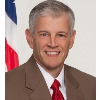
Sean Sullivan, a former naval officer who spent much of his career working on nuclear-powered submarines, was appointed by President Donald Trump on January 26, 2017, to chair the Defense Nuclear Facilities Safety Board (DNFSB). Sullivan had previously been appointed in 2012 by former President Barack Obama as a member of the board. Established in 1988, the DNFSB monitors the nation’s nuclear facilities and advises the Department of Energy on their management, including decommissioning and cleanup.
Sullivan was born November 30, 1958, in Bridgeport, Connecticut. His home-state senator, Lowell Weicker (R), appointed him to the U.S. Naval Academy in 1976. Sullivan graduated in 1980 with a B.S. in marine engineering. In 2002, he earned an M.A. in national security affairs from the Naval War College.
Sullivan’s first shipboard assignment was to the USS Plunger, a nuclear-powered attack submarine. After that, he returned to the Naval Academy as an instructor, and then was assigned to another attack boat, the USS Chicago.
Sullivan worked his way up to become executive officer, or second in command, on the USS Maryland, a ballistic missile sub. After that, he got his first taste of politics when he was sent to Washington as deputy director of the House of Representatives Navy Legislative Liaison Office. In 1996, Sullivan returned to the sea as captain of the USS Jefferson City, a Los Angeles-class attack submarine.
In 1999 Sullivan returned to shore duty, with his career culminating with an assignment beginning in 2004 as the commander of the Naval Submarine Base New London in Groton, Connecticut. He retired from the Navy in 2006 with the rank of captain.
While ending his time in the Navy, Sullivan was preparing for his second career, earning his J.D. from the University of Connecticut in 2006. He worked as a civil litigation attorney for Brown Jacobson, a law firm in Norwich, Connecticut.
Sullivan began his own political career in 2008, when he ran as a Republican for a congressional seat from Eastern Connecticut. He called for an end to the Iraq War, but opposed setting a date for U.S. troops to withdraw. He also called for increased spending for renewable energy, biofuels, fuel cells and nuclear power. His Democratic opponent, Joseph Courtney, had won his first term by only 83 votes, but roughed up Sullivan two years later, winning by a 2-to-1 margin. Sullivan found success in electoral politics the following year, when he won a seat on the Ledyard Town Council. In 2010, Sullivan ran for state senate, calling for deep spending cuts in the state budget and privatizing some social service programs, but lost by 802 votes to the 13-term incumbent, 84-year-old Edith Prague.
In 2011, Sullivan moved back into the world of submarines when he became a partner in Sonalysts, which supported the Navy’s development of its next ballistic missile submarine class.
He worked there until 2012, when he was first appointed to the DNFSB, and resigned from the Ledyard Town Council at that time as well.
Sullivan and his wife, Sharon, have four children: Amy, Kelley, Casey and Max.
On April 7, 2015, President Barack Obama announced his intention to nominate Joyce L. Connery, who has worked on nuclear policy for most of her career, to head the Defense Nuclear Facilities Safety Board, which monitors nuclear facilities, but does not have regulatory power.
The daughter of William and Rose Connery, Connery is from Stoneham, Massachusetts, and graduated from Stoneham High School in 1988. She went to Tufts University to study international relations. She spent a semester studying in Leningrad, Russia, before earning her bachelor’s degree in 1992. The following year, Connery began a two-and-a-half-year stint as a Peace Corps volunteer in Turkmenistan.
Connery returned to Tufts after her tour to work on a master’s degree in law and diplomacy with a concentration in conflict resolution and Southwest Asian area studies. She spent time as an intern in the political section of the U.S. embassy in Kyrgyzstan before earning her M.A. in 1999.
She spent two years at the U.S. embassy in Kazakhstan, first as the Department of Energy’s Nuclear Nonproliferation representative and then as the on-site project manager for the shut-down of the BN-350 nuclear reactor.
She went to work at the Argonne National Laboratory in Illinois in 1999, serving as nuclear nonproliferation program representative until 2000, a technical program coordinator until 2001, and then as a program analyst and foreign affairs specialist.
In 2004, Connery became a policy advisor to the assistant deputy administrator at the Department of Energy and in August 2006 was made senior policy advisor to the deputy administrator for defense nuclear proliferation.
Connery moved to the National Security Council (NSC) in 2008 as its director of nonproliferation policy. In 2009 she was made director of threat reduction and nuclear energy cooperation for the NSC and the following year became senior policy advisor to Deputy Secretary of Energy Daniel Poneman.
Connery helped organize the 2010 summit of 47 world leaders on nuclear security. Several countries gave up or reduced their nuclear materials as a result of that meeting, drawing praise for Connery from many, including Congressman Gerry Connolly (D-Virginia): “She continued to follow up for the next two years, ensuring that 90% of the uranium reduction goals have been met. It isn’t an exaggeration to say that Ms. Connery may have saved hundreds of thousands if not millions of lives by eliminating uranium which otherwise could have been used by terrorists or rogue nations for a dirty bomb.”
In January 2012, Connery took the newly-created position of director of nuclear energy policy in the NSC’s office of international economics. She has a reputation as a proponent of replacing coal fired power plants with small nuclear reactors and of exporting such reactors to other countries.
Connery has been active in support of research to find a cure for breast cancer, having been diagnosed with the disease in 2006.
Connery’s husband, Don Shaw, is also a Russian linguist who served in the Army in that capacity for many years. He’s now running for delegate in the Virginia House. They have two daughters, Christina and Ashley, and a son, Jon.
The Defense Nuclear Facilities Safety Board is an independent government agency responsible for monitoring and advising the Department of Energy’s management of defense nuclear facilities.
While the responsibility of waging nuclear war rests with the President, the Pentagon and branches of the military, the task of building America’s nuclear stockpile has been the responsibility of the Department of Energy (DOE) and its predecessor, the Atomic Energy Commission (AEC). From the very beginning of the nation’s nuclear weapons program in World War II, building nuclear warheads became a complicated, dangerous and highly secret process. Consequently, with numerous, top-secret facilities stretching from one end of the country to another, US energy officials operated the nuclear weapons complex with little external oversight when it came to abiding by environmental and health laws, it was later discovered.
This lack of oversight allowed a 40-year history of significant environmental and health problems to accrue at facilities from Washington state to South Carolina. By the 1980s, accounts of air, soil, and water contamination plus worker safety violations involving radioactive materials were reported by the media, prompting Congress to investigate. Congress came to the conclusion that a new government body was needed to keep an eye on DOE when it came to operating and decommissioning (now that the Cold War was over) defense nuclear facilities. Thus, the Defense Nuclear Facilities Safety Board (DNFSB) was born.
The DNFSB is not a true regulatory body, for it lacks the ability to enforce its recommendations to the DOE. Instead, it advises and makes recommendations to the department, which can accept or reject them. The DOE has never formally rejected any recommendation since the board was founded.
In 1942, while fighting a two-front war against Germany and Italy in Europe and Japan in the Pacific, the administration of President Franklin Roosevelt embarked on an ambitious plan to build the world’s first atomic weapons. Known as the Manhattan Project, the effort established three secret facilities to conduct all of the necessary work for producing the atomic bombs that were dropped on Hiroshima and Nagasaki. The Los Alamos National Laboratory in New Mexico served as the design and construction center where scientists built the weapons. Nuclear fuel for the bombs was produced at two other facilities: Oak Ridge, TN, where uranium 235 was extracted from uranium 238; and Hanford, WA, which produced plutonium.
All three facilities continued to serve critical functions in the years following WWII for America’s growing nuclear weapons complex, which eventually expanded into 15 major facilities and another dozen smaller ones playing roles in the research, production and testing of nuclear weapons. During the Cold War, the AEC/DOE’s top priority was to build more and more weapons, including those with increasing destructive capability, as the U.S. sought to maintain numerical superiority in the arms race against the Soviet Union. With production of weapons the overriding objective, energy officials paid less attention to safeguards against environmental degradation and radiation exposure to facility employees.
This became abundantly clear as the Cold War came to a close and investigations were conducted into the management of defense nuclear facilities by US energy officials. A 1994 report by the Congressional Budget Office said the DOE was faced with the disposing of 100 million gallons of highly radioactive waste spread out across the country among different facilities. The price tag for clean up was estimated at more than $100 billion. A few locations in particular—Hanford, Oak Ridge, Savannah River (SC) and Rocky Flats (CO)—received considerable media coverage for serious contamination involving uranium, plutonium, and various heavy metals.
Coupled with these revelations were the earlier accidents at nuclear power plants at Three Mile Island in Pennsylvania and Chernobyl in the Ukraine, which elevated public concerns over nuclear safety. A National Research Council study in 1987 examined the conditions with nuclear reactors at Savannah River and Hanford in the wake of Chernobyl and found that DOE officials had relied almost exclusively on private contractors to identify safety concerns instead of using DOE experts, resulting in failures to adequately address technical mishaps. Another investigation by the Senate Governmental Affairs Committee found that energy officials had failed to sufficiently address radiation exposure among workers at Hanford, Savannah River, Oak Ridge and Rocky Flats.
In an effort to stop such mistakes from continuing, legislation was introduced in 1987 in both the House and Senate to establish a new independent government authority outside of the DOE to provide oversight of DOE’s management of defense nuclear facilities. The House bill, by Rep. Norman Dicks (D-Washington), would have given the new authority the ability to hold hearings, conduct depositions and issue subpoenas—and more importantly, the power to suspend operations or construction at new or existing defense nuclear facilities if public health or safety was deemed to be at risk. Ultimately, however, Congress adopted legislation by Sen. John Glenn (D-Ohio) that established the Defense Nuclear Facilities Safety Board which was not granted the power to suspend operations at facilities, thus limiting the board’s ability to enforce changes upon the DOE.
The Defense Nuclear Facilities Safety Board is an independent government agency responsible for monitoring and advising DOE’s management of defense nuclear facilities, some of which today are being dismantled and cleaned up. Under its mandate from Congress, the board is charged with ensuring the implementation of DOE health and safety standards by energy officials and to issue advisory recommendations regarding work at facilities.
The board also investigates operations or specific problems that arise at facilities that could adversely impact public health or safety and issues recommendations to address these problems. The DNFSB publishes unclassified reports with recommendations to correct problems at DOE facilities.
In the several decades since the board was founded, the DOE has never formally rejected, in full, any recommendation by the board. However, according to the U.S. Government Accountability Office, this does not mean there haven’t been disagreements over recommendations. To avoid any adverse publicity, the department and board generally work out their differences at the staff level so DOE doesn’t have to resort to officially rejecting the board’s advice. (In 2011, the DOE partially rejected a board recommendation. See Controversies.)
Nevertheless, the board has been effective in influencing key decisions by the Secretary of Energy. In 2004, the DOE was considering rule changes that would have allowed private contractors who run nuclear facilities to determine worker safety standards. The board publicly opposed this measure, and the department subsequently backed off on implementing the change.
The board is currently evaluating the design of 16 U.S. defense nuclear facilities, whose total project costs equal $28 billion.
Stakeholders include those with vested interests in the work of the DNFSB range from defense contractors and multi-national engineering and construction firms to grass-roots citizens groups and universities.
Between 2007 and 2011, DNFSB has spent $14.6 million on 415 transactions for services that include administrative support ($4.7 million) and engineering/technical contracts ($3.5 million).
The top five contractors are:
1. Enterprise Information Services Inc. $2,305,086
2. New Age Systems Inc. $1,601,393
3. Enterprise Information SVC $1,496,286
4. Paul C. Rizzo Associates Inc. $624,749
5. Verizon Communications Inc. $517,819
Based on recommendations to DOE from DNFSB, nuclear facility clean-up operations are overseen by the Office of Environmental Management (EM), whose program funding has been directed to such sites as Hanford, Savannah River, Oak Ridge National Laboratory, Los Alamos National Laboratory, and the Nevada Test Site.
The nation’s largest-ever nuclear waste cleanup project has produced numerous problems and controversies, with the DNFSB caught in the middle.
The former nuclear weapons plant at Hanford, Washington, produced 53 million gallons of radioactive waste that’s currently sitting in more than 170 large, and leaking, storage tanks. To get rid of this waste, the DOE is trying to build a one-of-a-kind plant that will convert the liquid radiation into glass tubes (in a process called “vitrification”).
The DOE has spent years, and so far $12.2 billion, to assemble this vitrification facility. Because no one has ever built anything like this, the project has been an engineering nightmare. Experts serving on the DNFSB raised concerns about some of the plant’s design, and offered solutions. Energy officials rejected some of the board’s suggestions, creating a stalemate and bumping the matter to Congress for a resolution.
At the same time, the board launched an investigation into safety problems at Hanford. This came after Bechtel National (the building contractor) fired Walter Tamosaitis, a whistleblower who warned the plant might explode once it begins operation (in 2019).
The board also looked into allegations that the DOE pressured witnesses at a hearing into downplaying the risks posed by the plant. The department responded by saying the board lacked the legal authority to conduct its investigation.
The DNFSB has maintained a low public profile and garnered little attention in the media, except for brief references to its reports in stories about problems at defense nuclear facilities. Criticism over lapses in safety at these facilities has been targeted at DOE, not the board, since it is the former rather than the latter that is responsible for managing these operations. But the board has got caught in the middle on occasion between DOE and public interest groups monitoring conditions at facilities.
For instance, in January 2006, a coalition of peace and security activists wrote to the board’s chairman, A.J. Eggenberger, citing a report by the Institute for Energy and Environmental Research (IEER) which uncovered evidence in DOE documents that at least 300 kilograms of plutonium was unaccounted for at the Los Alamos National Laboratory (LANL). “Given that this large amount of unaccounted plutonium could present national security, public health and environmental threats, we are writing to request that you open an immediate investigation into plutonium accounting at LANL,” read the letter.
In his response, Eggenberger punted, saying the accusation of plutonium being “diverted for hostile purposes” is “beyond the Board’s statutory authority.” He added that the matter had been brought to DOE’s attention by the IEER, inferring that it was unnecessary for the board to act further.
The board also became the focus of criticism when President George W. Bush selected two new board members in September 2006. Those members, Larry Brown and Peter Winokur, were both ex-DOE officials. Brown, an attorney in DOE’s legal office, had worked on a Bush administration initiative to promote the expansion of nuclear energy worldwide, while Winokur, a former staffer of Sen. Harry Reid (D-Nevada), had come over from DOE’s National Nuclear Security Administration.
Tom Carpenter of the Government Accountability Project, a nonprofit government and corporate watchdog organization, told Inside Energy the nominations represented an attempt by the Bush administration to stack the board “with people they can trust, and turning it into more of a lapdog than a watchdog.”
In the wake of the Gulf of Mexico oil spill and the earthquake/tsunami disaster in Japan, the head of the DNFSB went before Congress to provide his assessment of how the DOE is managing its safety operations.
Dr. Peter Winokur, chairman of the Defense Nuclear Facilities Safety Board, made several points that reaffirmed existing departmental policies or encouraged new actions. He noted the importance of considering safety matters early in the design of new defense nuclear facilities, which are proposed for Los Alamos National Laboratory in New Mexico and the Oak Ridge National Laboratory in Tennessee.
Winokur also emphasized the need to resolve safety issues at the Hanford Waste Treatment and Immobilization Plant, which has produced no shortage of concerns while the DOE tries to dispose of 53 million gallons of radioactive waste left over from the Cold War.
Referencing the nuclear disaster in Japan, the board chairman recommended that the department’s National Nuclear Safety Administration (NNSA), which oversees the nuclear weapons stockpile, “invest in safety upgrades at newer facilities with enduring missions.”
He also told lawmakers that the DOE has yet to correct problems with the fire-suppression system at the Device Assembly Facility at the Nevada National Security Site, which performs assembly work for subcritical experiments and “is a potential location for nuclear explosive assembly and disassembly operations.”
Finally, Winokur noted there are “noteworthy elements in DOE’s and NNSA’s oversight reform efforts” and lauded their requirements that contractors implement and continuously improve systems that support safety. But, he added, “contractor assurance systems at defense nuclear facilities have not achieved a degree of effectiveness that would warrant a reduction in federal safety oversight, nor are they expected to in the foreseeable future. It would not be prudent to reduce federal safety oversight of defense nuclear facilities in expectation of future improved assurance by the contractors.”
Born in Harlowton, MT, A.J. Eggenberger is only the second chairman in the DNFSB’s 20-year history, having succeeded the board’s original chairman, John Conway, in July 2005. From 1972 to 1984, he worked in the private sector with D'Appolonia Consulting Engineers in Pittsburgh, PA, where he was an associate partner in charge of the Nuclear Facilities Group that dealt with engineering issues ranging from mining, milling, fabrication, and reprocessing to disposal facilities in the U.S. and abroad. He then served at the National Science Foundation as program director and leader of the Earthquake Hazard Mitigation Program until he was appointed vice chairman of the DNFSB in 1989.
hello chairman winokur,
i’m writing this letter in the hopes of you helping the american nuclear test workers who were put at risk to serve the national security interests of the united states. at the present time there are several programs to aid the nuclear test workers in our country, the veterans administration (va), the energy employees occupational illness compensation program (eeoicp) and the radiation exposure compensation act (reca).the eeoicp covers the workers but only if...
Sean Sullivan, a former naval officer who spent much of his career working on nuclear-powered submarines, was appointed by President Donald Trump on January 26, 2017, to chair the Defense Nuclear Facilities Safety Board (DNFSB). Sullivan had previously been appointed in 2012 by former President Barack Obama as a member of the board. Established in 1988, the DNFSB monitors the nation’s nuclear facilities and advises the Department of Energy on their management, including decommissioning and cleanup.
Sullivan was born November 30, 1958, in Bridgeport, Connecticut. His home-state senator, Lowell Weicker (R), appointed him to the U.S. Naval Academy in 1976. Sullivan graduated in 1980 with a B.S. in marine engineering. In 2002, he earned an M.A. in national security affairs from the Naval War College.
Sullivan’s first shipboard assignment was to the USS Plunger, a nuclear-powered attack submarine. After that, he returned to the Naval Academy as an instructor, and then was assigned to another attack boat, the USS Chicago.
Sullivan worked his way up to become executive officer, or second in command, on the USS Maryland, a ballistic missile sub. After that, he got his first taste of politics when he was sent to Washington as deputy director of the House of Representatives Navy Legislative Liaison Office. In 1996, Sullivan returned to the sea as captain of the USS Jefferson City, a Los Angeles-class attack submarine.
In 1999 Sullivan returned to shore duty, with his career culminating with an assignment beginning in 2004 as the commander of the Naval Submarine Base New London in Groton, Connecticut. He retired from the Navy in 2006 with the rank of captain.
While ending his time in the Navy, Sullivan was preparing for his second career, earning his J.D. from the University of Connecticut in 2006. He worked as a civil litigation attorney for Brown Jacobson, a law firm in Norwich, Connecticut.
Sullivan began his own political career in 2008, when he ran as a Republican for a congressional seat from Eastern Connecticut. He called for an end to the Iraq War, but opposed setting a date for U.S. troops to withdraw. He also called for increased spending for renewable energy, biofuels, fuel cells and nuclear power. His Democratic opponent, Joseph Courtney, had won his first term by only 83 votes, but roughed up Sullivan two years later, winning by a 2-to-1 margin. Sullivan found success in electoral politics the following year, when he won a seat on the Ledyard Town Council. In 2010, Sullivan ran for state senate, calling for deep spending cuts in the state budget and privatizing some social service programs, but lost by 802 votes to the 13-term incumbent, 84-year-old Edith Prague.
In 2011, Sullivan moved back into the world of submarines when he became a partner in Sonalysts, which supported the Navy’s development of its next ballistic missile submarine class.
He worked there until 2012, when he was first appointed to the DNFSB, and resigned from the Ledyard Town Council at that time as well.
Sullivan and his wife, Sharon, have four children: Amy, Kelley, Casey and Max.
On April 7, 2015, President Barack Obama announced his intention to nominate Joyce L. Connery, who has worked on nuclear policy for most of her career, to head the Defense Nuclear Facilities Safety Board, which monitors nuclear facilities, but does not have regulatory power.
The daughter of William and Rose Connery, Connery is from Stoneham, Massachusetts, and graduated from Stoneham High School in 1988. She went to Tufts University to study international relations. She spent a semester studying in Leningrad, Russia, before earning her bachelor’s degree in 1992. The following year, Connery began a two-and-a-half-year stint as a Peace Corps volunteer in Turkmenistan.
Connery returned to Tufts after her tour to work on a master’s degree in law and diplomacy with a concentration in conflict resolution and Southwest Asian area studies. She spent time as an intern in the political section of the U.S. embassy in Kyrgyzstan before earning her M.A. in 1999.
She spent two years at the U.S. embassy in Kazakhstan, first as the Department of Energy’s Nuclear Nonproliferation representative and then as the on-site project manager for the shut-down of the BN-350 nuclear reactor.
She went to work at the Argonne National Laboratory in Illinois in 1999, serving as nuclear nonproliferation program representative until 2000, a technical program coordinator until 2001, and then as a program analyst and foreign affairs specialist.
In 2004, Connery became a policy advisor to the assistant deputy administrator at the Department of Energy and in August 2006 was made senior policy advisor to the deputy administrator for defense nuclear proliferation.
Connery moved to the National Security Council (NSC) in 2008 as its director of nonproliferation policy. In 2009 she was made director of threat reduction and nuclear energy cooperation for the NSC and the following year became senior policy advisor to Deputy Secretary of Energy Daniel Poneman.
Connery helped organize the 2010 summit of 47 world leaders on nuclear security. Several countries gave up or reduced their nuclear materials as a result of that meeting, drawing praise for Connery from many, including Congressman Gerry Connolly (D-Virginia): “She continued to follow up for the next two years, ensuring that 90% of the uranium reduction goals have been met. It isn’t an exaggeration to say that Ms. Connery may have saved hundreds of thousands if not millions of lives by eliminating uranium which otherwise could have been used by terrorists or rogue nations for a dirty bomb.”
In January 2012, Connery took the newly-created position of director of nuclear energy policy in the NSC’s office of international economics. She has a reputation as a proponent of replacing coal fired power plants with small nuclear reactors and of exporting such reactors to other countries.
Connery has been active in support of research to find a cure for breast cancer, having been diagnosed with the disease in 2006.
Connery’s husband, Don Shaw, is also a Russian linguist who served in the Army in that capacity for many years. He’s now running for delegate in the Virginia House. They have two daughters, Christina and Ashley, and a son, Jon.





Comments