Bookmark and Share
News  
Overview  

The Broadcasting Board of Governors (BBG) is an independent federal agency responsible for all non-military broadcasting sponsored by the US government. Once a part of the United States Information Agency, BBG oversees seven international broadcasters. BBG seeks to “promote and sustain freedom” through the broadcast of news and information about the United States and the world to overseas audiences. Some of BBG’s networks were created to promote a pro-American message to audiences in the Middle East - but instead they have broadcast unflattering accounts of the US. In addition, the leadership of the BBG has been the source of its own, unwanted, news for misuse of federal funds for gambling and to reward personal friends.

 
History  

In 1990, all US government international broadcasting services began to work more closely, as new media made newsgathering faster and more prevalent. That year, the US Information Agency established the Bureau of Broadcasting to consolidate its three broadcasting services: the Voice of America, WORLDNET Television and Film Service, and Radio and TV Marti. These three came together under one organization and were supported by the Office of Engineering and Technical Operations.
 
In 1991, the Bureau of Broadcasting created the Office of Affiliate Relations and Audience Analysis (renamed the Office of Affiliate Relations and Media Training in 1996). This office was charged with establishing and maintaining a network of affiliated radio and television stations around the globe to broadcast Voice of America and WORLDNET produced programs. Today, more than 1,200 radio and television stations receive programming through the Office of Affiliate Relations.
 
In 1994, President Bill Clinton signed the International Broadcasting Act, which consolidated federal government international broadcasting even further. With this legislation, the International Broadcasting Bureau (IBB) was created within the US Information Agency (USIA), and the Broadcasting Board of Governors (BGG) was established. These governors were given oversight authority over all non-military government international broadcasting. The IBB is comprised of the Voice of America and Radio and TV Marti, along with the Office of Engineering and Technical Services. In 2004, WORLDNET TV was folded into Voice of America.
 

The BBG was organized under a Secretary of State (ex officio) and eight members appointed by the President and confirmed by the Senate. The first BBG was sworn in on August 11, 1995. BBG became an independent agency on October 1, 1999, as a result of the Foreign Affairs Reform and Restructuring Act of 1998.


What it Does  

The Broadcasting Board of Governors (BBG) is responsible for all non-military international broadcasting sponsored by the federal government. In order to “promote and sustain freedom,” the BBG seeks to broadcast accurate and objective news about the United States and the world overseas audiences. BBG’s work involves reaching mass audiences by programming content for AM, FM, audio and video satellite, shortwave radio and the Internet, through seven independent broadcasting organizations that collectively broadcast in 65 languages in more than 125 markets around the world. The BBG is composed of nine members, eight of whom are appointed by the President.
 
BBG’s programs consist of:
  • Voice of America (VOA) offers continuously updated programs on satellite, FM, AM and shortwave radio frequencies, as well as streaming media and downloadable formats at VOANews.com. 
  • Alhurra is a satellite TV channel broadcasting in the Middle East. 
  • Radio Sawa is an Arabic language radio station providing news and information to youth in Arabic-speaking countries. 
  • Radio Farda is a Persian language radio station based in Prague and Washington, DC. It broadcasts political, cultural, social and art news, with an emphasis on Iran. 
  • Radio Free Europe/Radio Liberty is a radio and communications organization broadcasting in 28 languages around the world via shortwave, AM, FM and the Internet. It tries to promote democracy by “disseminating factual information and ideas.”
  • Radio Free Asia (RFA) is a private radio station broadcasting in nine Asian languages.
  • Radio Marti and TV Marti is a radio and television broadcaster located in Miami broadcasting Spanish-language programs to Cuba and the United States.


Where Does the Money Go  

The Broadcasting Board of Governors (BBG) spent nearly $414 million on 3,685 contractors this decade. According to USASpending.gov, BBG paid for a variety of services, from communication, detection and coherent radar equipment to special studies and analyses in support of its programs.
 
The top 10 recipients of BBG money were: 
Thales
$21,720,743
New Skies Satellites N.V.
$19,238,552
Hughes Global Services, Inc.
$17,497,197
Asiasat BVI Limited
$15,522,557
France Telecom
$13,636,775
BC Partners Holdings, Ltd.
$12,848,817
Comsat Corporation
$11,441,863
Dalet SA
$9,407,939
Intermedia Survey Institute
$8,855,513
Scientific-Atlanta, Inc.
$6,167,534
                                                                       

Thales

, the agency’s largest contractor, is known for its information systems and software for the aerospace, defense and security markets in all parts of the world. The remaining contractors on BBG’s top 10 list deal in creating, deploying and maintaining satellite communication systems around the globe.


Controversies  

BBG Head Removed from Board
In August 2006, the New York Times reported that Kenneth Y. Tomlinson, then-director of the Broadcasting Board of Governors, was being removed from office after a State Department report revealed that he had used his office to run a “horse racing operation” and that he improperly put a friend on the payroll. This came a year after Tomlinson had been removed from a position at the Corporation for Public Broadcasting, after another inquiry found that he had violated rules meant to insulate public television and radio from political influence.
Broadcast Chief Misused Office, Inquiry Reports (by Stephen Labaton, New York Times)           
 
Bush Appointees at Odds with National Public Radio Programming
In May 2005, the New York Times reported that executives at National Public Radio were increasingly at odds with Bush-appointed representatives at the Corporation for Public Broadcasting (CPB), including Kenneth Tomlinson, then-chairman of the Broadcasting Board of Governors. CPB led by Tomlinson had appointed two ombudsmen to judge the content of programs for balance, and NPR station managers criticized this decision, urging CPB not to interfere in its editorial decisions. CPB also blocked NPR from broadcasting its programs at a Voice of America radio station in Berlin.
A Battle Over Programming at National Public Radio (by Stephen Labaton, New York Times)
 
BBG Networks Broadcast Anti-American Material
In June 2008, Alhurra and Sawa, founded by the Bush administration to promote a positive image of the United States in the Middle East, were found to have aired anti-American and anti-Israeli viewpoints, showcased pro-Iranian policies and given air time to a militant who called for the death of American soldiers in Iraq.
 
The federal government has spent almost $500 million to fund the Alhurra
television network and the Sawa radio network. Launched as an alternative to Al Jazeera, Alhurra has suffered from numerous problems and gaffes. Alhurra’s reporters and commentators operate with little oversight. Alhurra’s president, Brian Conniff, does not speak Arabic and is unable to understand anything broadcast on the radio and television networks he is paid to manage. Conniff has no journalism experience and worked previously as a government auditor. His news director, Daniel Nassif, grew up in Lebanon and has no background in television. Before coming to the network, he helped promote the political aspirations in Washington of a Lebanese Christian former general.

Lost in Translation: Alhurra - America’s Troubled Effort to Win Middle East Hearts and Minds

(by Dafna Linzer, Pro Publica)


Debate  
Suggested Reforms  
Congressional Oversight  
Former Directors  

James K. Glassman (June 2007 to December 2007)
James Glassman served as chairman of the Broadcasting Board of Governors for less than one year when he was selected by President George W. Bush in December 2007 to replace Karen Hughes as the Undersecretary for Public Diplomacy and Public Affairs at the State Department. Glassman is a graduate of Harvard University, where he was managing editor of the university daily, The Crimson.
 
Between July 1993 and July 2004, he was an investing columnist for The Washington Post. For four years, he also wrote an op-ed column for The Washington Post on political and economic issues. His articles have been published in the Wall Street Journal, Los Angeles Times, Forbes, and other publications. Glassman's most recent book is The Secret Code of the Superior Investor.
 
Glassman was a senior fellow at the American Enterprise Institute, a conservative Washington public policy think tank. He was editor-in-chief of The American, AEI’s bimonthly magazine of business and economics.
 
He was also the former president of The Atlantic Monthly Co., publisher of The New Republic, Executive Vice President of US News & World Report and editor-in-chief and co-owner of Roll Call, the congressional newspaper. Glassman has hosted Capital Gang Sunday on CNN and TechnoPolitics on PBS. In 2000, he co-founded Tech Central Station.com, a technology and policy website.
 
Glassman was a member of the President’s Council on the 21st Century Workforce and serves on the board of trustees of the US Chamber Foundation and the Intel Corp. Public Policy Advisory Board.

BBG Press Release


Comments  
Jamal Hasan - 6/28/2010 11:53:26 AM              
The VOA Bangla Service Chief Iqbal B. Choudhury finally decided to retire. June 18th,2010 was his last day at work. Here is the video link of his farewell party: http://www.youtube.com/watch?v=eeDtKvPqkkw

Jamal Hasan - 12/23/2009 9:51:50 AM              
[MY LETTER TO VOA DIRECTOR] Mr. Danforth W. Austin December 21, 2009 Director, Voice of America 330 Independence Avenue, SW Washington, DC 20237. Dear Mr. Austin, With great pain and anguish I am writing this letter to you. I have been working with the Voice of America Bangla Service for the last eight years as a part-time broadcaster, commonly known as POV. I am a qualified candidate to be a full-time radio broadcaster for the Voice of America. I have been taking the requisite test for a number of years and passed it all the time. First time I took the test in the year 1985. This year was the last time I took the test. I am enclosing a copy of the test result for your attention. Being a US citizen with required skill, I was not given the opportunity to serve the VOA Bangla service on a full-time basis. Mr. Iqbal B. Choudhury, the Service Chief, on many occasions, gave me the hope that some day I would be a full-timer. But quite regrettably, it turned out his encouragement was nothing but simply a false hope. Most recently, he arranged a feast for all the staffers. In reality the get together was a parting occasion for the POV’s who are going to lose their jobs after December 31st, 2009. Although Mr. Choudhury did not disclose the management decision of closing the breakfast show of the VOA Bangla Service, we came to know from the grapevine that all the POV’s are losing their positions. After this, I learned the VOA Bangla is going to hire a full-time POV from outside for their multi-media production. I had served not only the Voice of America Bangla radio broadcasts; I took part in the Voice of America’s On the Line program as well. I also acquired substantial experience in Bangla and English TV presentation for South Asian TV networks outside VOA. Most importantly, before coming to USA, I worked in Bangladesh Radio and Bangladesh Television as a Program Producer and as a News Producer respectively. I thought the VOA management would have been humane enough to recruit somebody from their present pool of POV’s, who are qualified for the position. For further discussion I would appreciate if you call me at 410-979-1848 or arrange for a meeting. Thanking you, Jamal Hasan Encl: as above © 2009 Microsoft Privacy Terms of use Account Feedback

Nominations  
Leave a Comment  
Name:
Email:
Message:
Enter the code:
Nominate Official  
Name:
Email:
Message:
Enter the code:
Table of Contents

Founded: 1995
Annual Budget: $699.5 million
Employees: 1,630

Broadcasting Board of Governors
Walter_Isaacson
Chairman

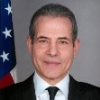
President Barack Obama chose former Time managing editor and CNN executive Walter Isaacson to chair the Broadcasting Board of Governors, which runs Voice of America, Radio Free Europe, and other international broadcasts of the U.S. government. He was nominated on November 18, 2009, but not confirmed by the Senate until June 30, 2010.

 
Born May 20, 1952, in New Orleans, Louisiana, Isaacson graduated from the prep school Isidore Newman School and spent a summer at Deep Springs College as a participant in the Telluride Association Summer Program before attending Harvard. He received a bachelor’s degree in history and literature in 1974, and then attended Pembroke College at the University of Oxford as a Rhodes Scholar, earning a Master of Arts in philosophy, politics, and economics in 1976.
 
His journalism career began at The Sunday Times of London, before moving to the New Orleans Times-Picayune. In 1978 he joined Time and served the next 22 years at the national magazine as a political correspondent, national editor, and editor of new media before becoming managing editor in 1996. He became chairman and CEO of CNN in 2001, and two years later accepted the roles of president and CEO of The Aspen Institute, a nonpartisan educational and policy studies organization based in Washington, DC.
 
In October 2005, Democratic Governor Kathleen Blanco of Louisiana appointed Isaacson vice chairman of the Louisiana Recovery Authority, a 33-member policymaking board. In December 2007, he was appointed by President George W. Bush to chair the U.S.-Palestinian Partnership, which seeks to create economic and educational opportunities in the Palestinian territories.
 
In addition, Isaacson has served as chairman of the board of Teach for America, and as a member of the board of Tulane University, United Airlines, and the Bipartisan Policy Center. He also has served as the co-chair of the U.S.-Vietnam Dialogue Group on Agent Orange, a project of The Aspen Institute. He was also a member of the Advisory Council of Permella Weinberg Partners, a corporate advisory and investment firm.
 
 
Articles by Walter Isaacson (Aspen Institute)
 
Kaufman, Edward
Previous Senior Member

When the position of chairman of the Broadcasting Board of Governors was vacated in December 2007, Edward E. Kaufman was the senior member of the board, having been chosen as a charter member by President Clinton in 1995. Kaufman earned a BSME degree from Duke University and an MBA from the Wharton School. He spent seven years working for the DuPont Company and then 22 years as the chief of staff for Sen. Joe Biden (D-DE). Kaufman is also a Senior Lecturing Fellow at Duke.


ftzcas3h0twf4o45yxxour55