The Corporation for Public Broadcasting (CPB) was created to foster non-commercial public radio and television programming, including educational, cultural and civic programs. Supported through a combination of government funding, state funding and private donations, the CPB was designed to operate as independently as possible from political influence. The CPB does not actually own or operate any television or radio broadcast stations, nor does it produce any public programming. Rather, the CPB provides approximately 89% of its $415 million annual budget in the form of grants to support independent stations, directors and producers. The CPB currently supports nearly 1,300 local public television and radio stations.
The Corporation for Public Broadcasting (CPB) was created by President Lyndon B. Johnson through the Public Broadcasting Act of 1967. The Public Broadcasting Act was created to foster and promote non-commercial public radio and television, including educational, cultural and civic programming. In the words of President Johnson, “It will give a wider and, I think, stronger voice to educational radio and television by providing new funds for broadcast facilities. It will launch a major study of television's use in the nation's classrooms and their potential use throughout the world. Finally—and most important—it builds a new institution: the Corporation for Public Broadcasting.”
The CPB was inaugurated during a time of intense interest in national television and radio broadcasting. At the time, three commercial networks dominated the American television market, and nearly all educational programming was broadcast by independent television stations scattered across the country. Of the 326 noncommercial radio stations, most were funded by a mix of university, state and private funding, with little communication or organization among them.
In 1962, the Education Television Facilities Act was passed by Congress, designed to encourage the use of television facilities in schools and colleges around the country. Three years later, the Carnegie Commission on Educational Television called for the creation of a national broadcasting service, a recommendation that served as the impetus for the creation of the Corporation for Public Broadcasting two years later.
The CPB initially provided funding and programming through the National Educational Television network (NET), the first network of educational television programming in the United States, which was created in 1952 through a grant by the Ford Foundation. In 1969, the CPB created its own television network, the Public Broadcasting Service (PBS), after NET came under fire for broadcasting controversial programs about race relations and the Vietnam War. The following year, the National Public Radio (NPR) network was established to distribute and produce noncommercial radio content on a national scale.
In 1983, the American Public Radio Network was formed as an alternative to NPR. It was renamed Public Radio International in 1994, and remains another important affiliate of the CPB and NPR. PRI currently produces more than 400 hours of news and cultural programming per week.
The CPB is headed by a nine-member Board of Directors, each appointed by the President and confirmed by the U.S. Senate for a six-year term. Of the nine members, no more than five can be members of the same political party. Each year, the Board selects one of its members to be Chairman.
Nearly all of the Corporation’s direct grants fall into four categories: grants to public television stations, grants to public radio stations, grants for public television programming and grants for public radio programming.
Local Public Television Stations ($210.2 million)
Support for the operation and staffing of approximately 350 independent local television stations. Known as Community Service Grants (CSG), these unrestricted funds are given to qualified public TV stations and give stations the flexibility to provide programming, outreach initiatives and other services. Projecting CSG funding is $247.8 million for FY 2014.
Local Public Radio Stations ($62.3 million)
This total funding for 900 local public radio station and their programming includes $65.4 million in grants to public radio stations across the country, $21.7 million for programming acquisitions, and $6.79 for public radio programming. Previous grants have included $4 million for the Rural Listener Access Incentive Fund (RLAIF), which is focused on improving access to radio programming for rural Americans.
TV Programming Grants ($361.7 million)
The CPB provides a wide variety of grants and support to independent television programming. The largest program is the Direct Station, or Community Service, Grants. Stations use these funds for production or acquisition of programming. Projected funding for FY 2014 is $247.8 million.
The Opportunity Fund has $27 million in funding to invest in key PBS primetime series, which has included Masterpiece Theater and Nova. National Program Service provides $26 million in grants through the Public Broadcasting Service (PBS) to fund such programs as the PBS NewsHour and Frontline, as well as children’s programming such as Sesame Street.
The Independent Television Service (ITVS) program provides $14.2 million to support diversity and innovation through funding of independent television producers
Finally there is the General Program Funds, $14 million in grants set aside for other educational, cultural and instructional public television programming that falls outside of the scope of the other grants, including projects with time-sensitive or urgent content. One of the programs, which was first funded in 2008 and is scheduled to continue through 2017 on a $2-million annual grant, is Telling America’s Stories.
Radio Programming Grants ($28.2 million)
The majority of CPB funding for radio programming falls under the Radio National Program Production and Acquisition Grants (NPPAG) program, which provides $28.2 million per year to support the production, promotion and distribution of national radio programs. Programming includes the StoryCorps project, which uses permanent and mobile recording booths in public spaces to collect personal stories from the public. An additional $8.4 million is provided through the Radio Program Fund, which supports the creation of new radio programming, especially news, music and diverse programming.
System Support ($32.5 million)
The System Support category includes approximately $3 million in administrative support for the Minority Consortia and ITVS programs, as well as nearly $10 million in research and development to support long-term planning and decision-making for public programming. This category also includes $4 million in support for the PBS TV Interconnection program, which funds half the cost of the technology for broadcasting and distributing television programming, including satellite, wireless and wired infrastructure. This category also includes more than $7 million in music copyright fees per year.
CPB Operations ($27 million)
Funding for CPB operations is federally limited to 5% of the total CPB allocated budget. These funds go entirely towards CPB staffing and operating costs.
Additional Expenses ($307 million)
In addition to the general grants provided by federal funding, the CPB has requested $307 million in special emergency appropriations, including $40 million to support the transition from analog to digital transmission for public television stations, $27 million for public radio interconnection, $26 million to develop an interconnected multi-channel public television system, and $27.2 million (FY 2013 request) to support the Ready to Learn Program (pdf) devoted to improved reading and educational programming for high-poverty children ages two to eight.
From the Web Site of the Corporation for Public Broadcasting
The largest stakeholders of the Corporation for Public Broadcasting include the 1,250 television and radio stations that received CPB funding, as well as the Public Broadcasting Service (PBS), which has traditionally received between 25-35% of its funding through the CPB. The CPB also supports thousands of independent media producers and programmers.
Although supported entirely through federal funding, the CPB has a legal mandate to ensure objectivity and balance in all programming. Toward this end, the CPB was organized under a nine-member board of directors, of which only five could be from the same party. Nonetheless, the CPB has been criticized for succumbing to political pressure.
A controversy arose in 2003, involving Chairman Kenneth Y. Tomlinson, who had been appointed by President George W. Bush. Known for his aggressively conservative position, Tomlinson commissioned a study of the TV program Now with Bill Moyers shortly after being appointed, without informing the rest of the CPB board of directors. Tomlinson saw the investigation as an attempt to rid the CPB of what he saw as a liberal bias. Moyers eventually resigned, saying "I'm going out telling the story that I think is the biggest story of our time: how the right-wing media has become a partisan propaganda arm of the Republican National Committee.”
In 2005, the Office of the Inspector General of the CPB produced a report on the tenure of Tomlinson. The report (pdf) found that Tomlinson “violated statutory provisions and the Director’s Code of Ethics by dealing directly with one of the creators of a new public affairs program during negotiations with the Public Broadcasting Service (PBS),” and also concluded that Tomlinson had been “strongly motivated by political considerations in filling the president/CEO position." Under pressure from the rest of the Board, Tomlinson resigned in 2005 and was replaced by Cheryl Halpern, an active Republican and board member of the International Republican Institute.
As of early 2012, the chairman and the president of the CPB were Republicans. The Board of Directors, including the chairman, was comprised of three Republicans and three Democrats, filling six of its nine seats. In order to respond to concerns of bias, the CPB Ombudsman releases an annual “Open to the Public” Objectivity report, detailing CPB’s efforts to remain objective and balanced in its support of public programming.
Firings, Resignations at National Public Radio
Within a period of less than six months, National Public Radio (NPR), financed by the CPB (until or unless it is “weaned” off federal funding), was rocked by two public controversies that wound up costing four people their jobs.
In October 2010, NPR fired analyst Juan Williams after he appeared on Fox News, where he also worked as an analyst, saying he sometimes became nervous at the sight of Muslims on airplanes. Williams’ termination produced outcry by conservatives and others who accused NPR of political correctness and censorship. An internal review of the decision resulted in Ellen Weiss, the radio network’s senior vice president for news, resigning from her post.
Then, in March 2011, executive Ronald Schiller was recorded secretly by a Republican operative who caught him saying that the Republican Party had been “hijacked” by the Tea Party and that Tea Party supporters were “seriously racist, racist people.” The next day NPR’s CEO, Vivian Schiller (no relation), was forced out of her job by the network’s board. Ronald Schiller subsequently left the network for a job with the international nonprofit Aspen Institute. NPR claimed the departure had nothing to do with his remarks.
In an article in Extra!, Steve Rendall and Peter Hart argue that the CPB has become distinctly pro-establishment and pro-corporate. They suggest that the only way to regain the independence and objectivity of the CPB is to replace the politically appointed Board of Directors with an independent trust. This move, they argue, could be funded through a tax on advertising or commercial broadcast license sales, potentially generating $1 billion in annual funding and thereby eliminating the CPB’s dependence on federal funding.
Adam Thierer of The Heritage Foundation argues that the CPB should be privatized. Thierer notes that when the CPB was created, to foster public educational television and radio programming, such programming was rare. Now, with a wide variety of commercial and non-commercial educational and informational programming available, the original mission of the CPB is obsolete. Thierer also argues that the CPB should be successful enough to stand on its own, and that privatization would finally end the controversy over the political bias of the Corporation.
A graduate of U.C. Berkeley, Chris Boskin holds a BA in Art History and English. She studied at the Academia in Florence, Italy, and joined the Architectural Digest in 1972. From 1977 to 1987 Boskin was the Pacific and Asia Manager for the New Yorker magazine, after which she moved to Hearst Magazines, which publishes Harper’s Bazaar, House Beautiful, and Esquire. In 1991, Boskin joined Town and Country. Married to Michael Boskin, Professor of Economics at Stanford University and former Chairman of the President’s Council of Economic Advisors under President George H.W. Bush, Boskin has served on the Boards of Directors for Yoga Journal and College Track magazines and on the Advisory Board for the School of Journalism at U.C. Berkeley. She was nominated to the CPB Board in 2006.
Is it possible for a public school in an area that has no local radio or TV station to apply for a grant to start a school run station?
The only local station went out of business about 6 months ago.
Thank you,
Craig Addis
Technology Teacher
Socorro High School
Lori Gilbert—whose real name is Loretta Sutliff—was chosen to be chair of the Corporation for Public Broadcasting (CPB) for one year beginning in September 2016. She has been a member of the CPB board of directors since 2008. Designed to operate independently from politics, CPB does not own or operate any television or radio stations, nor does it produce any programming. Rather, about 89% of CPB’s $415 million annual budget is in the form of grants that support nearly 1,300 local public television and radio stations. President Donald Trump’s draft budget proposal would completely defund CPB.
Born Loretta Cheryl Sutliff on August 1, 1963, at Hill Air Force Base in Ogden, Utah, she took the name Lori Gilbert in 1983 when she became a radio broadcaster in Elko, Nevada. Gilbert studied communications at Weber State University in Ogden, Utah, and has taken continuing education courses at Great Basin College in Elko, Nevada.
Gilbert began her broadcasting career in 1983, focusing on news. Since October 1986, she has been news director at KELK/KLKO Radio in Elko, Nevada, where for about 18 years she has hosted a daily half-hour community news program, “Elko Live.” In June 1997, Gilbert became the founding news director and first anchor of KENV TV News 10 in Elko.
Gilbert was appointed to the CPB board by President George W. Bush in 2008, and reappointed to a second term by President Barack Obama in 2013. Elected chair in September 2016, she also chairs the Education Committee and served as board vice-chair from 2014 to 2016.
She has been a member of the board of directors of the Associated Press Television and Radio Association of California. She has served on the boards of the Elko County Family Resource Center, the Boys and Girls Club of Elko, and on the Elko County Juvenile Advisory Board.
In 2003, Gilbert had a voice role in the movie Identity, starring John Cusack. From 1998 to 2010, Gilbert was an adjunct instructor of Journalism at Great Basin College in Elko, Nevada.
She is married to Dr. John Patrick Rice, formerly a professor at Great Basin College and now a member of the Elko City Council. They have a daughter, Olivia, born circa 2000. In 2010, Gilbert was diagnosed with breast cancer and underwent a double mastectomy; she later gave an interview about her experience and has been active in the Elko Cancer Network.
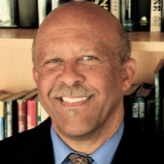
A college professor with extensive experience in communications and communications policy, Ernest J. Wilson III is the longest serving member of the Corporation for Public Broadcasting’s board. He has held the position of chair since September 2009.
Originally from Washington, DC, Wilson received his Bachelor of Arts degree from Harvard College (1970) and both his Master of Arts (1973) and PhD (1978) in political science from the University of California, Berkeley.
While pursuing his graduate studies, Wilson worked a variety of jobs, including teaching social studies in Zaire (Congo) (1970-1971); on the national news desk of the Washington bureau of The New York Times (1971-1972); legislative assistant to Rep. Charles Diggs (D-Michigan) (1972); teaching assistant in the Department of Political Science at the University of California, Berkeley (1974-1975); editorial director of The Black Scholar magazine (1976-1977); and acting assistant professor of Afro-American Studies at the University of California, Berkeley (1977).
From 1977-1980, he was a member of the University of Pennsylvania faculty in the Department of Political Science. In 1986 he joined the faculty of the University of Michigan, also in the Department of Political Science, remaining there until 1992. At the same time, he served as the director of the Center for Research on Economic Development and as an associate research scientist at the Institute for Public Policy Studies.
In 1992-1993, was an associate professor in the Department of Government and Politics at the University of Maryland..During this time, he also was a visiting senior fellow for Africa at the Council on Foreign Relations in New York.
From 1993-1995, he served in several senior policy positions in the public and private sector as director of international programs and resources for the National Security Council (1993-1994); director of the Policy and Planning Unit, Office of the Director, U.S. Information Agency (1994); and as deputy director of the Global Information Infrastructure Commission (1994-1995).
In 2006, Wilson joined the University of Southern California, becoming the Walter H. Annenberg Chair in Communication and, in July 2007, dean of the Annenberg School for Communication.
He was first appointed to the board of the Corporation for Public Broadcasting by President Bill Clinton in September 2000. Four years later he was re-appointed by President George W. Bush. While serving on the board, he has chaired the New Media Committee and helped launch and chair the Public Awareness Committee.
Following the 2008 presidential election, he advised President Obama’s transition team on matters of communication technology and public diplomacy.
The Corporation for Public Broadcasting (CPB) was created to foster non-commercial public radio and television programming, including educational, cultural and civic programs. Supported through a combination of government funding, state funding and private donations, the CPB was designed to operate as independently as possible from political influence. The CPB does not actually own or operate any television or radio broadcast stations, nor does it produce any public programming. Rather, the CPB provides approximately 89% of its $415 million annual budget in the form of grants to support independent stations, directors and producers. The CPB currently supports nearly 1,300 local public television and radio stations.
The Corporation for Public Broadcasting (CPB) was created by President Lyndon B. Johnson through the Public Broadcasting Act of 1967. The Public Broadcasting Act was created to foster and promote non-commercial public radio and television, including educational, cultural and civic programming. In the words of President Johnson, “It will give a wider and, I think, stronger voice to educational radio and television by providing new funds for broadcast facilities. It will launch a major study of television's use in the nation's classrooms and their potential use throughout the world. Finally—and most important—it builds a new institution: the Corporation for Public Broadcasting.”
The CPB was inaugurated during a time of intense interest in national television and radio broadcasting. At the time, three commercial networks dominated the American television market, and nearly all educational programming was broadcast by independent television stations scattered across the country. Of the 326 noncommercial radio stations, most were funded by a mix of university, state and private funding, with little communication or organization among them.
In 1962, the Education Television Facilities Act was passed by Congress, designed to encourage the use of television facilities in schools and colleges around the country. Three years later, the Carnegie Commission on Educational Television called for the creation of a national broadcasting service, a recommendation that served as the impetus for the creation of the Corporation for Public Broadcasting two years later.
The CPB initially provided funding and programming through the National Educational Television network (NET), the first network of educational television programming in the United States, which was created in 1952 through a grant by the Ford Foundation. In 1969, the CPB created its own television network, the Public Broadcasting Service (PBS), after NET came under fire for broadcasting controversial programs about race relations and the Vietnam War. The following year, the National Public Radio (NPR) network was established to distribute and produce noncommercial radio content on a national scale.
In 1983, the American Public Radio Network was formed as an alternative to NPR. It was renamed Public Radio International in 1994, and remains another important affiliate of the CPB and NPR. PRI currently produces more than 400 hours of news and cultural programming per week.
The CPB is headed by a nine-member Board of Directors, each appointed by the President and confirmed by the U.S. Senate for a six-year term. Of the nine members, no more than five can be members of the same political party. Each year, the Board selects one of its members to be Chairman.
Nearly all of the Corporation’s direct grants fall into four categories: grants to public television stations, grants to public radio stations, grants for public television programming and grants for public radio programming.
Local Public Television Stations ($210.2 million)
Support for the operation and staffing of approximately 350 independent local television stations. Known as Community Service Grants (CSG), these unrestricted funds are given to qualified public TV stations and give stations the flexibility to provide programming, outreach initiatives and other services. Projecting CSG funding is $247.8 million for FY 2014.
Local Public Radio Stations ($62.3 million)
This total funding for 900 local public radio station and their programming includes $65.4 million in grants to public radio stations across the country, $21.7 million for programming acquisitions, and $6.79 for public radio programming. Previous grants have included $4 million for the Rural Listener Access Incentive Fund (RLAIF), which is focused on improving access to radio programming for rural Americans.
TV Programming Grants ($361.7 million)
The CPB provides a wide variety of grants and support to independent television programming. The largest program is the Direct Station, or Community Service, Grants. Stations use these funds for production or acquisition of programming. Projected funding for FY 2014 is $247.8 million.
The Opportunity Fund has $27 million in funding to invest in key PBS primetime series, which has included Masterpiece Theater and Nova. National Program Service provides $26 million in grants through the Public Broadcasting Service (PBS) to fund such programs as the PBS NewsHour and Frontline, as well as children’s programming such as Sesame Street.
The Independent Television Service (ITVS) program provides $14.2 million to support diversity and innovation through funding of independent television producers
Finally there is the General Program Funds, $14 million in grants set aside for other educational, cultural and instructional public television programming that falls outside of the scope of the other grants, including projects with time-sensitive or urgent content. One of the programs, which was first funded in 2008 and is scheduled to continue through 2017 on a $2-million annual grant, is Telling America’s Stories.
Radio Programming Grants ($28.2 million)
The majority of CPB funding for radio programming falls under the Radio National Program Production and Acquisition Grants (NPPAG) program, which provides $28.2 million per year to support the production, promotion and distribution of national radio programs. Programming includes the StoryCorps project, which uses permanent and mobile recording booths in public spaces to collect personal stories from the public. An additional $8.4 million is provided through the Radio Program Fund, which supports the creation of new radio programming, especially news, music and diverse programming.
System Support ($32.5 million)
The System Support category includes approximately $3 million in administrative support for the Minority Consortia and ITVS programs, as well as nearly $10 million in research and development to support long-term planning and decision-making for public programming. This category also includes $4 million in support for the PBS TV Interconnection program, which funds half the cost of the technology for broadcasting and distributing television programming, including satellite, wireless and wired infrastructure. This category also includes more than $7 million in music copyright fees per year.
CPB Operations ($27 million)
Funding for CPB operations is federally limited to 5% of the total CPB allocated budget. These funds go entirely towards CPB staffing and operating costs.
Additional Expenses ($307 million)
In addition to the general grants provided by federal funding, the CPB has requested $307 million in special emergency appropriations, including $40 million to support the transition from analog to digital transmission for public television stations, $27 million for public radio interconnection, $26 million to develop an interconnected multi-channel public television system, and $27.2 million (FY 2013 request) to support the Ready to Learn Program (pdf) devoted to improved reading and educational programming for high-poverty children ages two to eight.
From the Web Site of the Corporation for Public Broadcasting
The largest stakeholders of the Corporation for Public Broadcasting include the 1,250 television and radio stations that received CPB funding, as well as the Public Broadcasting Service (PBS), which has traditionally received between 25-35% of its funding through the CPB. The CPB also supports thousands of independent media producers and programmers.
Although supported entirely through federal funding, the CPB has a legal mandate to ensure objectivity and balance in all programming. Toward this end, the CPB was organized under a nine-member board of directors, of which only five could be from the same party. Nonetheless, the CPB has been criticized for succumbing to political pressure.
A controversy arose in 2003, involving Chairman Kenneth Y. Tomlinson, who had been appointed by President George W. Bush. Known for his aggressively conservative position, Tomlinson commissioned a study of the TV program Now with Bill Moyers shortly after being appointed, without informing the rest of the CPB board of directors. Tomlinson saw the investigation as an attempt to rid the CPB of what he saw as a liberal bias. Moyers eventually resigned, saying "I'm going out telling the story that I think is the biggest story of our time: how the right-wing media has become a partisan propaganda arm of the Republican National Committee.”
In 2005, the Office of the Inspector General of the CPB produced a report on the tenure of Tomlinson. The report (pdf) found that Tomlinson “violated statutory provisions and the Director’s Code of Ethics by dealing directly with one of the creators of a new public affairs program during negotiations with the Public Broadcasting Service (PBS),” and also concluded that Tomlinson had been “strongly motivated by political considerations in filling the president/CEO position." Under pressure from the rest of the Board, Tomlinson resigned in 2005 and was replaced by Cheryl Halpern, an active Republican and board member of the International Republican Institute.
As of early 2012, the chairman and the president of the CPB were Republicans. The Board of Directors, including the chairman, was comprised of three Republicans and three Democrats, filling six of its nine seats. In order to respond to concerns of bias, the CPB Ombudsman releases an annual “Open to the Public” Objectivity report, detailing CPB’s efforts to remain objective and balanced in its support of public programming.
Firings, Resignations at National Public Radio
Within a period of less than six months, National Public Radio (NPR), financed by the CPB (until or unless it is “weaned” off federal funding), was rocked by two public controversies that wound up costing four people their jobs.
In October 2010, NPR fired analyst Juan Williams after he appeared on Fox News, where he also worked as an analyst, saying he sometimes became nervous at the sight of Muslims on airplanes. Williams’ termination produced outcry by conservatives and others who accused NPR of political correctness and censorship. An internal review of the decision resulted in Ellen Weiss, the radio network’s senior vice president for news, resigning from her post.
Then, in March 2011, executive Ronald Schiller was recorded secretly by a Republican operative who caught him saying that the Republican Party had been “hijacked” by the Tea Party and that Tea Party supporters were “seriously racist, racist people.” The next day NPR’s CEO, Vivian Schiller (no relation), was forced out of her job by the network’s board. Ronald Schiller subsequently left the network for a job with the international nonprofit Aspen Institute. NPR claimed the departure had nothing to do with his remarks.
In an article in Extra!, Steve Rendall and Peter Hart argue that the CPB has become distinctly pro-establishment and pro-corporate. They suggest that the only way to regain the independence and objectivity of the CPB is to replace the politically appointed Board of Directors with an independent trust. This move, they argue, could be funded through a tax on advertising or commercial broadcast license sales, potentially generating $1 billion in annual funding and thereby eliminating the CPB’s dependence on federal funding.
Adam Thierer of The Heritage Foundation argues that the CPB should be privatized. Thierer notes that when the CPB was created, to foster public educational television and radio programming, such programming was rare. Now, with a wide variety of commercial and non-commercial educational and informational programming available, the original mission of the CPB is obsolete. Thierer also argues that the CPB should be successful enough to stand on its own, and that privatization would finally end the controversy over the political bias of the Corporation.
A graduate of U.C. Berkeley, Chris Boskin holds a BA in Art History and English. She studied at the Academia in Florence, Italy, and joined the Architectural Digest in 1972. From 1977 to 1987 Boskin was the Pacific and Asia Manager for the New Yorker magazine, after which she moved to Hearst Magazines, which publishes Harper’s Bazaar, House Beautiful, and Esquire. In 1991, Boskin joined Town and Country. Married to Michael Boskin, Professor of Economics at Stanford University and former Chairman of the President’s Council of Economic Advisors under President George H.W. Bush, Boskin has served on the Boards of Directors for Yoga Journal and College Track magazines and on the Advisory Board for the School of Journalism at U.C. Berkeley. She was nominated to the CPB Board in 2006.
Is it possible for a public school in an area that has no local radio or TV station to apply for a grant to start a school run station?
The only local station went out of business about 6 months ago.
Thank you,
Craig Addis
Technology Teacher
Socorro High School
Founded: November 7, 1967
Annual Budget: $445 million (FY 2013, FY 2014, and FY 2015 Per Annum Request)
Lori Gilbert—whose real name is Loretta Sutliff—was chosen to be chair of the Corporation for Public Broadcasting (CPB) for one year beginning in September 2016. She has been a member of the CPB board of directors since 2008. Designed to operate independently from politics, CPB does not own or operate any television or radio stations, nor does it produce any programming. Rather, about 89% of CPB’s $415 million annual budget is in the form of grants that support nearly 1,300 local public television and radio stations. President Donald Trump’s draft budget proposal would completely defund CPB.
Born Loretta Cheryl Sutliff on August 1, 1963, at Hill Air Force Base in Ogden, Utah, she took the name Lori Gilbert in 1983 when she became a radio broadcaster in Elko, Nevada. Gilbert studied communications at Weber State University in Ogden, Utah, and has taken continuing education courses at Great Basin College in Elko, Nevada.
Gilbert began her broadcasting career in 1983, focusing on news. Since October 1986, she has been news director at KELK/KLKO Radio in Elko, Nevada, where for about 18 years she has hosted a daily half-hour community news program, “Elko Live.” In June 1997, Gilbert became the founding news director and first anchor of KENV TV News 10 in Elko.
Gilbert was appointed to the CPB board by President George W. Bush in 2008, and reappointed to a second term by President Barack Obama in 2013. Elected chair in September 2016, she also chairs the Education Committee and served as board vice-chair from 2014 to 2016.
She has been a member of the board of directors of the Associated Press Television and Radio Association of California. She has served on the boards of the Elko County Family Resource Center, the Boys and Girls Club of Elko, and on the Elko County Juvenile Advisory Board.
In 2003, Gilbert had a voice role in the movie Identity, starring John Cusack. From 1998 to 2010, Gilbert was an adjunct instructor of Journalism at Great Basin College in Elko, Nevada.
She is married to Dr. John Patrick Rice, formerly a professor at Great Basin College and now a member of the Elko City Council. They have a daughter, Olivia, born circa 2000. In 2010, Gilbert was diagnosed with breast cancer and underwent a double mastectomy; she later gave an interview about her experience and has been active in the Elko Cancer Network.
A college professor with extensive experience in communications and communications policy, Ernest J. Wilson III is the longest serving member of the Corporation for Public Broadcasting’s board. He has held the position of chair since September 2009.
Originally from Washington, DC, Wilson received his Bachelor of Arts degree from Harvard College (1970) and both his Master of Arts (1973) and PhD (1978) in political science from the University of California, Berkeley.
While pursuing his graduate studies, Wilson worked a variety of jobs, including teaching social studies in Zaire (Congo) (1970-1971); on the national news desk of the Washington bureau of The New York Times (1971-1972); legislative assistant to Rep. Charles Diggs (D-Michigan) (1972); teaching assistant in the Department of Political Science at the University of California, Berkeley (1974-1975); editorial director of The Black Scholar magazine (1976-1977); and acting assistant professor of Afro-American Studies at the University of California, Berkeley (1977).
From 1977-1980, he was a member of the University of Pennsylvania faculty in the Department of Political Science. In 1986 he joined the faculty of the University of Michigan, also in the Department of Political Science, remaining there until 1992. At the same time, he served as the director of the Center for Research on Economic Development and as an associate research scientist at the Institute for Public Policy Studies.
In 1992-1993, was an associate professor in the Department of Government and Politics at the University of Maryland..During this time, he also was a visiting senior fellow for Africa at the Council on Foreign Relations in New York.
From 1993-1995, he served in several senior policy positions in the public and private sector as director of international programs and resources for the National Security Council (1993-1994); director of the Policy and Planning Unit, Office of the Director, U.S. Information Agency (1994); and as deputy director of the Global Information Infrastructure Commission (1994-1995).
In 2006, Wilson joined the University of Southern California, becoming the Walter H. Annenberg Chair in Communication and, in July 2007, dean of the Annenberg School for Communication.
He was first appointed to the board of the Corporation for Public Broadcasting by President Bill Clinton in September 2000. Four years later he was re-appointed by President George W. Bush. While serving on the board, he has chaired the New Media Committee and helped launch and chair the Public Awareness Committee.
Following the 2008 presidential election, he advised President Obama’s transition team on matters of communication technology and public diplomacy.






Comments