



Despite its small size, El Salvador has been a big target for American foreign policy over the past four decades. For much of its modern history, the country has had to endure the rein of military juntas and right-wing governments, most of whom have enjoyed strong support from Washington, DC. Beginning in the 1960s, US military advisers began schooling Salvadoran army officers in counterinsurgency tactics and sent many officers to the notorious School of the Americas at Fort Benning, Georgia. Human rights organizations and critics of US policy in Central America have pointed out that this military training helped infuse a brutal mentality within the Salvadoran military and those closely allied with it. From 1980 to 1992, El Salvador was ravaged by civil war between the US-backed conservative government and leftist guerillas. Since then, the country has enjoyed relative peace as the leftist rebels put down their weapons, joined in the electoral process and won seats in the national legislative body. However, the left wing has been unable to capture control of the presidency thanks to US efforts to prevent this from happening, according to organizations in Latin America. In March 2009, Salvadorans elected their first left-wing president, Mauricio Funes, who previously worked as a journalist and focused on revealing the corrupt habits of El Salvador’s previous presidents.
Lay of the Land: El Salvador, the smallest mainland nation in the Western Hemisphere, occupies a southwestern corner of Central America and is bordered by Honduras and Guatemala. The mountains and the Pacific Ocean form its natural boundaries. The majority of the country is a large inland plateau at an elevation of 2,000 feet. Active volcanoes and crater lakes dot the lush countryside.
El Salvador was originally inhabited by the Pipils, descendants of the Aztecs and the Toltecs of Mexico, who had arrived in the 12th Century. In 1524, Pedro de Alvarado landed and carried out a series of military campaigns that conquered El Salvador for Spain. It remained under Spanish control until 1821 when El Salvador gained its independence and became part of the Mexican Empire for two years. In 1823, El Salvador joined the Central American Federation, where it struggled with Guatemala for control of the federation. After the federation broke apart in 1839, El Salvador had to deal with dictators of neighboring countries, such as Rafael Carrera and Justo Rufino Barrios of Guatemala and José Santos Zelaya of Nicaragua. The following century, dictators became a common problem for El Salvadoran politics.
Contrapunto (Spanish)
In the 1960s, the United States helped the Salvadoran government organize a rural paramilitary force known as the Democratic Nationalist Organization (ORDEN) and the Salvadoran National Security Agency (ANSESAL). The Green Berets sent 10 counterinsurgency trainers to help instruct the Salvadoran military. Both ORDEN and ANSESAL were formed to combat communism. ORDEN not only indoctrinated peasants about the evils of the communist system, it also operated as an intelligence network. The paramilitary operation was also blamed for numerous human rights abuses. A spinoff of ORDEN, the White Hand (Mano Blanco), was later called “nothing less that the birth of the death squads” by a former US ambassador to El Salvador.
Notable Salvadoran-Americans
The US imported $1.8 billion worth of goods from El Salvador and exported $2.0 billion worth of goods in 2009.
The largest US import from El Salvador, by far and away, is apparel and household goods made of cotton. About $885 million of this good was imported in 2009 down from $1.08 billion from the previous year. This is followed by apparel and household goods made of “other textiles”, about $424 million in 2009, down from $471 million from 2008. Third, green coffee is imported at $83 million, a decline from the 2008 figure of $121 million.
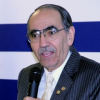 Zamora, Rubén
Rubén Zamora presented his credentials as El Salvador’s ambassador to the United States to President Barack Obama on April 15, 2013. For Zamora, the moment may have seemed ironic; 30 years earlier, he was prohibited from even entering the country.
Zamora was born November 9, 1942, in San Salvador, the capital of El Salvador. He was in seminary for a while, but studied law at the University of El Salvador and later received a Master’s degree in political science from the University of Essex in England.
In the early 1970s, he was a member of the San Salvador council, working the mayor’s office. In 1979, after a coup toppled a right-wing president, Zamora, as a member of a center-left group, was briefly part of the group that assumed power. However, right-wing factions took control of the government in early 1980, forcing out Zamora and assassinating his brother Mario, who was also in the government. Rubén Zamora then fled El Salvador, staying in exile for seven years.
During his time out of the country, spent in Nicaragua and Mexico, Zamora was often a spokesman for the rebels fighting for control of El Salvador, whose government was backed by U.S. President Ronald Reagan. Zamora was blocked by the Reagan State Department from entering the United States during this period.
When finally peace talks resulted in an amnesty in 1987, Zamora returned to El Salvador, wearing a bulletproof vest. In 1989, his house was bombed, but no one was hurt.
In 1991, peace talks resumed and a truce was declared. Zamora won a seat in the national assembly and was named one of its vice presidents, posts he held until 1994. He was also a member of the Salvadoran peace commission. Zamora ran for president in 1994, the first election since the peace accords were signed. He was backed by the center-left CD-FMLN coalition. He lost to Armando Calderon Sol of the right-leaning ARENA party. Zamora ran unsuccessfully for president again in 1999.
For the next 10 years, Zamora worked in the opposition to the government, getting local candidates elected and taking his case to lecture audiences abroad. In 2009, FMLN candidate Mauricio Funes was elected president. Zamora was named ambassador to India, where he remained until being named to the Washington post in 2013.
Zamora and his wife Ester have five children.
-Steve Straehley
To Learn More:
Interview: El Salvador's Ambassador to the U.S. Rubén Zamora (by Carin Zissis, AS/COA Online)
- Table of Contents
- News
- Overview
- Basic Information
- History
- Newspapers
- History of U.S. Relations with El Salvador
- Current U.S. Relations with El Salvador
- Where Does the Money Flow
- Controversies
- Human Rights
- Debate
- Past Ambassadors
- Ambassador to the U.S.
- Embassy Web Site in the U.S.
- Comments
- Leave a comment

U.S. Ambassador to El Salvador
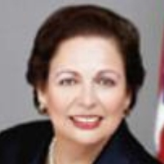
The choice of Mari Del Carmen Aponte as ambassador to El Salvador got the conservative blogosphere all riled up, after word got out about Aponte’s failed nomination during the Clinton administration. Back then, President Bill Clinton put forth her name as ambassador to the Dominican Republic—but had to withdraw it once rumors began to spread about Cuban spies having tried to recruit Aponte. The FBI’s interest in Aponte was dropped, but that didn’t stop conservatives from rehashing the story shortly after her latest ambassadorial appointment. Obama nominated Aponte on December 9, 2009, and she was approved by the Senate Foreign Relations Committee April 27, 2010. However, Senate Republicans put a hold on her nomination.
Comments