The State Department’s Bureau of Economic, Energy and Business Affairs (EEB) is one of the federal government’s leading voices for promoting US economic interests across the globe. EEB implements policies involving international trade, investment and finance, economic development and sanctions, debt policy, terrorist financing, energy security, telecommunications and transportation. It also actively promotes opportunities for American businesses. Since 9/11 the bureau has increasingly supported the government’s Global War on Terrorism (GWOT) while carrying out its economic mission. This includes promoting US sanctions against Iran, which has continued to do business with numerous American corporations - including those with close ties to the Bush administration - through a loophole in federal law.
The economic principle of free trade gained importance after the end of World War II when Western world leaders set out to create a more stable, productive and harmonious economic and political international environment. Along with the establishment of the United Nations, International Monetary Fund and World Bank, the US and European leaders led the way in creating the General Agreement on Trade and Tariff (GATT). Created at the first session of the Preparatory Committee of UN Conference on Trade and Employment in 1946, GATT's initial purpose was to negotiate tariff concessions among members and establish a code of conduct and procedures for the resolution of trade disputes. Successive negotiations (called rounds) also focused on the code of conduct for nontariff barriers.
For the next 30 years GATT served as the leading body for implementing changes that encouraged free trade and was lauded for helping to expand world trade during this period. By the 1970s the United States economic dominance on the world stage had begun to decline, thanks to changes in both domestic and global markets. The rebirth of the Japanese and German economies, and later the growth of other Asian economies, left America with ever-increasing trade deficits as demand for US exports leveled off. American diplomats pressed for changes in GATT to eliminate subsidies in certain foreign markets, claiming they created uneven playing fields for US corporations. When other GATT members refused to agree to American demands, the US government began considering other ways to improve its international economic standing.
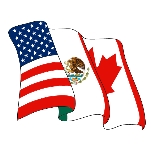
During the administration of President George H. W. Bush, American negotiators engaged in talks with counterparts in Canada and Mexico about creating a free trade zone in North America. The talks eventually led to the creation of NAFTA, the North American Free Trade Agreement, in 1994 despite protests in the US from labor unions and environmentalists who argued the agreement would result in the loss of middle-class jobs overseas and increases in pollution and habitant degradation. These concerns ultimately led to side agreements to NAFTA designed to address labor and environmental issues.
The 1990s also witnessed the birth of the World Trade Organization (WTO), which replaced GATT as the leading international body for promoting free trade. The establishment of the WTO led to even larger and more heated protests than the birth of NAFTA. A wide range of opponents have expressed concerns about the WTO’s ability to challenge environmental, health and other regulations that may serve legitimate social goals but may be regarded as impediments to international trade. Concerns also have been raised about the organization’s enforcement powers that represented a further shift in power from citizens and national governments to a global authority run by unelected bureaucrats.
Since the adoption of NAFTA, the US has signed free trade agreements with 18 countries: Australia; Bahrain; CAFTA-DR (Central America-Dominican Republic-United States Free Trade Agreement includes Costa Rica, Dominican Republic, El Salvador, Guatemala, Honduras and Nicaragua); Chile; Colombia; Israel; Jordan; South Korea; Morocco; Oman; Panama; Peru; and Singapore.
The United States’ promotion of eliminating trade barriers has not precluded it from implementing economic sanctions on nations for political reasons. Since 1987 American trade sanctions have been in place against Iran, whose relations with the US have been strained since the 1979 Islamic Revolution overthrew the US-backed Shah Mohammad Reza Pahlavi and seized the US embassy in Tehran and held 52 hostages for 444 days. Sanctions were imposed because of Iran’s support for terrorist organizations and later its efforts to develop nuclear weapons. These sanctions have not been effective due to loopholes in US laws that allow goods and services to be sold through foreign-based American subsidiaries.
The State Department’s Bureau of Economic, Energy and Business Affairs (EEB) is one of the federal government’s leading voices for promoting US economic interests across the globe. EEB implements policies involving international trade, investment and finance, economic development and sanctions, debt policy, terrorist financing, energy security, telecommunications and transportation. It also actively promotes opportunities for American businesses.
Since 9/11 the bureau has increasingly supported the government’s Global War on Terrorism (GWOT) while carrying out its economic mission. This becomes apparent when reviewing the bureau’s pre-Bush administration web site, when it functioned purely in terms of economic diplomacy. In his opening remarks on the current EEB web site, Assistant Secretary Daniel Sullivan emphasizes the role that economic development plays in America’s campaign to combat terrorism. “America’s security threats emanate from countries that are disconnected from the global system…. For a long time, we did not see in this tragic situation an urgent national security challenge but we do now.”
Unfortunately, Sullivan’s analysis is wrong, considering that fifteen of the nineteen 9/11 terrorists were from Saudi Arabia, a nation that is very much connected with the global system.
The bureau has been involved in economic efforts to bolster the administration’s top two country projects with regards to fighting terrorism: Afghanistan and Iraq. EEB served as the lead US negotiator for the Paris Club in securing more than $10 billion in debt relief for Afghanistan. The bureau played a central role in developing and launching the International Compact with Iraq on May 3, 2007, and it is working with the Office of the US Trade Representative (USTR) to facilitate Iraq’s accession to the WTO. EEB also continues to lobby creditors to obtain more debt relief for Iraq in addition to the $32 billion debt-relief package secured from Paris Club creditors.
Another component of EEB that addresses the GWOT policy is its Office of Terrorism Finance and Economic Sanctions Policy. Through this office the bureau has taken a leadership position in building strategic bilateral and regional coalitions with Saudi Arabia, the European Union, Persian Gulf countries and the UK against terrorist financing networks. It has worked with the Department of Treasury and other US agencies to address informal finance mechanisms such as cash couriers, abuses of charities, and alternative remittance systems such as hawalas. EEB also plays a key role in implementing sanctions against Iran by discouraging Western companies from investing in Iran’s energy sector and working with Treasury to prevent Iranian use of the international financial system.
Whether it is addressing the problem of terrorism or economic trade, EEB carries out its missions through a process it calls “Total Economic Engagement” (TEE). Through the TEE the bureau:
Promotes prosperity and competitiveness through market-expanding trade, aviation, telecommunication and investment agreements;
Advances US and international economic programs and ensures sound, stable financial systems to reduce debt and encourage pro-growth economic policies;
Promotes American and global energy security by working with partner countries to diversify sources of energy and the regions from which they come;
Denies terrorists the financial support they need to thrive, survive, and operate;
Fights corruption and strengthen compliance with global economic rules and norms that promote American interests;
Promotes transportation and telecommunications infrastructure safety and security; and
Examples of EEB’s non-terrorist related activities include working with the USTR to secure preferential trade programs for other developing countries, such as the African Growth and Opportunity Act, the Andean Trade Preferences and Drug Eradication Act, the Generalized System of Preferences and Qualified Industrial Zones in Jordan and Egypt. It is also developing new initiatives, including a Reconstruction Opportunity Zone in Pakistan and its Economic Empowerment in Strategic Regions initiative.
Among the many US economic issues the bureau works on are expansion of biotechnology markets, piracy of American film and television through intellectual property (IP) rights discussions and advancing opportunities for US airlines through “Open Skies” agreements. Because countries in Europe and Asia have resisted importation of American genetically-modified goods, EEB has spearheaded efforts to encourage acceptance of agricultural biotechnology among poor growers in developing countries. In 2006 more than 10 million farmers grew biotech crops on 252 million acres in 22 countries, according to the bureau. EEB also is trying to restore overseas beef markets restricted or closed to US beef due to concerns related to mad cow disease.
EEB has taken a leading role to combat global piracy and counterfeiting, a major concern for several US industries including Hollywood. But even here the administration sees the issue through the prism of terrorism. “Our work helps fight growing terrorist and organized crime networks that use counterfeiting and piracy to finance their operations,” said Sullivan.
The latest country to reach an “Open Skies” agreement with the US is
In 2005, at the request of Congress, the State Department established its first ever Office of International Intellectual Property Enforcement within EEB. In addressing the issue of intellectual property rights, piracy and counterfeiting, EEB has made the point that unless something is done to halt this problem, all stakeholders will suffer financially. Some of the most important stakeholders in this issue are Hollywood studios and TV networks which have complained loudly about the pirating of movies and shows overseas. The largest players include: Sony Pictures Studios, Disney, Paramount Pictures, Universal Studios, Fox,NBC, ABC, CBS and Time Warner.
The IP issue also spills over to large pharmaceutical companies which closely guard the patents for their drugs. Between IP and the bureau’s efforts to help promote biotech crops, another significant group of stakeholders includes the likes of Amgen, Genentech, Merck, Novartis, Pioneer Hi-Bred, Wyeth, Pfizer, Eli Lilly and Johnson & Johnson. An extensive list of agricultural technology companies can be found here. An even more complete listing of biotech companies is located with BIO, the Biotechnology Industry Organization, which represents more than 1,150 biotechnology companies, academic institutions, state biotechnology centers and related organizations across the United States and in more than 30 other nations.
One of EEB’s priorities is keeping pressure on foreign governments and companies to comply with US efforts to isolate Iran because of its nuclear program. This policy has left untouched the business dealings by American foreign subsidiaries that have provided goods and services to Iran through a loophole in US law (see Controversies). These companies include
The United States’ policy of maintaining trade sanctions against Iran has come under question for both its effectiveness and duplicity. A December 2007 report (PDF) by the Government Accountability Office recommended the administration review its sanctions in light of the failure to achieve policy goals. The report stated:
“U.S. officials report that U.S. sanctions have slowed foreign investment in Iran’s petroleum sector, denied parties involved in Iran’s proliferation and terrorism activities access to the U.S. financial system, and provided a clear statement of U.S. concerns to the rest of the world. However, other evidence raises questions about the extent of reported impacts. Since 2003, the Iranian government has signed contracts reported at about $20 billion with foreign firms to develop its energy resources. Further, sanctioned Iranian banks may fund their activities in currencies other than the dollar. Moreover, while Iran halted its nuclear weapons program in 2003, according to the November 2007 National Intelligence Estimate, it continues to enrich uranium, acquire advanced weapons technology, and support terrorism. Finally, U.S. agencies do not systematically collect or analyze data demonstrating the overall impact and results of their sanctioning and enforcement actions.”
Further adding to the questions of the US policy was the revelation that American corporations have been doing business in Iran, including those with powerful connections. According to one analyst, there are more than 30 US corporations with deals through foreign subsidiaries or related companies. None of the companies were considered in violation of US law because the sanctions legislation did not preclude American off-shore subsidiaries. On the list was Vice President Cheney's old firm Halliburton which has a subsidiary, Halliburton Products and Services, that helps build drilling rigs in Iran's southern oil field.
Even worse for Cheney and Halliburton was a story reporting that the company was working with Cyrus Nasseri, the vice chairman of the board of directors of Oriental Oil Kish, one of Iran’s largest private oil companies, on oil development projects in Tehran. Nasseri is also a key member of Iran’s nuclear development team. “Nasseri, a senior Iranian diplomat negotiating with Europe over Iran's controversial nuclear program, is at the heart of deals with US energy companies to develop the country’s oil industry,” the Financial Times reported.
Nasseri was later interrogated by Iranian authorities for allegedly providing Halliburton with Iran’s nuclear secrets and accepting as much as $1 million in bribes from Halliburton, according to Iranian government officials. Halliburton later pulled out of its deal with Nasseri's company following pressure from Washington.
Halliburton first started doing business in Iran as early as 1995, while Vice President Cheney was chief executive of the company and in possible violation of US sanctions. According to a February 2001 report in the Wall Street Journal, “Halliburton Products & Services Ltd. works behind an unmarked door on the ninth floor of a new north Tehran tower block. A brochure declares that the company was registered in 1975 in the Cayman Islands, is based in the Persian Gulf sheikdom of Dubai and is ‘non-American.’ But, like the sign over the receptionist’s head, the brochure bears the company’s name and red emblem and offers services from Halliburton units around the world.” Moreover, mail sent to the company’s offices in Tehran and the Cayman Islands is forwarded to the company’s Dallas headquarters.”
Democrats on Capitol Hill have repeatedly criticized the efforts of Halliburton and other companies to skirt US law. This includes Congressman Brad Sherman (D-CA) who has been especially vocal about the US bowing down to Iran for the sake of corporate profits.
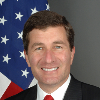
Charles Rivkin, whose previous jobs spanned from being the man in charge of the Muppets to Ambassador to France and Monaco, was confirmed February 11, 2014 as Assistant Secretary of State for Economic and Business Affairs. The Bureau of Economic and Business Affairs supports U.S. companies wishing to do business overseas, furthers U.S. trade policy objectives and promotes other U.S. economic interests abroad.
Rivkin, who will be 52 in April 2014, is the son of the late William R. Rivkin, a lawyer and Democratic insider who was appointed ambassador to Luxembourg by President John F. Kennedy and ambassador to Senegal and Gambia by President Lyndon Johnson. Rivkin was only a child when his father died in Dakar in 1967. His family established the William R. Rivkin Award in 1968, which is awarded each year by the American Foreign Service Association to a mid-career Foreign Service officer who best exemplifies “constructive dissent” in their duties.
After growing up with his mother and three siblings (Julia, Laura, and Robert), Rivkin went on to attend college at Yale, receiving a B.A. in political science and international relations in 1984. He later earned an MBA from Harvard University.
Rivkin worked as a corporate finance analyst at Salomon Brothers, before joining The Jim Henson Company in 1988 as director of strategic planning. Two years later, he was made vice president. In 1990, he married Susan Melissa Tolson, an analyst at Capital Research Company.
Rivkin continued to rise at the company famous for creating the Muppets, becoming senior vice president and chief operating officer in 1991, executive vice president and COO in 1994, and president and COO in 1995, making him the first chief executive who was not a member of the Henson family. In 2000, he was given the title of CEO, and engineered the sale of the company to the German-owned EM.TV for $1 billion.
By the following year, EM.TV’s legal and financial troubles led to rumors that The Henson Company might again be sold, but after two years of struggling to find a buyer, German executives agreed to sell the company back to the Henson family in 2003, which in turn sold the Muppets franchise to the Walt Disney Company. Rivkin then stepped aside to allow the family to once again run the company, while retaining a position on the board.
During the 2004 presidential campaign, Rivkin was an active supporter of Democratic nominee John Kerry, and served as an at-large California delegate to the Democratic National Convention.
In 2005, Rivkin became president and chief executive officer of Wild Brain, a San-Francisco-based entertainment and animation production company whose television series include Yo Gabba Gabba! and Higglytown Heroes. Rivkin was an executive producer of Yo Gabba Gabba!, which has aired on Nickelodeon and Noggin cable networks.
Outside of his business dealings, Rivkin is a member of the Homeland Security Advisory Council and the Pacific Council on International Policy.
When Obama shattered campaign fundraising records with a $150 million haul in September 2008, his bundlers in California played a key role in amassing so much cash. Rivkin was one of these major players, serving as Obama’s Southern California finance co-chair. According to OpenSecrets.org, he sent at least $500,000 toward Obama’s campaign committee as a bundler and another $300,000 toward his inaugural committee. Since the 1994 election cycle, Rivkin has personally contributed more than $97,500 to Democrats, including $6,600 to Obama.
Rivkin’s 2009 appointment as ambassador raised eyebrows, coming as it did in the wake of the large fundraising contribution he made to Team Obama. It showed that the newly inaugurated president was following in a long Washington tradition of rewarding donors with choice patronage jobs.
However, most observers agree that Rivkin worked out well as ambassador. He lived in France for a time as a student, giving him an excellent command of the language. One of his biggest challenges in Paris was to attempt to smooth over relations between the United States and France in the wake of reports released by Edward Snowden that the National Security Agency conducted surveillance of French citizens. On June 6, 2012, to commemorate the D-Day landings in Normandy, Rivkin parachuted into the town of Sainte-Mere-Eglise with the U.S. Army Golden Knights parachute team.
Rivkin is not the only member of his family to receive an appointment from Obama. His brother, Robert, was selected to be general counsel for the Department of Transportation, and Robert’s wife, Cindy S. Moelis, a close friend of Michelle Obama, was chosen to direct the Commission on White House Fellows. Rivkin’s mother, who died in 2002, and stepfather founded the American Refugee Committee, which helps relocate international refugees.
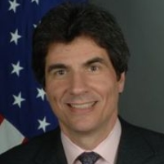
Jose W. Fernandez is in charge of the State Department’s Bureau of Economic, Energy and Business Affairs (EEB). EEB implements policies involving international trade, investment and finance, economic development and sanctions, debt policy, terrorist financing, energy security, telecommunications and transportation. It is primarily tasked with promoting opportunities for American businesses. Since the 9/11 terrorist attacks, the bureau has increasingly supported the government’s anti-terror efforts while carrying out its economic mission. This includes promoting US sanctions against Iran, which continued to do business with numerous American corporations through a loophole in federal law.
Nominated by President Obama on August 6, 2009, Fernandez was sworn in as Assistant Secretary on December 1, 2009.
Fernandez was born in 1955 in Cuba, where his father was a lawyer in a small town near the Bay of Pigs. Eight years after the 1959 Cuban Revolution, his family left Cuba for Hudson County, N.J., where his mother worked as a seamstress in a local factory. He earned a B.A. in history at Dartmouth College in 1977, and a J.D. at Columbia Law School in 1980.
After graduation, he moved to Spain, where he worked for a law firm and says that he tried to break into the Spanish professional basketball league.
Returning from Spain, Fernandez began his U.S. law career in 1985 in the New York office of Baker & McKenzie, where he gained expertise in privatizations, infrastructure projects, cross-border mergers and acquisitions, and capital markets transactions, particularly as they related to Latin America. After eleven years at Baker & McKenzie, he moved on to the New York office of O’Melveny & Myers. There, he headed the international practice group, working on Latin American issues, such as the privatization of the Ecuadorian telecommunications business.
In 2006, Fernandez joined the Latham & Watkins law firm as global co-chair of their Latin America practice.
A Democrat, in 2008 Fernandez donated $5,000 to Democratic candidates and causes, including $2,000 to Barack Obama’s presidential campaign and $1,500 to Kirsten Gillibrand’s senate campaign. In the same year, Gabor donated $750 to Hillary Clinton’s presidential campaign.
Fernandez is married to journalist and author Andrea Gabor. They have two daughters, Sarah and Anna.
The State Department’s Bureau of Economic, Energy and Business Affairs (EEB) is one of the federal government’s leading voices for promoting US economic interests across the globe. EEB implements policies involving international trade, investment and finance, economic development and sanctions, debt policy, terrorist financing, energy security, telecommunications and transportation. It also actively promotes opportunities for American businesses. Since 9/11 the bureau has increasingly supported the government’s Global War on Terrorism (GWOT) while carrying out its economic mission. This includes promoting US sanctions against Iran, which has continued to do business with numerous American corporations - including those with close ties to the Bush administration - through a loophole in federal law.
The economic principle of free trade gained importance after the end of World War II when Western world leaders set out to create a more stable, productive and harmonious economic and political international environment. Along with the establishment of the United Nations, International Monetary Fund and World Bank, the US and European leaders led the way in creating the General Agreement on Trade and Tariff (GATT). Created at the first session of the Preparatory Committee of UN Conference on Trade and Employment in 1946, GATT's initial purpose was to negotiate tariff concessions among members and establish a code of conduct and procedures for the resolution of trade disputes. Successive negotiations (called rounds) also focused on the code of conduct for nontariff barriers.
For the next 30 years GATT served as the leading body for implementing changes that encouraged free trade and was lauded for helping to expand world trade during this period. By the 1970s the United States economic dominance on the world stage had begun to decline, thanks to changes in both domestic and global markets. The rebirth of the Japanese and German economies, and later the growth of other Asian economies, left America with ever-increasing trade deficits as demand for US exports leveled off. American diplomats pressed for changes in GATT to eliminate subsidies in certain foreign markets, claiming they created uneven playing fields for US corporations. When other GATT members refused to agree to American demands, the US government began considering other ways to improve its international economic standing.
During the administration of President George H. W. Bush, American negotiators engaged in talks with counterparts in Canada and Mexico about creating a free trade zone in North America. The talks eventually led to the creation of NAFTA, the North American Free Trade Agreement, in 1994 despite protests in the US from labor unions and environmentalists who argued the agreement would result in the loss of middle-class jobs overseas and increases in pollution and habitant degradation. These concerns ultimately led to side agreements to NAFTA designed to address labor and environmental issues.
The 1990s also witnessed the birth of the World Trade Organization (WTO), which replaced GATT as the leading international body for promoting free trade. The establishment of the WTO led to even larger and more heated protests than the birth of NAFTA. A wide range of opponents have expressed concerns about the WTO’s ability to challenge environmental, health and other regulations that may serve legitimate social goals but may be regarded as impediments to international trade. Concerns also have been raised about the organization’s enforcement powers that represented a further shift in power from citizens and national governments to a global authority run by unelected bureaucrats.
Since the adoption of NAFTA, the US has signed free trade agreements with 18 countries: Australia; Bahrain; CAFTA-DR (Central America-Dominican Republic-United States Free Trade Agreement includes Costa Rica, Dominican Republic, El Salvador, Guatemala, Honduras and Nicaragua); Chile; Colombia; Israel; Jordan; South Korea; Morocco; Oman; Panama; Peru; and Singapore.
The United States’ promotion of eliminating trade barriers has not precluded it from implementing economic sanctions on nations for political reasons. Since 1987 American trade sanctions have been in place against Iran, whose relations with the US have been strained since the 1979 Islamic Revolution overthrew the US-backed Shah Mohammad Reza Pahlavi and seized the US embassy in Tehran and held 52 hostages for 444 days. Sanctions were imposed because of Iran’s support for terrorist organizations and later its efforts to develop nuclear weapons. These sanctions have not been effective due to loopholes in US laws that allow goods and services to be sold through foreign-based American subsidiaries.
The State Department’s Bureau of Economic, Energy and Business Affairs (EEB) is one of the federal government’s leading voices for promoting US economic interests across the globe. EEB implements policies involving international trade, investment and finance, economic development and sanctions, debt policy, terrorist financing, energy security, telecommunications and transportation. It also actively promotes opportunities for American businesses.
Since 9/11 the bureau has increasingly supported the government’s Global War on Terrorism (GWOT) while carrying out its economic mission. This becomes apparent when reviewing the bureau’s pre-Bush administration web site, when it functioned purely in terms of economic diplomacy. In his opening remarks on the current EEB web site, Assistant Secretary Daniel Sullivan emphasizes the role that economic development plays in America’s campaign to combat terrorism. “America’s security threats emanate from countries that are disconnected from the global system…. For a long time, we did not see in this tragic situation an urgent national security challenge but we do now.”
Unfortunately, Sullivan’s analysis is wrong, considering that fifteen of the nineteen 9/11 terrorists were from Saudi Arabia, a nation that is very much connected with the global system.
The bureau has been involved in economic efforts to bolster the administration’s top two country projects with regards to fighting terrorism: Afghanistan and Iraq. EEB served as the lead US negotiator for the Paris Club in securing more than $10 billion in debt relief for Afghanistan. The bureau played a central role in developing and launching the International Compact with Iraq on May 3, 2007, and it is working with the Office of the US Trade Representative (USTR) to facilitate Iraq’s accession to the WTO. EEB also continues to lobby creditors to obtain more debt relief for Iraq in addition to the $32 billion debt-relief package secured from Paris Club creditors.
Another component of EEB that addresses the GWOT policy is its Office of Terrorism Finance and Economic Sanctions Policy. Through this office the bureau has taken a leadership position in building strategic bilateral and regional coalitions with Saudi Arabia, the European Union, Persian Gulf countries and the UK against terrorist financing networks. It has worked with the Department of Treasury and other US agencies to address informal finance mechanisms such as cash couriers, abuses of charities, and alternative remittance systems such as hawalas. EEB also plays a key role in implementing sanctions against Iran by discouraging Western companies from investing in Iran’s energy sector and working with Treasury to prevent Iranian use of the international financial system.
Whether it is addressing the problem of terrorism or economic trade, EEB carries out its missions through a process it calls “Total Economic Engagement” (TEE). Through the TEE the bureau:
Promotes prosperity and competitiveness through market-expanding trade, aviation, telecommunication and investment agreements;
Advances US and international economic programs and ensures sound, stable financial systems to reduce debt and encourage pro-growth economic policies;
Promotes American and global energy security by working with partner countries to diversify sources of energy and the regions from which they come;
Denies terrorists the financial support they need to thrive, survive, and operate;
Fights corruption and strengthen compliance with global economic rules and norms that promote American interests;
Promotes transportation and telecommunications infrastructure safety and security; and
Examples of EEB’s non-terrorist related activities include working with the USTR to secure preferential trade programs for other developing countries, such as the African Growth and Opportunity Act, the Andean Trade Preferences and Drug Eradication Act, the Generalized System of Preferences and Qualified Industrial Zones in Jordan and Egypt. It is also developing new initiatives, including a Reconstruction Opportunity Zone in Pakistan and its Economic Empowerment in Strategic Regions initiative.
Among the many US economic issues the bureau works on are expansion of biotechnology markets, piracy of American film and television through intellectual property (IP) rights discussions and advancing opportunities for US airlines through “Open Skies” agreements. Because countries in Europe and Asia have resisted importation of American genetically-modified goods, EEB has spearheaded efforts to encourage acceptance of agricultural biotechnology among poor growers in developing countries. In 2006 more than 10 million farmers grew biotech crops on 252 million acres in 22 countries, according to the bureau. EEB also is trying to restore overseas beef markets restricted or closed to US beef due to concerns related to mad cow disease.
EEB has taken a leading role to combat global piracy and counterfeiting, a major concern for several US industries including Hollywood. But even here the administration sees the issue through the prism of terrorism. “Our work helps fight growing terrorist and organized crime networks that use counterfeiting and piracy to finance their operations,” said Sullivan.
The latest country to reach an “Open Skies” agreement with the US is
In 2005, at the request of Congress, the State Department established its first ever Office of International Intellectual Property Enforcement within EEB. In addressing the issue of intellectual property rights, piracy and counterfeiting, EEB has made the point that unless something is done to halt this problem, all stakeholders will suffer financially. Some of the most important stakeholders in this issue are Hollywood studios and TV networks which have complained loudly about the pirating of movies and shows overseas. The largest players include: Sony Pictures Studios, Disney, Paramount Pictures, Universal Studios, Fox,NBC, ABC, CBS and Time Warner.
The IP issue also spills over to large pharmaceutical companies which closely guard the patents for their drugs. Between IP and the bureau’s efforts to help promote biotech crops, another significant group of stakeholders includes the likes of Amgen, Genentech, Merck, Novartis, Pioneer Hi-Bred, Wyeth, Pfizer, Eli Lilly and Johnson & Johnson. An extensive list of agricultural technology companies can be found here. An even more complete listing of biotech companies is located with BIO, the Biotechnology Industry Organization, which represents more than 1,150 biotechnology companies, academic institutions, state biotechnology centers and related organizations across the United States and in more than 30 other nations.
One of EEB’s priorities is keeping pressure on foreign governments and companies to comply with US efforts to isolate Iran because of its nuclear program. This policy has left untouched the business dealings by American foreign subsidiaries that have provided goods and services to Iran through a loophole in US law (see Controversies). These companies include
The United States’ policy of maintaining trade sanctions against Iran has come under question for both its effectiveness and duplicity. A December 2007 report (PDF) by the Government Accountability Office recommended the administration review its sanctions in light of the failure to achieve policy goals. The report stated:
“U.S. officials report that U.S. sanctions have slowed foreign investment in Iran’s petroleum sector, denied parties involved in Iran’s proliferation and terrorism activities access to the U.S. financial system, and provided a clear statement of U.S. concerns to the rest of the world. However, other evidence raises questions about the extent of reported impacts. Since 2003, the Iranian government has signed contracts reported at about $20 billion with foreign firms to develop its energy resources. Further, sanctioned Iranian banks may fund their activities in currencies other than the dollar. Moreover, while Iran halted its nuclear weapons program in 2003, according to the November 2007 National Intelligence Estimate, it continues to enrich uranium, acquire advanced weapons technology, and support terrorism. Finally, U.S. agencies do not systematically collect or analyze data demonstrating the overall impact and results of their sanctioning and enforcement actions.”
Further adding to the questions of the US policy was the revelation that American corporations have been doing business in Iran, including those with powerful connections. According to one analyst, there are more than 30 US corporations with deals through foreign subsidiaries or related companies. None of the companies were considered in violation of US law because the sanctions legislation did not preclude American off-shore subsidiaries. On the list was Vice President Cheney's old firm Halliburton which has a subsidiary, Halliburton Products and Services, that helps build drilling rigs in Iran's southern oil field.
Even worse for Cheney and Halliburton was a story reporting that the company was working with Cyrus Nasseri, the vice chairman of the board of directors of Oriental Oil Kish, one of Iran’s largest private oil companies, on oil development projects in Tehran. Nasseri is also a key member of Iran’s nuclear development team. “Nasseri, a senior Iranian diplomat negotiating with Europe over Iran's controversial nuclear program, is at the heart of deals with US energy companies to develop the country’s oil industry,” the Financial Times reported.
Nasseri was later interrogated by Iranian authorities for allegedly providing Halliburton with Iran’s nuclear secrets and accepting as much as $1 million in bribes from Halliburton, according to Iranian government officials. Halliburton later pulled out of its deal with Nasseri's company following pressure from Washington.
Halliburton first started doing business in Iran as early as 1995, while Vice President Cheney was chief executive of the company and in possible violation of US sanctions. According to a February 2001 report in the Wall Street Journal, “Halliburton Products & Services Ltd. works behind an unmarked door on the ninth floor of a new north Tehran tower block. A brochure declares that the company was registered in 1975 in the Cayman Islands, is based in the Persian Gulf sheikdom of Dubai and is ‘non-American.’ But, like the sign over the receptionist’s head, the brochure bears the company’s name and red emblem and offers services from Halliburton units around the world.” Moreover, mail sent to the company’s offices in Tehran and the Cayman Islands is forwarded to the company’s Dallas headquarters.”
Democrats on Capitol Hill have repeatedly criticized the efforts of Halliburton and other companies to skirt US law. This includes Congressman Brad Sherman (D-CA) who has been especially vocal about the US bowing down to Iran for the sake of corporate profits.
Charles Rivkin, whose previous jobs spanned from being the man in charge of the Muppets to Ambassador to France and Monaco, was confirmed February 11, 2014 as Assistant Secretary of State for Economic and Business Affairs. The Bureau of Economic and Business Affairs supports U.S. companies wishing to do business overseas, furthers U.S. trade policy objectives and promotes other U.S. economic interests abroad.
Rivkin, who will be 52 in April 2014, is the son of the late William R. Rivkin, a lawyer and Democratic insider who was appointed ambassador to Luxembourg by President John F. Kennedy and ambassador to Senegal and Gambia by President Lyndon Johnson. Rivkin was only a child when his father died in Dakar in 1967. His family established the William R. Rivkin Award in 1968, which is awarded each year by the American Foreign Service Association to a mid-career Foreign Service officer who best exemplifies “constructive dissent” in their duties.
After growing up with his mother and three siblings (Julia, Laura, and Robert), Rivkin went on to attend college at Yale, receiving a B.A. in political science and international relations in 1984. He later earned an MBA from Harvard University.
Rivkin worked as a corporate finance analyst at Salomon Brothers, before joining The Jim Henson Company in 1988 as director of strategic planning. Two years later, he was made vice president. In 1990, he married Susan Melissa Tolson, an analyst at Capital Research Company.
Rivkin continued to rise at the company famous for creating the Muppets, becoming senior vice president and chief operating officer in 1991, executive vice president and COO in 1994, and president and COO in 1995, making him the first chief executive who was not a member of the Henson family. In 2000, he was given the title of CEO, and engineered the sale of the company to the German-owned EM.TV for $1 billion.
By the following year, EM.TV’s legal and financial troubles led to rumors that The Henson Company might again be sold, but after two years of struggling to find a buyer, German executives agreed to sell the company back to the Henson family in 2003, which in turn sold the Muppets franchise to the Walt Disney Company. Rivkin then stepped aside to allow the family to once again run the company, while retaining a position on the board.
During the 2004 presidential campaign, Rivkin was an active supporter of Democratic nominee John Kerry, and served as an at-large California delegate to the Democratic National Convention.
In 2005, Rivkin became president and chief executive officer of Wild Brain, a San-Francisco-based entertainment and animation production company whose television series include Yo Gabba Gabba! and Higglytown Heroes. Rivkin was an executive producer of Yo Gabba Gabba!, which has aired on Nickelodeon and Noggin cable networks.
Outside of his business dealings, Rivkin is a member of the Homeland Security Advisory Council and the Pacific Council on International Policy.
When Obama shattered campaign fundraising records with a $150 million haul in September 2008, his bundlers in California played a key role in amassing so much cash. Rivkin was one of these major players, serving as Obama’s Southern California finance co-chair. According to OpenSecrets.org, he sent at least $500,000 toward Obama’s campaign committee as a bundler and another $300,000 toward his inaugural committee. Since the 1994 election cycle, Rivkin has personally contributed more than $97,500 to Democrats, including $6,600 to Obama.
Rivkin’s 2009 appointment as ambassador raised eyebrows, coming as it did in the wake of the large fundraising contribution he made to Team Obama. It showed that the newly inaugurated president was following in a long Washington tradition of rewarding donors with choice patronage jobs.
However, most observers agree that Rivkin worked out well as ambassador. He lived in France for a time as a student, giving him an excellent command of the language. One of his biggest challenges in Paris was to attempt to smooth over relations between the United States and France in the wake of reports released by Edward Snowden that the National Security Agency conducted surveillance of French citizens. On June 6, 2012, to commemorate the D-Day landings in Normandy, Rivkin parachuted into the town of Sainte-Mere-Eglise with the U.S. Army Golden Knights parachute team.
Rivkin is not the only member of his family to receive an appointment from Obama. His brother, Robert, was selected to be general counsel for the Department of Transportation, and Robert’s wife, Cindy S. Moelis, a close friend of Michelle Obama, was chosen to direct the Commission on White House Fellows. Rivkin’s mother, who died in 2002, and stepfather founded the American Refugee Committee, which helps relocate international refugees.
Jose W. Fernandez is in charge of the State Department’s Bureau of Economic, Energy and Business Affairs (EEB). EEB implements policies involving international trade, investment and finance, economic development and sanctions, debt policy, terrorist financing, energy security, telecommunications and transportation. It is primarily tasked with promoting opportunities for American businesses. Since the 9/11 terrorist attacks, the bureau has increasingly supported the government’s anti-terror efforts while carrying out its economic mission. This includes promoting US sanctions against Iran, which continued to do business with numerous American corporations through a loophole in federal law.
Nominated by President Obama on August 6, 2009, Fernandez was sworn in as Assistant Secretary on December 1, 2009.
Fernandez was born in 1955 in Cuba, where his father was a lawyer in a small town near the Bay of Pigs. Eight years after the 1959 Cuban Revolution, his family left Cuba for Hudson County, N.J., where his mother worked as a seamstress in a local factory. He earned a B.A. in history at Dartmouth College in 1977, and a J.D. at Columbia Law School in 1980.
After graduation, he moved to Spain, where he worked for a law firm and says that he tried to break into the Spanish professional basketball league.
Returning from Spain, Fernandez began his U.S. law career in 1985 in the New York office of Baker & McKenzie, where he gained expertise in privatizations, infrastructure projects, cross-border mergers and acquisitions, and capital markets transactions, particularly as they related to Latin America. After eleven years at Baker & McKenzie, he moved on to the New York office of O’Melveny & Myers. There, he headed the international practice group, working on Latin American issues, such as the privatization of the Ecuadorian telecommunications business.
In 2006, Fernandez joined the Latham & Watkins law firm as global co-chair of their Latin America practice.
A Democrat, in 2008 Fernandez donated $5,000 to Democratic candidates and causes, including $2,000 to Barack Obama’s presidential campaign and $1,500 to Kirsten Gillibrand’s senate campaign. In the same year, Gabor donated $750 to Hillary Clinton’s presidential campaign.
Fernandez is married to journalist and author Andrea Gabor. They have two daughters, Sarah and Anna.



Comments