The Office of Intelligence and Analysis (OIA) represents the intelligence wing of the Department of Homeland Security. OIA is responsible for gathering intelligence from other government and non-government sources on potential threats to US domestic security. OIA works with members of the Intelligence Community as well as state, local, federal and private officials to carry out its mission. Not only does OIA gather information from these sources but it also shares intelligence it has compiled in order to warn other sectors of the government about impending threats to the nation’s security. These information-sharing activities have raised concerns among civil libertarians, as have other facets of I&A work.
In the wake of the 9/11 terrorist attacks, President George B. Bush created in 2003 a new a cabinet-level agency, the Department of Homeland Security (DHS), in charge of protecting the United States from future assaults. In order to carry out its mission, DHS needed its own intelligence office, federal officials decided, one that would gather information on potential terrorist threats from various sources within the Intelligence Community (IC) and other federal agencies. The Information Analysis division was established, led by an Assistant Secretary for Information Analysis.
By 2005, DHS leadership was not happy with the intelligence division and decided to make changes. A new Office of Intelligence and Analysis (OIA) was
using intelligence analysts from the Information Analysis division. The head of the new office was now dubbed the Chief Intelligence Officer, who reported directly to the DHS Secretary and was responsible for intelligence coordination and working with the rest of the IC along with state, local and private sector partners.
Part of the Department of Homeland Security, the Office of Intelligence and Analysis (OIA) is responsible for gathering intelligence from other government and non-government sources on potential threats to US domestic security. OIA works with the Intelligence Community (such as the CIA and National Security Agency) as well as state, local, federal and private officials to carry out its mission. Not only does OIA gather information from these sources but it also shares intelligence it has compiled in order to warn other sectors of the government about impending threats to the nation’s security.
According to OIA leadership testimony before Congress, the office has created five categories of threats to the US:
Threats to Border Security involve air, land and sea borders, and virtual threats via the Internet. OIA examines a range of threats, such as narcotics trafficking, alien and human smuggling, money laundering and other illicit transnational threats. OIA focuses especially on the border with Mexico through the Southwest Border Threat Assessment, which tries to identify terrorists attempting to enter the country. The office’s Intelligence Campaign Plan for Border Security (ICP) has expanded intelligence capabilities along the Mexican border by deploying intelligence officers to key border intelligence centers. In 2008, DHS sent the first Homeland Intelligence Support Team (HIST) to El Paso, Texas, to provide direct intelligence support and “information fusion to front-line operators and agents along the border.” The HIST is staffed with an “integrated team of intelligence professionals.”
Threat of Radicalization and Extremism - OIA says the top priority in this threat area is radicalized Islam (Sunni and Shia groups). It also keeps watch on radicalized domestic groups, including white supremacists, black separatists and “fringe environmentalists.” The office, according to officials, does not monitor groups and their activities. Instead, it is “interested in the radicalization process – why and how people are attracted to radical beliefs and cross the line into violence.” However, OIA is developing an “integrated framework for tracking a radical or extremist group’s risk for terrorism and assisting policy makers in developing strategies to deter and prevent it.”
Potential Threats from Particular Groups Entering the US involves groups that could be exploited by terrorists or other “bad people” who enter the country legally. This assessment can include threats involving CBRN (chemical, biological, radiological, nuclear) weapons, devices or material. Under this category, OIA focuses on visa programs. It also looks at factors in global instability that drive people to migrate to the US - a phenomenon potentially exploitable by terrorists, according to OIA. The office led an effort in 2007 in developing a security screening program to vet prospective Iraqi refugees entering the US.
Threats to Critical Infrastructure involves both private sector and state-owned and operated buildings and facilities. OIA works with the DHS Office of Infrastructure Protection to maintain the Homeland Infrastructure Threat and Risk Assessment Center (HITRAC) to assess terrorist threats to various sites around the country.
Chemical, Biological, Radiological, and Nuclear (CBRN) Threats involve improvised nuclear devices (IND) and radiological dispersal devices (RDD) or “dirty bombs.” OIA is developing a program on bioterrorism threat analysis that includes the threat of infectious diseases, such as avian influenza, to support DHS’s role in pandemic preparedness. The office also examines infectious animal diseases that could devastate the US economy.
OIA Structure
The organizational structure of OIA is unknown because the intelligence office does not maintain a public presence on the Internet. According to testimony given by OIA officials before Congress, the office maintains a Production Management (PM) division which is responsible for distributing unclassified information to members of the private sector. PM maintains “comprehensive email dissemination lists, specifically designed to serve private sector partners at the unclassified level.” It is said that this email distribution occurs “using the Sector Coordinating Councils (SCCs), and when appropriate, Information Sharing and Analysis Centers (ISACs).”
To better manage information distribution, PM segments its audience into 17 sectors, including: Chemical, Commercial Facilities, Dams, Emergency Services, Energy,
Banking and Finance Agriculture and Food, Government Facilities, Public Health and
Healthcare, National Monuments and Icons, Information Technology, Commercial
Nuclear Reactors, Materials and Waste, Postal & Shipping, Telecommunications,
Defense Industrial Base, Drinking Water and Water Treatment Facilities, and
Transportation (including Aviation, Maritime, Railroad, Mass Transit, Highway).
OIA contributes information to the President’s Daily Brief and the National Terrorism Bulletin. It also issues intelligence “products,” such as the Border Security Monitor, CubaGram, Cyber Security Monitor, Infrastructure Intelligence Notes and Chief Intelligence Officer Notes. Some of these materials are provided to the (NICC) which posts unclassified material for receipt by private sector partners. Classified information is posted on the Homeland Secure Data Network (HSDN) - a network that involves the State and Local Fusion Center (SLFC) program. SLFC are used to compile and share intelligence and law enforcement information that helps warn of terrorist threats.
OIA produces the DHS Intelligence Enterprise research plan and the Homeland Security Threat Assessment which assess the major threats to the US. The threat assessment projects through 2010 and is updated annually.
Since 2003, defense contractor General Dynamics has been under contract with DHS’s intelligence operations to provide “information management support and maintain the key services and systems.” In October 2007, I&A renewed the contract with General Dynamics. The contract has a maximum potential value of $71.4 million over five years if all options are exercised, including a first-year option of $11.2 million. General Dynamics is expected to provide “professional services support to include systems engineering, architecture, governance, program management, information assurance, and National Security Systems activities.”
Another leading defense contractor, Northrop Grumman, also has a
The National Center for Crisis and Continuity Coordination, or NC4, a security and technology company, is currently working for I&A to enhance its information sharing capabilities. NC4 provides the Extranet Secure Portal (ESP) service as a platform for the DHS Homeland Security Information Network (HSIN) Intelligence Portal. The company is working under a three-year contract worth $6.1 million.
I & A has contracted with other companies like Booz Allen Hamilton (see Controversies) and SGIS, a business that describes itself as providing “services and solutions that defend the United States and its citizens from threats, provides advanced tools to soldiers who defend the nation and assists government agencies in running their business more effectively.” SGIS is a subcontractor of Booz Allen Hamilton that was awarded an intelligence analysis and management contract worth $2 million.
Other private sector stakeholders of I&A include businesses that receive information on security threats. This information is distributed through the Homeland Intelligence and Threat Analysis Center (HITRAC) and local fusion centers (see Controversies) located in various states. One example is in Illinois, where the State Terrorism Intelligence Center (STIC) has distributed information to the likes of Caterpillar, McDonald’s, Cargill and John Deere.
In 2007, as part of sweeping changes recommended by the 9/11 commission, Congress ordered I&A to do a better job of sharing intelligence with state and local officials. The primary mechanism for performing this responsibility is through the Interagency Threat Assessment and Coordination Group (ITACG), which operates as part of the National Counterterrorism Center. ITACG was created by Congress and began operating only in January 2008. But some Congressional representatives have expressed concerns that I&A has been slow to work with ITACG.
Rep. Jane Harman (D-CA), chairwoman of the House Homeland Security Committee’s Intelligence, Information Sharing and Terrorism Risk Assessment Subcommittee, said in February, “I have a major issue with I&A’s endless refusal to take the ITACG seriously and to build a robust state, local and tribal presence at the [National Counterterrorism Center] that makes the intelligence production process for state and locals better.”
I&A head Charles Allen, a former “Cold Warrior” CIA officer, who appeared before Harman’s committee, said his office had made progress in sharing unclassified and classified information with state and local partners.
Harman argued that I&A must change its “need-to-know culture” to a “need-to-share culture.” She also told Allen that DHS should stop trying to control what information gets disseminated to state and local officials. That responsibility rests with ITACG, she said, and DHS needs to realize the working group isn’t going to “go away” once the information sharing environment “matures organizationally and culturally.”
One response by government officials to the 9/11 attacks was the creation of “fusion centers” at the state and local level. The purpose of the centers is to facilitate the gathering and synthesizing of law enforcement and intelligence data to help warn of pending terrorist attacks. Initiated through Congressional legislation, fusion centers are supposed to be run by state or local officials, with DHS providing funding and support in the form of intelligence officers.
Civil libertarians have expressed worry about the function and scope of fusion center activities. The ACLU filed a Freedom of Information Act request for details about the Commonwealth Fusion Center outside of Boston.
The Boston center is just one of approximately 40 fusion centers established around the country. I&A has deployed 23 intelligence officers to the centers to help train state and local officials in the craft of intelligence collection and analysis. Also, DHS had doled out $380 million in grants to support the centers through the end of 2006.
One I&A official insisted there had been no privacy violations by fusion center staff. The same official admitted, however, that there was no real government oversight of the centers.
In 2003, the Defense Department got in trouble with Congress over a secret program designed to comb through personal information of American citizens to locate potential terrorists. Known as Total Information Awareness, the program, developed by the Defense Advanced Projects Research Agency (DARPA), was shut down after representatives on Capitol Hill raised concerns.
Four years later, a similar effort by DHS also has raised concerns. Known as Analysis, Dissemination, Visualization, Insight and Semantic Enhancement (ADVISE), the data-mining program uses mathematical algorithms to dig through vast amounts of personal information in order to extract suspicious people and places. ADVISE has been tested in four DHS pilot programs, including one at the Office of Intelligence and Analysis, to help analysts sift through mounds of intelligence reports and documents.
DHS officials who helped develop ADVISE said that the program is only being tested using “synthetic” data based on “real data” made anonymous so it could not be traced back to people.
Privacy advocates have raised concerns about programs based on sheer statistical analysis because of the potential that people can be wrongly accused. “They will turn up hundreds of soccer teams, family reunions and civil war re-enactors whose patterns of behavior happen to be the same as the terrorist network,” said Jim Harper, director of information policy studies at the Cato Institute.
After DARPA killed Total Information Awareness, unspecified subcomponents of the program were allowed to be funded under the Pentagon’s classified budget. It is not known if any of these subcomponents are being utilized for ADVISE.
When DHS was launched in 2003, the new department had to scramble to outfit its new intelligence analysis wing. Short on experienced staff, DHS turned to Booz Allen Hamilton, one of the government’s biggest contractors that has done extensive work for defense and intelligence agencies. Under a no-bid contract, Booz Allen provided analysts, administrators and other contract employees to fill the ranks of the DHS Information Analysis division and Infrastructure Protection office.
At first, the company was paid $2 million in 2003. Over the next year, the cost of paying Booz Allen soared by millions of dollars per month. By December 2004, payments to Booz Allen had exceeded $30 million - 15 times the contract’s original value.
When DHS lawyers examined the deal, they found it was “grossly beyond the scope” of the original contract and that the arrangement had violated government procurement rules. The lawyers advised the department to immediately stop making payments and allow other companies to compete for the work. But the competition did not take place for more than a year. During that time, payments to Booz Allen continued. All told, the company earned a total a $73 million.
Did HSD publish an assessment on patriotic protesters?
Found at http://api.ning.com/files/UNNlkOVukw8cXztJc4bDEq2ztrm9owekwvHofmLwYgxLlpwX8*h1av8amHehbYkmt3Qvxny16Gh1ob8gFYeRrw2HVq-joU7Y/hsarightwingextremism0904071.pdf
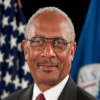
Francis Xavier Taylor was confirmed April 7, 2014, as the Department of Homeland Security’s (DHS) under secretary for intelligence and analysis. As the head of the Office of Intelligence and Analysis, he is responsible for gathering intelligence from other government and non-government sources on potential threats to U.S. national security.
Taylor was born October 22, 1948, in Washington, D.C. His mother was a single parent who worked for the Department of the Army. Taylor graduated from Dunbar High School in Washington in 1966. He went to the University of Notre Dame, where he was in the Reserve Officers Training Corps (ROTC). Upon graduation with a B.A. in government and international studies in 1970, Taylor was commissioned as a second lieutenant in the U.S. Air Force.
His first assignment in the Air Force was in its Office of Special Investigations. After some initial training, Taylor was an analyst in the counterintelligence division, focusing on the Middle East, Africa and South Asia.
In 1972, Taylor returned to Notre Dame, working on his M.A. in government and international studies, which he received in 1974. After earning his degree, Taylor returned to duty in the Office of Special Investigations. For about the next decade, he worked his way up the ranks, mostly working in Washington, but with one posting to Turkey.
Taylor took a year beginning in 1983 to study at the Armed Forces Staff College. Following that, he was named deputy director for operations in the Directorate of Counterintelligence and Investigative Programs, Office of the Deputy Undersecretary of Defense for Policy. He remained in that post until 1987, when he took another year for study, this time at the Air War College.
By this time, Taylor had worked his way well up the promotion ladder. His next assignment was as deputy commander of the 487th Combat Support Group at Comiso Air Station, Italy. He returned to special investigations in 1990, being named commander of the Air Force Office of Special Investigations in Osan Air Base, South Korea. In 1992, Taylor returned to Washington, taking on progressively more responsible positions in special investigations. He won his brigadier general’s star in 1996, and in 1998, he was named commander of Air Force special investigations. He held that job until 2001, when he retired from the Air Force after 31 years.
In 2001, President George W. Bush appointed Taylor to be coordinator for counterterrorism for the Department of State, holding the rank of ambassador in the post. During the time he was in that post, he contradicted the Bush administration’s claim that Iraq had links to Mohamed Atta, the suspected ringleader in the September 11, 2001, terrorist attacks. In 2002, Taylor was made responsible for diplomatic security in the post of assistant secretary of state for diplomatic security and director of the Office of Foreign Missions.
In 2005, Taylor left government service to become chief security officer at General Electric, a position he held until 2013, when he started a consulting firm.
Taylor is married with three children, Jacquis, Justin, and Shari. His wife, Constance, is part owner of a catering firm. Taylor wasn’t the only member of his family to make a career in the military. His late brother Benjamin served in the Army for 20 years.
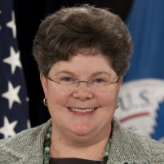
Born September 22, 1957, in Columbus, Georgia, Wagner received a Bachelor of Arts degree in English and history from the College of William and Mary in 1979.
After working as a short-order cook and waitress at a delicatessen in Williamsburg, Virginia, she began her career in the U.S. Army, serving eight years as a signals intelligence and electronic warfare officer, leaving active service as a captain in October 1987. That same year, she earned a Master of Science degree in systems management at the University of Southern California.
From February 1988 until May 1990, Wagner worked as an Army intelligence research specialist.
She joined Booz Allen Hamilton as an associate in May 1990,working in the areas of tactical exploitation of national capabilities, support to military operations, intelligence planning and intelligence systems architecture development.
In May 1993, she left Booz Allen to work on Capitol Hill as a staff member of the Program and Budget Authorization Sub-Committee of the House Permanent Select Committee on Intelligence.
Beginning in November 1995, she spent a year as staff director of the Subcommittee on Technical and Tactical Intelligence, also part of the House Permanent Select Committee on Intelligence. Her responsibilities included oversight of technical collection and processing capabilities in the National Intelligence Program and Military Intelligence Program.
From November 1996 to November 2000, Wagner worked for the Defense Intelligence Agency (DIA) as the director of the Military Intelligence Staff at the Pentagon. In this position, she conducted military intelligence community planning and was responsible for development and management of the General Defense Intelligence Program. She served as an associate member of the Military Intelligence Board (MIB) and oversaw the MIB secretariat. She also managed the implementation of the Joint Intelligence Virtual Architecture, a defense intelligence community-wide effort to modernize intelligence analysis and methods.
From November 2000 until April 2003, Wagner served as DIA deputy director for analysis and production at Boling Air Force Base. She was also the production functional manager, responsible for orchestrating analysis and production by analytic elements of the military services, the combatant commands other defense agencies.
For one year she served as the senior DIA representative to Europe and as liaison to the United States European Command (EUCOM) and to the North Atlantic Treaty Organization (NATO).
From May 2004 to April 2005, she was the executive director for intelligence community affairs at the CIA, making her responsible for the Community Management Staff, which provided strategic planning, policy formulation, resource planning, program assessment and budget oversight for the Intelligence Community.
Wagner then served from April 2005 through January 2007 in the Office of the Director of National Intelligence as an assistant deputy director of national intelligence for management and the first chief financial officer for the National Intelligence Program.
Wagner then took a position as an instructor in Intelligence Community management for The Intelligence and Security Academy, LLC, a private company that trains both members of both government agencies and private security firms. She also worked briefly as a substitute teacher in the Arlington County Public School system in Virginia.
The Office of Intelligence and Analysis (OIA) represents the intelligence wing of the Department of Homeland Security. OIA is responsible for gathering intelligence from other government and non-government sources on potential threats to US domestic security. OIA works with members of the Intelligence Community as well as state, local, federal and private officials to carry out its mission. Not only does OIA gather information from these sources but it also shares intelligence it has compiled in order to warn other sectors of the government about impending threats to the nation’s security. These information-sharing activities have raised concerns among civil libertarians, as have other facets of I&A work.
In the wake of the 9/11 terrorist attacks, President George B. Bush created in 2003 a new a cabinet-level agency, the Department of Homeland Security (DHS), in charge of protecting the United States from future assaults. In order to carry out its mission, DHS needed its own intelligence office, federal officials decided, one that would gather information on potential terrorist threats from various sources within the Intelligence Community (IC) and other federal agencies. The Information Analysis division was established, led by an Assistant Secretary for Information Analysis.
By 2005, DHS leadership was not happy with the intelligence division and decided to make changes. A new Office of Intelligence and Analysis (OIA) was
using intelligence analysts from the Information Analysis division. The head of the new office was now dubbed the Chief Intelligence Officer, who reported directly to the DHS Secretary and was responsible for intelligence coordination and working with the rest of the IC along with state, local and private sector partners.
Part of the Department of Homeland Security, the Office of Intelligence and Analysis (OIA) is responsible for gathering intelligence from other government and non-government sources on potential threats to US domestic security. OIA works with the Intelligence Community (such as the CIA and National Security Agency) as well as state, local, federal and private officials to carry out its mission. Not only does OIA gather information from these sources but it also shares intelligence it has compiled in order to warn other sectors of the government about impending threats to the nation’s security.
According to OIA leadership testimony before Congress, the office has created five categories of threats to the US:
Threats to Border Security involve air, land and sea borders, and virtual threats via the Internet. OIA examines a range of threats, such as narcotics trafficking, alien and human smuggling, money laundering and other illicit transnational threats. OIA focuses especially on the border with Mexico through the Southwest Border Threat Assessment, which tries to identify terrorists attempting to enter the country. The office’s Intelligence Campaign Plan for Border Security (ICP) has expanded intelligence capabilities along the Mexican border by deploying intelligence officers to key border intelligence centers. In 2008, DHS sent the first Homeland Intelligence Support Team (HIST) to El Paso, Texas, to provide direct intelligence support and “information fusion to front-line operators and agents along the border.” The HIST is staffed with an “integrated team of intelligence professionals.”
Threat of Radicalization and Extremism - OIA says the top priority in this threat area is radicalized Islam (Sunni and Shia groups). It also keeps watch on radicalized domestic groups, including white supremacists, black separatists and “fringe environmentalists.” The office, according to officials, does not monitor groups and their activities. Instead, it is “interested in the radicalization process – why and how people are attracted to radical beliefs and cross the line into violence.” However, OIA is developing an “integrated framework for tracking a radical or extremist group’s risk for terrorism and assisting policy makers in developing strategies to deter and prevent it.”
Potential Threats from Particular Groups Entering the US involves groups that could be exploited by terrorists or other “bad people” who enter the country legally. This assessment can include threats involving CBRN (chemical, biological, radiological, nuclear) weapons, devices or material. Under this category, OIA focuses on visa programs. It also looks at factors in global instability that drive people to migrate to the US - a phenomenon potentially exploitable by terrorists, according to OIA. The office led an effort in 2007 in developing a security screening program to vet prospective Iraqi refugees entering the US.
Threats to Critical Infrastructure involves both private sector and state-owned and operated buildings and facilities. OIA works with the DHS Office of Infrastructure Protection to maintain the Homeland Infrastructure Threat and Risk Assessment Center (HITRAC) to assess terrorist threats to various sites around the country.
Chemical, Biological, Radiological, and Nuclear (CBRN) Threats involve improvised nuclear devices (IND) and radiological dispersal devices (RDD) or “dirty bombs.” OIA is developing a program on bioterrorism threat analysis that includes the threat of infectious diseases, such as avian influenza, to support DHS’s role in pandemic preparedness. The office also examines infectious animal diseases that could devastate the US economy.
OIA Structure
The organizational structure of OIA is unknown because the intelligence office does not maintain a public presence on the Internet. According to testimony given by OIA officials before Congress, the office maintains a Production Management (PM) division which is responsible for distributing unclassified information to members of the private sector. PM maintains “comprehensive email dissemination lists, specifically designed to serve private sector partners at the unclassified level.” It is said that this email distribution occurs “using the Sector Coordinating Councils (SCCs), and when appropriate, Information Sharing and Analysis Centers (ISACs).”
To better manage information distribution, PM segments its audience into 17 sectors, including: Chemical, Commercial Facilities, Dams, Emergency Services, Energy,
Banking and Finance Agriculture and Food, Government Facilities, Public Health and
Healthcare, National Monuments and Icons, Information Technology, Commercial
Nuclear Reactors, Materials and Waste, Postal & Shipping, Telecommunications,
Defense Industrial Base, Drinking Water and Water Treatment Facilities, and
Transportation (including Aviation, Maritime, Railroad, Mass Transit, Highway).
OIA contributes information to the President’s Daily Brief and the National Terrorism Bulletin. It also issues intelligence “products,” such as the Border Security Monitor, CubaGram, Cyber Security Monitor, Infrastructure Intelligence Notes and Chief Intelligence Officer Notes. Some of these materials are provided to the (NICC) which posts unclassified material for receipt by private sector partners. Classified information is posted on the Homeland Secure Data Network (HSDN) - a network that involves the State and Local Fusion Center (SLFC) program. SLFC are used to compile and share intelligence and law enforcement information that helps warn of terrorist threats.
OIA produces the DHS Intelligence Enterprise research plan and the Homeland Security Threat Assessment which assess the major threats to the US. The threat assessment projects through 2010 and is updated annually.
Since 2003, defense contractor General Dynamics has been under contract with DHS’s intelligence operations to provide “information management support and maintain the key services and systems.” In October 2007, I&A renewed the contract with General Dynamics. The contract has a maximum potential value of $71.4 million over five years if all options are exercised, including a first-year option of $11.2 million. General Dynamics is expected to provide “professional services support to include systems engineering, architecture, governance, program management, information assurance, and National Security Systems activities.”
Another leading defense contractor, Northrop Grumman, also has a
The National Center for Crisis and Continuity Coordination, or NC4, a security and technology company, is currently working for I&A to enhance its information sharing capabilities. NC4 provides the Extranet Secure Portal (ESP) service as a platform for the DHS Homeland Security Information Network (HSIN) Intelligence Portal. The company is working under a three-year contract worth $6.1 million.
I & A has contracted with other companies like Booz Allen Hamilton (see Controversies) and SGIS, a business that describes itself as providing “services and solutions that defend the United States and its citizens from threats, provides advanced tools to soldiers who defend the nation and assists government agencies in running their business more effectively.” SGIS is a subcontractor of Booz Allen Hamilton that was awarded an intelligence analysis and management contract worth $2 million.
Other private sector stakeholders of I&A include businesses that receive information on security threats. This information is distributed through the Homeland Intelligence and Threat Analysis Center (HITRAC) and local fusion centers (see Controversies) located in various states. One example is in Illinois, where the State Terrorism Intelligence Center (STIC) has distributed information to the likes of Caterpillar, McDonald’s, Cargill and John Deere.
In 2007, as part of sweeping changes recommended by the 9/11 commission, Congress ordered I&A to do a better job of sharing intelligence with state and local officials. The primary mechanism for performing this responsibility is through the Interagency Threat Assessment and Coordination Group (ITACG), which operates as part of the National Counterterrorism Center. ITACG was created by Congress and began operating only in January 2008. But some Congressional representatives have expressed concerns that I&A has been slow to work with ITACG.
Rep. Jane Harman (D-CA), chairwoman of the House Homeland Security Committee’s Intelligence, Information Sharing and Terrorism Risk Assessment Subcommittee, said in February, “I have a major issue with I&A’s endless refusal to take the ITACG seriously and to build a robust state, local and tribal presence at the [National Counterterrorism Center] that makes the intelligence production process for state and locals better.”
I&A head Charles Allen, a former “Cold Warrior” CIA officer, who appeared before Harman’s committee, said his office had made progress in sharing unclassified and classified information with state and local partners.
Harman argued that I&A must change its “need-to-know culture” to a “need-to-share culture.” She also told Allen that DHS should stop trying to control what information gets disseminated to state and local officials. That responsibility rests with ITACG, she said, and DHS needs to realize the working group isn’t going to “go away” once the information sharing environment “matures organizationally and culturally.”
One response by government officials to the 9/11 attacks was the creation of “fusion centers” at the state and local level. The purpose of the centers is to facilitate the gathering and synthesizing of law enforcement and intelligence data to help warn of pending terrorist attacks. Initiated through Congressional legislation, fusion centers are supposed to be run by state or local officials, with DHS providing funding and support in the form of intelligence officers.
Civil libertarians have expressed worry about the function and scope of fusion center activities. The ACLU filed a Freedom of Information Act request for details about the Commonwealth Fusion Center outside of Boston.
The Boston center is just one of approximately 40 fusion centers established around the country. I&A has deployed 23 intelligence officers to the centers to help train state and local officials in the craft of intelligence collection and analysis. Also, DHS had doled out $380 million in grants to support the centers through the end of 2006.
One I&A official insisted there had been no privacy violations by fusion center staff. The same official admitted, however, that there was no real government oversight of the centers.
In 2003, the Defense Department got in trouble with Congress over a secret program designed to comb through personal information of American citizens to locate potential terrorists. Known as Total Information Awareness, the program, developed by the Defense Advanced Projects Research Agency (DARPA), was shut down after representatives on Capitol Hill raised concerns.
Four years later, a similar effort by DHS also has raised concerns. Known as Analysis, Dissemination, Visualization, Insight and Semantic Enhancement (ADVISE), the data-mining program uses mathematical algorithms to dig through vast amounts of personal information in order to extract suspicious people and places. ADVISE has been tested in four DHS pilot programs, including one at the Office of Intelligence and Analysis, to help analysts sift through mounds of intelligence reports and documents.
DHS officials who helped develop ADVISE said that the program is only being tested using “synthetic” data based on “real data” made anonymous so it could not be traced back to people.
Privacy advocates have raised concerns about programs based on sheer statistical analysis because of the potential that people can be wrongly accused. “They will turn up hundreds of soccer teams, family reunions and civil war re-enactors whose patterns of behavior happen to be the same as the terrorist network,” said Jim Harper, director of information policy studies at the Cato Institute.
After DARPA killed Total Information Awareness, unspecified subcomponents of the program were allowed to be funded under the Pentagon’s classified budget. It is not known if any of these subcomponents are being utilized for ADVISE.
When DHS was launched in 2003, the new department had to scramble to outfit its new intelligence analysis wing. Short on experienced staff, DHS turned to Booz Allen Hamilton, one of the government’s biggest contractors that has done extensive work for defense and intelligence agencies. Under a no-bid contract, Booz Allen provided analysts, administrators and other contract employees to fill the ranks of the DHS Information Analysis division and Infrastructure Protection office.
At first, the company was paid $2 million in 2003. Over the next year, the cost of paying Booz Allen soared by millions of dollars per month. By December 2004, payments to Booz Allen had exceeded $30 million - 15 times the contract’s original value.
When DHS lawyers examined the deal, they found it was “grossly beyond the scope” of the original contract and that the arrangement had violated government procurement rules. The lawyers advised the department to immediately stop making payments and allow other companies to compete for the work. But the competition did not take place for more than a year. During that time, payments to Booz Allen continued. All told, the company earned a total a $73 million.
Did HSD publish an assessment on patriotic protesters?
Found at http://api.ning.com/files/UNNlkOVukw8cXztJc4bDEq2ztrm9owekwvHofmLwYgxLlpwX8*h1av8amHehbYkmt3Qvxny16Gh1ob8gFYeRrw2HVq-joU7Y/hsarightwingextremism0904071.pdf
Francis Xavier Taylor was confirmed April 7, 2014, as the Department of Homeland Security’s (DHS) under secretary for intelligence and analysis. As the head of the Office of Intelligence and Analysis, he is responsible for gathering intelligence from other government and non-government sources on potential threats to U.S. national security.
Taylor was born October 22, 1948, in Washington, D.C. His mother was a single parent who worked for the Department of the Army. Taylor graduated from Dunbar High School in Washington in 1966. He went to the University of Notre Dame, where he was in the Reserve Officers Training Corps (ROTC). Upon graduation with a B.A. in government and international studies in 1970, Taylor was commissioned as a second lieutenant in the U.S. Air Force.
His first assignment in the Air Force was in its Office of Special Investigations. After some initial training, Taylor was an analyst in the counterintelligence division, focusing on the Middle East, Africa and South Asia.
In 1972, Taylor returned to Notre Dame, working on his M.A. in government and international studies, which he received in 1974. After earning his degree, Taylor returned to duty in the Office of Special Investigations. For about the next decade, he worked his way up the ranks, mostly working in Washington, but with one posting to Turkey.
Taylor took a year beginning in 1983 to study at the Armed Forces Staff College. Following that, he was named deputy director for operations in the Directorate of Counterintelligence and Investigative Programs, Office of the Deputy Undersecretary of Defense for Policy. He remained in that post until 1987, when he took another year for study, this time at the Air War College.
By this time, Taylor had worked his way well up the promotion ladder. His next assignment was as deputy commander of the 487th Combat Support Group at Comiso Air Station, Italy. He returned to special investigations in 1990, being named commander of the Air Force Office of Special Investigations in Osan Air Base, South Korea. In 1992, Taylor returned to Washington, taking on progressively more responsible positions in special investigations. He won his brigadier general’s star in 1996, and in 1998, he was named commander of Air Force special investigations. He held that job until 2001, when he retired from the Air Force after 31 years.
In 2001, President George W. Bush appointed Taylor to be coordinator for counterterrorism for the Department of State, holding the rank of ambassador in the post. During the time he was in that post, he contradicted the Bush administration’s claim that Iraq had links to Mohamed Atta, the suspected ringleader in the September 11, 2001, terrorist attacks. In 2002, Taylor was made responsible for diplomatic security in the post of assistant secretary of state for diplomatic security and director of the Office of Foreign Missions.
In 2005, Taylor left government service to become chief security officer at General Electric, a position he held until 2013, when he started a consulting firm.
Taylor is married with three children, Jacquis, Justin, and Shari. His wife, Constance, is part owner of a catering firm. Taylor wasn’t the only member of his family to make a career in the military. His late brother Benjamin served in the Army for 20 years.
Born September 22, 1957, in Columbus, Georgia, Wagner received a Bachelor of Arts degree in English and history from the College of William and Mary in 1979.
After working as a short-order cook and waitress at a delicatessen in Williamsburg, Virginia, she began her career in the U.S. Army, serving eight years as a signals intelligence and electronic warfare officer, leaving active service as a captain in October 1987. That same year, she earned a Master of Science degree in systems management at the University of Southern California.
From February 1988 until May 1990, Wagner worked as an Army intelligence research specialist.
She joined Booz Allen Hamilton as an associate in May 1990,working in the areas of tactical exploitation of national capabilities, support to military operations, intelligence planning and intelligence systems architecture development.
In May 1993, she left Booz Allen to work on Capitol Hill as a staff member of the Program and Budget Authorization Sub-Committee of the House Permanent Select Committee on Intelligence.
Beginning in November 1995, she spent a year as staff director of the Subcommittee on Technical and Tactical Intelligence, also part of the House Permanent Select Committee on Intelligence. Her responsibilities included oversight of technical collection and processing capabilities in the National Intelligence Program and Military Intelligence Program.
From November 1996 to November 2000, Wagner worked for the Defense Intelligence Agency (DIA) as the director of the Military Intelligence Staff at the Pentagon. In this position, she conducted military intelligence community planning and was responsible for development and management of the General Defense Intelligence Program. She served as an associate member of the Military Intelligence Board (MIB) and oversaw the MIB secretariat. She also managed the implementation of the Joint Intelligence Virtual Architecture, a defense intelligence community-wide effort to modernize intelligence analysis and methods.
From November 2000 until April 2003, Wagner served as DIA deputy director for analysis and production at Boling Air Force Base. She was also the production functional manager, responsible for orchestrating analysis and production by analytic elements of the military services, the combatant commands other defense agencies.
For one year she served as the senior DIA representative to Europe and as liaison to the United States European Command (EUCOM) and to the North Atlantic Treaty Organization (NATO).
From May 2004 to April 2005, she was the executive director for intelligence community affairs at the CIA, making her responsible for the Community Management Staff, which provided strategic planning, policy formulation, resource planning, program assessment and budget oversight for the Intelligence Community.
Wagner then served from April 2005 through January 2007 in the Office of the Director of National Intelligence as an assistant deputy director of national intelligence for management and the first chief financial officer for the National Intelligence Program.
Wagner then took a position as an instructor in Intelligence Community management for The Intelligence and Security Academy, LLC, a private company that trains both members of both government agencies and private security firms. She also worked briefly as a substitute teacher in the Arlington County Public School system in Virginia.





Comments