



A world-renowned art facility that sits on 17 acres of land overlooking the Potomac River, the Kennedy Center for the Performing Arts presents more than 2,000 performances a year, including a variety of theater, dance, music, and multimedia programs. The events attract almost 2 million visitors annually. The Center also takes some of the shows on the road. In addition, it offers several artistic learning experiences tailored specifically for young people, including open rehearsals, competitions, and music and dance study residencies.
The creation of an arts center in Washington D.C. had been a dream of many for nearly two centuries when President Dwight D. Eisenhower signed legislation in 1958 that established a National Cultural Center in the District of Columbia. The National Cultural Center Act authorized its construction, and mandated it to present a wide variety of classical and contemporary performances and carry out an educational mission as an independent, self-sustaining, private funded facility. Fundraising for the Center began shortly after the bill was passed, with John F. Kennedy, a life-long advocate of the arts, significantly involved in calling attention to the project and its funding needs in a variety of ways when he became President, including naming his wife, Jackie, and President Eisenhower’s wife, Mamie, honorary chairwomen of the fundraising campaign. Two months after the assassination of President Kennedy, Congress designated the National Cultural Center a “living memorial” to him, and authorized $23 million to help build the John F. Kennedy Center for the Performing Arts. President Lyndon Johnson signed the John F. Kennedy Center Act on January 23, 1964, and on December 2, 1964, shoveled the first dirt at the site, with the same gold-plated spade that had been used in the groundbreaking ceremonies for the Lincoln Memorial in 1914 and the Jefferson Memorial in 1938. After legal haggling over the Center’s precise site location and various other topics were ironed out, construction got underway in 1967, with $34.5 million in private contributions, $23 million in federal matching funds, and $20.4 million in long-term revenue bonds held by the U.S. Department of Treasury. On September 8, 1971, the Center opened to the public, with a gala performance featuring the world premiere of a requiem mass honoring President Kennedy, commissioned from Leonard Bernstein.
The Kennedy Center for the Performing Arts houses nine stages, five public galleries, two public restaurants, and nine special event rooms. It puts on a variety of shows, including many Broadway hits and Tony Award-winning theatrical productions, and also develops premiere works through its Fund for New American Plays, three of which have gone on to win Pulitzer Prizes: Angels in America by Tony Kushner; The Heidi Chronicles by Wendy Wasserstein; and The Kentucky Cycle by Robert Schenkkan. The Center also commissions world premiere performances of new ballet and dance programs, and has its own ensemble, The Suzanne Farrell Ballet. In addition, it co-produces new operas and brings international opera companies to the United States. The National Symphony Orchestra, the Center’s affiliate since 1987, also commissions dozens of new works and concerts, while the American Residencies for the Kennedy Center is a program that sends the National Symphony Orchestra to different states each year to perform and teach. The Center also presents performances of chamber music, folk music, popular music, and jazz. In addition, it puts on annual festivals that celebrate cities, countries and regions of the world. It also offers hundreds of free performances, including an Open House Arts Festival every September, to celebrate its birthday, and daily concerts of seasonal music in December. In addition, 365 days a year at 6 pm there are free Millennium Stage performances by talent from across the country that can also be seen live on the Kennedy Center’s web site, or at a later date via its digitalized archives. On network television, The Kennedy Center Honors is aired every year, while Public TV broadcasts additional Kennedy Center shows, as does National Public Radio. The Center also offers touring productions, many of which originate as newly commissioned projects at the Center before heading out on tour in subsequent seasons. In addition, the Center provides a wide range of educational opportunities for young people, alongside the many children’s theater presentations it produces, including giving backstage learning tours; sponsoring two annual dance residencies, one in ballet and one in partnership with the Dance Theater of Harlem; holding yearly multicultural book festivals, in which books come to life in readings and other interactive performances; hosting the American College Theater Festival competition; and offering internships and awarding fellowships. On July 1, 2011, the Kennedy Center entered into an affiliation with the Washington National Opera that is designed to continue WNO performances while providing long-term financial security for the artistic development of WNO.
From the Web Site of the Kennedy Center:
Alliance for Arts Education Network
Arts and Technology: The 8th Stage
Ballet Performances and Programs
Changing Education Through the Arts
Multicultural Children’s Book Festival
Performances for School Groups
Performances for Young Audiences
Performance for Young Audiences On Tour Events
During the years 1997 through 2011, the Kennedy Center has spent $92.9 million on 1,039 transactions for goods and services. The top five services include restoration and repair of real property ($21.8 million), electric services ($9.59 million), restoration and repair of museums and exhibit buildings ($9.5 million), guard services ($9.5 million), and custodial janitorial services ($7.4 million).
The five top recipients of spending by the Kennedy Center from 1997 to 2011 are:
The Whiting-Turner Contracting Company $17,098,477
Securiguard Inc. $9,506,783
James G. David Construction Corporation $7,730,542
Pepco Holdings Inc. $6,500,300
Metropolitan Building Services Inc. $5,854,551
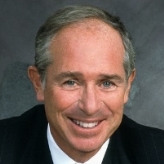
Recent concerns have been raised on a couple of fronts regarding The Blackstone Group, of which Schwarzman is the CEO and Chairman. One issue revolves around The Blackstone Group owning 80% of the power producer, Sithe Global, which is aiming to build the 1,500 megawatt plant Desert Rock on land governed by the Navajo Nation in New Mexico, and the 750 megawatt plant Toquop in Nevada, both of which are opposed by many parties, including the Sierra Club, the National Resources Defense Council, New Mexico Governor Bill Richardson (Desert Rock), and Nevada Senator Harry Reid (Toquop). The other major topic of concern surrounding The Blackstone Group is the idea that it has seemingly found a way to avoid paying taxes on funds it raised while selling shares to the public.
The Golden Ass: How Blackstone CEO Steve Schwarzman's antics may cost him and his colleagues billions of dollars. (by Daniel Gross, Slate)
Stephen A. Schwarzman
Roger Stevenson
Ralph P. Davidson
James D. Wolfensohn
James A. Johnson
- Table of Contents
- Overview
- History
- What it Does
- Where Does the Money Go
- Controversies
- Suggested Reforms
- Comments
- Leave a comment
Comments