



An independent federal agency, the Corporation for National and Community Service (CNCS) is responsible for making grants to support service and volunteering. Their programs include Senior Corps, AmeriCorps, Learn and Serve America, Nonprofit Capacity Building Program, Social Innovation Fund, and Volunteer Generation Fund. CNCS’ funding is given to national and local nonprofits, schools, faith-based and other community organizations and public agencies, and it supports a variety of programs.
In 1990, President George H. W. Bush’s support for volunteering resulted in the National and Community Service Act. This new law encouraged volunteering across the board and created a new federal agency called the Commission on National and Community Service (CNCS).
In 1992, the National Civilian Community Corps (NCCC) was created to explore the possibility of using outdated military resources to solve domestic problems. Modeled on the Depression-era Civilian Conservation Corps, it helped to jump-start volunteering efforts in a new way.
The Clinton administration carried on the spirit of volunteerism with the passage of the National Community Service Trust Act of 1993, which merged the offices of ACTION (the Federal Domestic Volunteer Agency) and the Commission on National and Community Service. With Serve America and NCCC, the Corporation for National and Community Service (CNCS) was created to support a culture of citizenship, service and responsibility by financing various programs. Current services offered include tutoring at-risk youth, building homes for low-income people, responding to natural disasters, and caring for homebound seniors. In addition, members and volunteers help mobilize other volunteers and build the capacity of local organizations.
In 2002, President George W. Bush created the USA Freedom Corps, which operates independently of the Corporation for National and Community Service but functions in the same spirit. The Freedom Corps acts like a network to promote volunteering opportunities across the nation and overseas. On January 3, 2005, President Bush announced that former presidents George H.W. Bush and Bill Clinton would lead Freedom Corps’ major campaigns, including the Relief and Recovery: 2004 Indian Ocean Tsunami program. They helped to raise funds from private individuals and businesses to provide humanitarian relief.
In April 2009, President Barack Obama signed into law the Edward M. Kennedy Serve America Act, which expanded national service programs administered by the CNCS.
The Corporation for National and Community Service (CNCS) is an independent federal agency responsible for funding programs across the country that promote public service and volunteering. From national and local nonprofits to schools, faith-based and other community programs and public agencies, CNCS makes grants that fund initiatives to help communities address poverty, the environment, education, and other unmet human needs.
Key CNCS programs:
- AmeriCorps was begun in 1994 as a national service program designed to engage Americans in many different kinds of service. Programs operating under this umbrella include VISTA (Volunteers in Service to America), the National Civilian Community Corps, AmeriCorps National and AmeriCorps State programs. This network of local, state, and national service programs serves more than 3,000 organizations nationwide.
- Learn and Serve America, formerly known as Serve America, is designed to engage students in community-based organizations and schools in service learning programs.
- Senior Corps helps to connect people over the age of 55 with the people and organizations that need them most. Seniors are encouraged to become mentors, coaches, or companions to people in need or contribute their skills to community projects and organizations. Senior Corps was created during President John F. Kennedy’s administration and helps to bring real-life experience and wisdom to community organizations nationwide. Initiatives include the Foster Grandparent Program, connecting those over 60 with children and young people with exceptional needs, and the Senior Companion program, which brings volunteers together with adults in their community who have difficulty with day-to-day tasks. Lastly, RSVP connects volunteers aged 55 or older with service opportunities that match their skills.
- Nonprofit Capacity Building Program supports grantees in providing nonprofit recipients with management systems to help in measuring and improving performance that will benefit communities being served. One to five grants are awarded each year. Funding of $1 million was available in FY 2010.
- Social Innovation Fund helps to develop community-based solutions to benefit the low-income sector in the areas of economic opportunity, health, and youth development. In FY 2010, $49.3 million was awarded to 11 intermediary organizations.
- Volunteer Generation Fund supports the recruitment and management of volunteers. In FY 2010, available funding for this program was $4 million, with at least $75,000 in grants to be awarded.
Special initiatives:
- Summer of Service is a national coalition of organizations serving youth (ages 5 to 21) and committed to engaging them in service.
- Serve to Remember, Remember to Serve is a network of community service programs concentrated around the area devastated by Hurricane Katrina in 2005.
- National Service Responds to the Hurricanes, which focuses support on hurricane disasters.
- Helping America’s Youth was launched by First Lady Laura Bush to help address various problems facing America’s children. At a conference held at Harvard in 2005, the First lady unveiled the Community Guide to Helping America’s Youth, with up-to-date research on youth development and effective programs.
- Martin Luther King Jr. Day of Service helps to remember Dr. King’s life and help to transform his message into community service that helps empower and strengthen local communities.
- National Conference on Volunteering and Service gathers service and volunteer leaders from all over the country to experience intensive education, training, and networking to expand the ranks and effectiveness of volunteers.
- National Mentoring Month was begun in 2002 by President Bush and brings attention to the need for more volunteer mentors to help American’s young people. During January of each year, various efforts are made to recruit more mentors among those wishing to volunteer their time.
- President’s Higher Education Community Service Honor Roll recognizes colleges and universities nationwide that support innovative and effective community service-learning programs. Each year the Honor Roll’s Presidential Award is given to a few institutions embodying this spirit.
- President’s Volunteer Service Award encourages and recognizes volunteer service by giving awards to individuals and families in various age groups that have completed a certain minimum number of community service hours. Lifetime Achievement Awards also recognize those who have made community service a part of their everyday lives.
- Pro Bono Challenge brings together corporate, government, and nonprofit leaders to help create pro bono relationships that address the nonprofits’ financial management, technology, organizational development, communications and marketing, human resource management, and fundraising assistance needs.
- Universities Rebuilding America Partnership (URAP) helps students displaced by Hurricane Katrina in 2005. Student organizations hold fundraiser and assemble books, supplies, clothing and other necessities for the victims. URAP also offers resources and support to engage college and university students, faculty, and staff in helping to rebuild the Gulf Coast region.
From the Web Site of the Corporation for National and Community Service
Press Releases and Media Advisories
The Corporation for National and Community Service (CNCS) spent nearly $438.5 million on 5,635 transactions during the past decade. According to USASpending.gov, CNCS paid for a variety of services, from medical to management support and program evaluation.
The top five contractors are:
|
1. Seven Corners, Inc. |
$130,669,030 |
|
2. ABT Associates, Inc. |
$ 19,820,877 |
|
3. WPP PLC |
$ 15,776,147 |
4. Government of the United States $14,368,191
5. Information Network, Inc. $13,434,060
Seven Corners, the CNCS’ largest contractor, provides a selection of international medical and travel insurance programs. They manage healthcare benefits and deliver customized management solutions to many government agencies, including the State Department. In contrast, ABT Associates, the CNCS’ second largest contractor, is a leader in research and development implementation in the areas of health, social and economic policy, and international development.
CNCS Employee Status
Almost since its inception, the Corporation for National and Community Service (CNCS) has been controversial. One reason is that its hiring practices sometimes work against the more skilled and experienced applicants. The agency’s Alternative Personnel System (APS) gives those hired by CNCS no competitive advantage elsewhere in the federal government, even if they’ve accumulated years of service at the agency. This situation changed in 2005 when the Office of Personnel Management (OPM) and CNCS agreed to an interchange agreement that makes most APS employees eligible to apply for competitive service positions in other agencies. CNCS was urged to monitor employee departures to see what impact, if any, this policy had on employee attrition.
Additionally, since CNCS had received the vast majority (95%) of term appointments, the agency’s leadership believed that the appointment policy had a negative impact on staff morale, since most feared losing their jobs when their appointments expired. In December 2004, the term appointment policy was updated, and CNCS converted most employees to permanent appointments.
The Challenge of Boards in Government: Advising the Corporation for
National and Community Service (National Academy of Public Administration) (pdf)
American Jewish Congress Sues Corporation for National and Community Service
On July 2, 2004, Judge Gladys Kessler of the U.S. District Court for the District of Columbia ruled that the AmeriCorps Education Awards Program (EAP), which is administered by the CNCS, violated the Establishment Clause of the Constitution by providing education awards to teachers who serve in religious schools and by making grants to religious organizations overseeing these teachers. The American Jewish Congress brought the constitutional challenge, alleging that teachers were allowed to teach secular and religious subjects, and that organizations receiving CNCS funds were not required to segregate these funds from the organization’s other money. This ruling raised questions about CNCS oversight into organizations responsible for secular and religious service. In March 2005, the U.S. Court of Appeals for the District of Colombia reversed the ruling, stating that taxpayer funds may be used to pay teachers who teach religious subjects in religious schools. In January 2006, the Supreme Court supported the ruling.
American Jewish Congress v. Corporation for National and Community Service (by Ira C. Lupu and Robert W. Tuttle, Roundtable on Religion & Social Welfare Policy, pgs. 11-28) (pdf)
Financial Mismanagement Threatens to Derail AmeriCorps
In June 2003, Slate magazine reported that AmeriCorps revealed that it could fund only half the number of members it had bankrolled in recent years. Budget cuts forced on it by a Republican-led Congress and accusations of mismanagement by Leslie Lenkowsky threatened to close the organization completely. Lenkowsky was accused of hiring more volunteers than the agency could pay for, and outside reviews by both the Office of Management and Budget and the Government Accountability Office led to his stepping down a few weeks later. Some blamed the fact that AmeriCorps never had an accurate count of its members as one reason for the financial problems, while others blamed the agency’s decentralized management system.
Loving AmeriCorps to Death: How Leslie Lenkowsky sank national service. (by David Skinner, Slate)
David Eisner
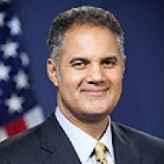
David Eisner has served as the chief executive officer of the Corporation for National and Community Service since December 2003. Eisner graduated from Stanford University and received his law degree from Georgetown University Law Center.
His professional experience included serving as press secretary for three members of Congress, Mac Sweeney (R-Texas), Bill McCollum (R-Florida), and Dana Rohrabacher (R-California), managing public relations at the Legal Services Corporation and serving as a senior vice president of the Fleishman-Hilliard International Communications public relations firm. Eisner then worked as a vice president at America Online and AOL Time Warner, overseeing the AOL Foundation, the company’s charitable wing.
Eisner has served on the board of several nonprofits, including Independent Sector, the National 4-H Council, and the Network for Good.
- Table of Contents
- Overview
- History
- What it Does
- Where Does the Money Go
- Controversies
- Suggested Reforms
- Comments
- Leave a comment

Comments