The Bureau of the Public Debt (BPD) is an agency within the US Department of the Treasury responsible for selling treasury securities such as US savings bonds to members of the public. The money made from selling these securities is, in essence, borrowed in order to finance the activities of the federal government and to account for its resulting debt. The agency pays interest to investors who buy the securities, and when it’s time to repay the loans, the agency redeems investors’ securities. Every transaction affects the outstanding national debt of the United States. Today, that debt stands at $9 trillion. It took the United States a little over 200 years to exceed the trillion dollar mark, but less than 30 years to go from $1 trillion to almost $10 trillion. The constant accumulation of debt has created considerable debate over what the country should do about it.
The United States has had public debt since the country was founded. Debts incurred during the Revolutionary War amounted to approximately $75 million by 1791. Over the following 45 years, the debt grew, briefly contracted to zero on January 8, 1835 under President Andrew Jackson but then quickly grew into the millions again. The first dramatic growth spurt of the debt occurred because of the Civil War. The debt was just $65 million in 1860 but passed $1 billion in 1863 and reached $2.7 billion following the war. The debt slowly fluctuated for the rest of the century, finally growing steadily in the 1910s and early 1920s to roughly $22 billion as the country paid for involvement in World War I.
The Bureau of the Public Debt (BPD) evolved from the Register of the Treasury, which became the Public Debt Service in 1919, under Treasury Secretary Carter Glass. Glass created new positions for the Commissioner of Accounts and Deposits and the Commissions of the Public Debt. These officials were to oversee the organizations comprising the new Bureau of Accounts and Deposits (which was later renamed the Bureau of Accounts) and the Bureau of the Public Debt.
The country’s debt problems really began in June 1933, when President Franklin Roosevelt changed the nature of government by signing into law a Joint Resolution of Congress that repealed the right of the Treasury to pay what it owed in gold. Even though the United States had adopted the gold standard in 1873, guaranteeing the value of its currency against certain quantities of gold, Roosevelt’s new resolution now made it impossible for the Treasury to repay its debts. It promptly defaulted.
That same year, Roosevelt mandated the transfer of the Executive Departments’ disbursing clerks to the newly established Division of Disbursement, which operated under the Bureau of Accounts. Twenty-seven of these facilities were established to handle the volume of checks issued by the federal government.
President Franklin D. Roosevelt created the Bureau of the Public Debt in 1940, as a way to centralize the federal government and its debt. The mission of the agency was not to repay any existing debt or to teach the public about responsible spending, but to borrow money. Some have suggested that this was a way of keeping the agency around semi-permanently, by making its purpose needed on a perennial basis.
Though the federal budget was briefly balanced under Roosevelt, the country continued to experience debt problems. The military buildup for World War II brought the debt up from $51 billion in 1940 to $260 billion following the war. After this period, the debt’s growth closely matched the rate of inflation until the 1980s, when it again began to increase rapidly. In October 1981, it topped $1 trillion for the first time. By the end of the decade, the debt had tripled, reaching $3 trillion. The debt shrank briefly after the end of the Cold War in the 1990s, but by the end of 2005, the gross debt had reached $7.9 trillion, about 8.7 times its 1980 level.
The Bureau of the Public Debt (BPD) is a small agency within the Department of the treasury that is responsible for borrowing the money needed to operate the federal government and account for the national debt. The agency does this by selling treasury bills, notes and bonds, as well as US savings bonds. BPD pays interest on these securities, and when the time comes to pay back the loans, the agency redeems the securities from investors. Every time the agency borrows or pays back money, it affects the outstanding debt of the United States.
The federal government requires a good deal of capital for its operations, so the Bureau of Public Debt is constantly borrowing money. BPD borrows about $2 trillion each year by conducting around 140 auctions, in addition to selling securities at approximately 40,000 locations around the country, which include Federal Reserve Banks. Securities are also sold through the agency’s TreasuryDirect system, which conducts regular auctions.
The Bureau of the Public Debt fulfills its goals through six main programs:
- Commercial book-entry securities, such as Treasury bills, notes and bonds. In these cases, no physical certificates are issued.
- Direct access securities, such as those traded with market participants, exchanges and the Electronics Communication Network (ECN). TreasuryDirect offers these using TAAPS, an application that provides direct access to US Treasury auctions.
- Savings securities, such as State and Local Government Series Securities (SLGs) and savings bonds.
- Government securities, such as Treasury Inflation-Protected Securities (TIPS).
- Market regulation which oversees regulations for the buying and selling of Treasury securities.
- Public Debt Accounting which accounts for the national debt of the United States.
The agency also implements regulations for the government securities market. These regulations are meant to protect individual investors while keeping the market fair and liquid. Additional functions of the BPD are: receiving, storing, issuing, and redeeming government securities; servicing registered accounts and paying interest when it is due; maintaining control over accounting and auditing of public debt transactions and publishing statements; processing claims for securities that are lost, stolen, or destroyed; promoting the sale of U.S. Savings Bonds.
Who Owns the Debt?
Currently, the US government is the largest holder of the debt, with 52% of the total $9.13 trillion. Much of the federal government’s ownership portion of the debt is held by the trust funds for Social Security and Medicare. In the case of Social Security, its trust fund owns $1.7 trillion of the debt ( as of 2005).
That’s leaves approximately $4 trillion in the hands of others, including foreign countries and banks. As of June 2008, according to the Treasury Department, there are about 50 countries that own collectively hold about $2.6 trillion of the American debt, or almost 30%. These holders range from wealthy industrial powerhouses like Japan to struggling developing nations like Iraq. Some experts are troubled that countries like China, No. 2 on the list, could gain an unhealthy upper hand in trade dealings with the US by owning a large share of these securities and jeopardizing national security.
As of September 2008, the top foreign nation holders of the US Debt are (in billions of dollars):
|
China
|
585.0
|
|
Japan
|
573.2
|
|
United Kingdom
|
338.4
|
|
Caribbean Banking Centers**
|
185.3
|
|
Oil Exporters*
|
182.2
|
|
Brazil
|
141.9
|
|
Luxembourg
|
91.8
|
|
Russia
|
69.7
|
|
Hong Kong
|
60.9
|
|
Norway
|
52.2
|
|
Switzerland
|
49.0
|
|
Germany
|
41.4
|
|
Taiwan
|
37.4
|
|
South Korea
|
36.1
|
|
Mexico
|
34.2
|
|
Turkey
|
31.3
|
|
Singapore
|
30.9
|
|
Thailand
|
28.6
|
|
Ireland
|
27.3
|
|
Canada
|
20.6
|
|
India
|
14.2
|
|
Egypt
|
13.8
|
|
Chile
|
12.9
|
|
Netherlands
|
12.9
|
|
Belgium
|
12.3
|
|
Poland
|
12.1
|
|
Sweden
|
11.6
|
|
Italy
|
10.9
|
*Oil exporters include Ecuador, Venezuela, Indonesia, Bahrain, Iran, Iraq, Kuwait, Oman, Qatar, Saudi Arabia, the United Arab Emirates, Algeria, Gabon, Libya and Nigeria.
**Caribbean Banking Centers include Bahamas, Bermuda, Cayman Islands, Netherlands Antilles, Panama and the British Virgin Islands.
Other big holders of the national debt include:
|
State and local governments
|
($467 billion, or 5%)
|
|
Individual investors, including brokers
|
($423 billion, 4.6%)
|
|
Public and private pension funds
|
($319 billion, 3.5%)
|
|
Mutual funds holders
|
($243 billion, 2.6%)
|
|
Holders of US savings bonds
|
($206 billion, 2.2%)
|
|
Insurance companies
|
($166 billion, 1.8%)
|
|
Banks and credit unions
|
($117 billion, 1.2%)
|
The Bureau of the Public Debt spent nearly $4.1 billion on 6,274 contractors this decade. According to USASpending.gov, BPD paid for a variety of services, from research and development to utilities and housekeeping services, in support of its goals.
The top 10 recipients of BPD contracts are as follows:
|
The Interpublic Group of Companies, Inc.
|
$969,123,520
|
|
Kelly Services, Inc.
|
$467,567,691
|
|
Westaff, Inc.
|
$446,558,160
|
|
Cerberus Capital Management, L.P.
|
$234,042,138
|
|
Adecco S.A.
|
$129,869,643
|
|
Star Mountain, Inc.
|
$108,248,463
|
|
KPMG L.L.P.
|
$103,421,428
|
|
Professional Performance Development Group
|
$98,849,885
|
|
Amer Technology, Inc.
|
$98,535,698
|
|
Ricoh Corporation
|
$96,691,062
|
The Interpublic Group of Companies, the agency’s largest contractor, is comprised of global advertising agencies like McCann Erickson, Draftfcb and Lowe Worldwide. For the Bureau of the Public Debt, they provide professional, administrative and management support services.
Kelly Services, the Bureau of the Public debt’s second largest contractor, offers human resources and staffing services in 37 countries. Kelly also provides professional, administrative and management support services for the Bureau of the Public Debt.
National Debt Clock Runs out of Space
The National Debt Clock was erected in New York’s Times Square in 1989 by Seymour Durst to display the shocking fact that the debt had reached $2,7 trillion. But it ran out of space in September 2008 when the US debt topped $10,000,000,000,000.
Who Bears the Cost of the US National Debt?
A March 2006 report issued by the Congressional Research Service’s Government and Finance Division outlined the controversial aspects of adding more to the national debt, saying it shifted the burden of responsibility onto future generations to not only pay back the money but to make sacrifices necessary to do so. Since growing the debt only makes it harder to pay off, including its enormous interest payments, this burden will become almost unbearable to these future generations.
President Bush Adds $1 Trillion to National Debt
Claiming that the economy was firmly in place, President George W. Bush proposed in February 2004 adding $1 trillion to the national debt, mostly to fund the cost of shifting Social Security to a partially privatized system. This added controversy to the situation since the $7 trillion debt was growing at about $500 billion a year at the time.
Increasing National Debt Raises Controversy
In June 2003, an analyst presented a report to Congress on why the national debt should be increased, in order to pay for expensive programs like the Social Security, Medicare, transportation and civil service trust funds. These experts argued that debt taken on by the government alleviates debt the public has to take on. This is a controversial position because many believe the federal government should not go deeper into debt when public programs may have to be cut.
National Debt: Pay It, or Leave It?
Since the national debt began to grow, after the Revolutionary War, there has been contentious debate about whether it is better to have the nation remain in debt, thus keeping the burden from the people, or to pay off the national debt, and learn to live within our means. This debate continues today with strong opinions on both sides.
Pro:
In June 2008, billionaire Ross Perot warned that the federal deficit must be addressed immediately, or the nation would suffer bankruptcy. He launched a web site to spotlight the national debt, which stands at $9.5 trillion, and the danger it poses to US currency (due to hyperinflation) if this trend continues.
Some believe that the nation is headed into another Depression, primarily because there are few well-paying jobs, little economic growth, and an astronomical debt that is added to each month. Perot points out that this could soon reach crisis proportions because of the size of the Baby Boomer generation which is beginning to retire. These people are likely to put an added burden on the Medicare and Social Security systems, which are linked to the national debt.
Lastly, many experts in favor of paying of the debt point out that more money in the economy doesn’t always lead to economic growth. Stimulus plans have historically not worked and instead caused the national debt to soar even higher.
Con:
On the other side of the argument, those who do not want to pay down the national debt say that once the federal government has paid its debts, there is likely to be a period of “deflationary recession,” which would cause further financial problems. Instead, proponents of keeping the national debt as it is suggest focusing on increasing the country’s GDP and reducing the percentage of debt the nation carries relative to its productivity. Deficit spending like this is likely to increase the GDP, they argue, as it did in the years following World War II.
Other opponents argue that paying off the debt has to be done eventually, but why do it now? The national debt accrues interest at a rate of only 6%, so why not apply our fiscal resources on other more pressing concerns?
|
Founded: 1940
Annual Budget: $187 million
Employees: 1,987
|
Bureau of the Public Debt
|
|
|
|
|
|
|
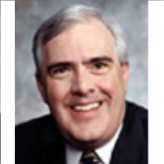
A native of Morgantown, West Virginia, Van Zeck has served as Commissioner of the Public Debt since February 15, 1998, when he was appointed by then-Secretary of the Treasury Robert E. Rubin. Zeck attended West Virginia University in Morgantown and received a Bachelor of Science degree in accounting and business administration in 1970.
Zeck has worked for the Bureau of the Public Debt in a variety of staff and managerial positions. He began his federal service with the Treasury Department internal audit staff in 1971 and subsequently held positions in data processing, marketable securities operations and administration. Zeck headed the departmental team that, in cooperation with the Federal Reserve Bank of Philadelphia, implemented Treasury Direct, an automated on-line book-entry securities system that allowed the department to eliminate physical securities for new marketable offerings. Zeck served as Assistant Commissioner (Financing) from 1982 until being named deputy commissioner on April 23, 1987.
As Commissioner of the Public Debt, Zeck oversees the sale of Treasury securities to finance the public debt, directs debt servicing activities nationwide, administers the regulations governing the government securities market, and accounts for public debt principal and interest costs. The debt financing operations are performed directly by the bureau and by Federal Reserve Banks acting as fiscal agents of the Treasury.
|
|
|
|